UGJA Strengthens Anti-Corruption Fight in Uasin Gishu Through EU-Funded TUNU Programme
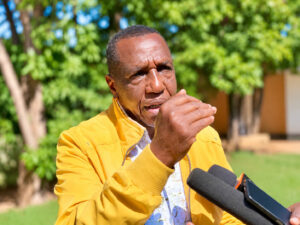
“The media must continue serving as society’s watchdog by exposing corruption regardless of where it occurs,” Uasin Gishu TUNU Executive Director James Gitaka
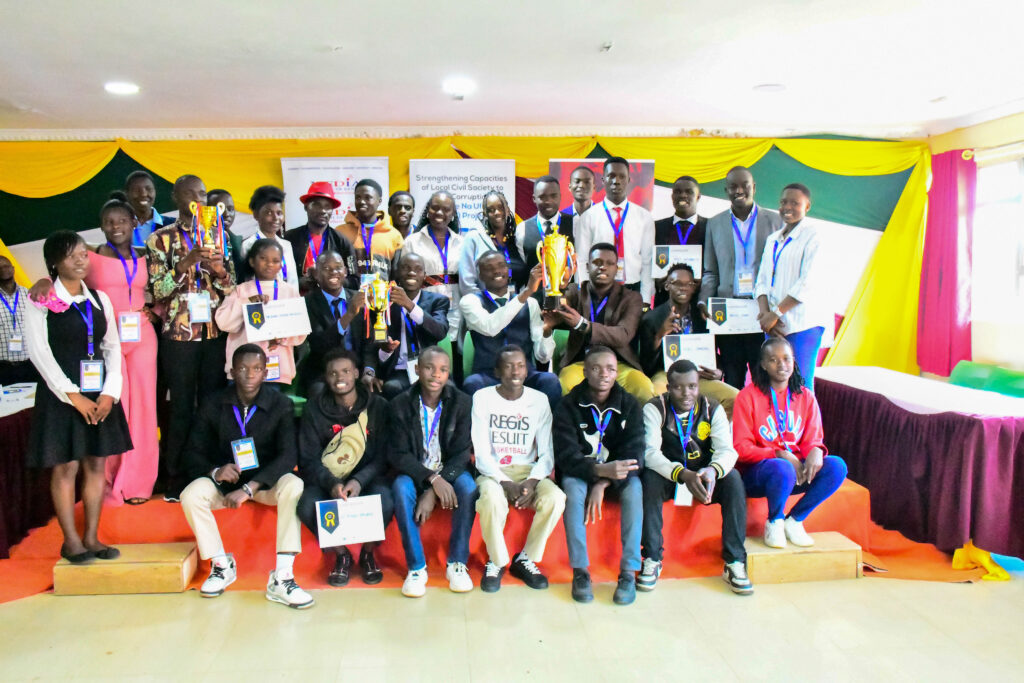
Students from Moi University, the University of Eldoret and Eldoret National Polytechnic proudly display their trophies after an inter-institutional debate held at Eldoret National Polytechnic under the Tupigane na Ufisadi (TUNU) Project.
By Hubz Media Reporter
Eldoret, Uasin Gishu County
The Uasin Gishu Journalists Association (UGJA), through the Eldoret Media Hub, is strengthening the fight against corruption in Uasin Gishu County through a series of youth-focused integrity, accountability and public advocacy initiatives under the European Union-funded Tupigane na Ufisadi (TUNU) programme.
The 12-month initiative is being implemented under the broader project, Strengthening Capacities of Local Civil Society to Fight Corruption, through a Financial Support to Third Parties (FSTP) framework designed to enhance grassroots civil society participation in promoting transparency, accountability and good governance.
In Uasin Gishu County, the programme targets three tertiary institutions: Moi University Main Campus, University of Eldoret Main Campus and Eldoret National Polytechnic.
Through the initiative, UGJA is working with educational institutions, integrity agencies and civil society organisations to empower young people to identify, challenge and report corruption while promoting ethical leadership and responsible citizenship.
Integrity clubs put students at the centre of accountability
A key component of the TUNU programme is the establishment and strengthening of Integrity Clubs in tertiary institutions, providing students with structured platforms to engage in discussions on corruption prevention, ethical leadership and social accountability.
Under the Integrity Clubs and Mentorship Programme, students receive training on corruption prevention using the Ethics and Anti-Corruption Commission (EACC) manual, alongside practical skills in advocacy, debating, writing and public presentations.
UGJA Programmes Lead Ibrahim Kiplagat said rapporteurs responsible for coordinating and guiding the clubs had undergone specialised technical training to strengthen their capacity to mentor students.
“The rapporteurs have been thoroughly trained by officers from EACC, the Media Council of Kenya and Transparency International to ensure they are well equipped to guide integrity clubs effectively,” said Kiplagat.
Naomi Cheruiyot, one of the trained rapporteurs, said the initiative would create lasting benefits by encouraging young people to embrace accountability and ethical leadership.
“Integrity discussions at the grassroots level are vital because young people are the future of this country. The clubs will create long-term benefits and empower students to champion accountability,” she said.
The programme seeks to build a generation of young citizens capable of questioning governance practices, demanding transparency and participating actively in efforts to protect public resources.
Inter-university debate promotes youth participation
The impact of the initiative was recently demonstrated during an inter-university anti-corruption debate held in Eldoret, bringing together students from the three participating institutions to examine the underlying causes of corruption in society.
Moi University emerged the overall winner, followed by the University of Eldoret in second place, while Eldoret National Polytechnic finished third.
The debate provided a platform for students to interrogate governance challenges, challenge normalised corruption and explore the role of citizens in strengthening accountability systems.
TUNU Executive Director James Gitaka said empowering young people was essential to building a society that rejects corruption and demands responsible leadership.
“Empowering young people is critical to building a society where public resources are protected and opportunities are open to all,” said Gitaka.
He acknowledged the support of the European Union and Konrad Adenauer Stiftung (KAS), noting that their contributions had been instrumental in supporting youth empowerment and initiatives promoting integrity and accountability.
Gitaka also emphasised the importance of independent journalism in exposing corruption and holding institutions and individuals accountable.
“The media must continue serving as society’s watchdog by exposing corruption regardless of where it occurs,” he said.
He noted that journalism plays a critical role in ensuring that corruption allegations and governance failures receive public scrutiny, while giving citizens information necessary to demand accountability.
Transparency International backs grassroots accountability
The programme also brings together integrity institutions and civil society organisations to strengthen community participation in the fight against corruption.
Transparency International Kenya North Rift Regional Coordinator Tom Juma said the initiative was contributing to efforts to institutionalise anti-corruption values and encourage citizens to report corruption.
He called for stronger collaboration among stakeholders, noting that public participation and access to reporting mechanisms were essential in addressing the vice.
Juma pointed to digital accountability platforms, including Uwajibikaji Pamoja, which provide citizens with channels to report corruption confidentially.
The collaboration between UGJA, Transparency International Kenya, educational institutions and other civil society actors reflects growing recognition of the importance of grassroots engagement in strengthening governance and accountability.
Civil society networks strengthen social accountability
Beyond the tertiary institutions, the TUNU programme has also facilitated engagement among civil society organisations through activities under the Strengthening Capacities of Local CSOs to Fight Corruption project.
Members of the Governance Thematic Group from the Uasin Gishu County Civil Society Network participated in the second cluster workshop held in Baringo County.
The workshop focused on strengthening public advocacy platforms around social accountability, access to information and anti-corruption interventions.
Philip Tomno, Chairperson of the Baringo Civil Society Network, said empowering local communities with knowledge and practical tools was essential to ensuring that leaders remained accountable.
“Our objective here is to equip communities with the necessary knowledge and tools to hold their leaders accountable. This workshop is a significant step towards that goal,” he said.
Fred Yego, Chairperson of the Governance Thematic Area at the Uasin Gishu Civil Society Network, said the engagement would strengthen the network’s efforts to promote accountability in the county.
“We are committed to increasing our efforts and ensuring that social accountability becomes a cornerstone of governance in Uasin Gishu,” Yego remarked.
Uasin Gishu Civil Society Network Chairperson Benedine Kipruto said the network was committed to working with government institutions and other duty bearers to ensure public projects delivered tangible benefits to residents.
“We are dedicated to working closely with duty bearers to advance social accountability. Our mission is to ensure that every project undertaken by both county and national governments delivers value for money and benefits the residents of Uasin Gishu,” Kipruto stated.
The workshop was supported by the Institute for Social Accountability (TISA), Transparency International and Konrad Adenauer Stiftung.
EACC intensifies public integrity education
The Ethics and Anti-Corruption Commission has also been instrumental in promoting integrity education and public awareness in Eldoret and the wider Uasin Gishu region.
Through its Education and Public Awareness (EPA) Department, the Commission has used public engagement platforms, including the Agricultural Society of Kenya (ASK) Eldoret Show, to sensitise citizens, particularly school-going children, on corruption prevention and ethical conduct.
The Commission has also promoted Integrity Clubs as part of its preventive approach, seeking to nurture values of honesty, transparency and accountability among young people from an early age.
In a significant development in the county’s anti-corruption efforts, EACC has recovered public land valued at approximately KSh3.2 billion that had been grabbed or irregularly acquired.
The recovered land includes parcels belonging to the Judiciary, Uasin Gishu Referral Hospital, the Fire Station, the Administration Police and the County Government.
The recoveries underscore the importance of institutional accountability and the protection of public assets for the benefit of residents.
Strengthening the fight against corruption ahead of 2027
As Kenya approaches the 2027 General Election, the TUNU programme’s focus on ethical leadership, youth participation and public accountability is particularly significant.
The initiative seeks to strengthen citizens’ capacity to question governance practices, monitor the use of public resources and demand transparency from elected leaders and public institutions.
Through integrity clubs, mentorship, inter-university debates, civil society engagement and watchdog journalism, UGJA and the Eldoret Media Hub are positioning grassroots participation as a critical component of the fight against corruption in Uasin Gishu County.
Working alongside Transparency International Kenya, the Uasin Gishu Civil Society Network and EACC, the association aims to strengthen a culture in which corruption is challenged rather than normalised.
The broader objective is to ensure that accountability becomes a shared responsibility involving young people, journalists, civil society organisations, public institutions and the communities they serve.
About Author