Trans Nzoia Cuts Business Permit Fees as County Intensifies Public Consultations on Finance Bill 2025/26
He called on traders to embrace digital payment systems and warned against cases where some individuals reverse mobile transactions after paying fees.
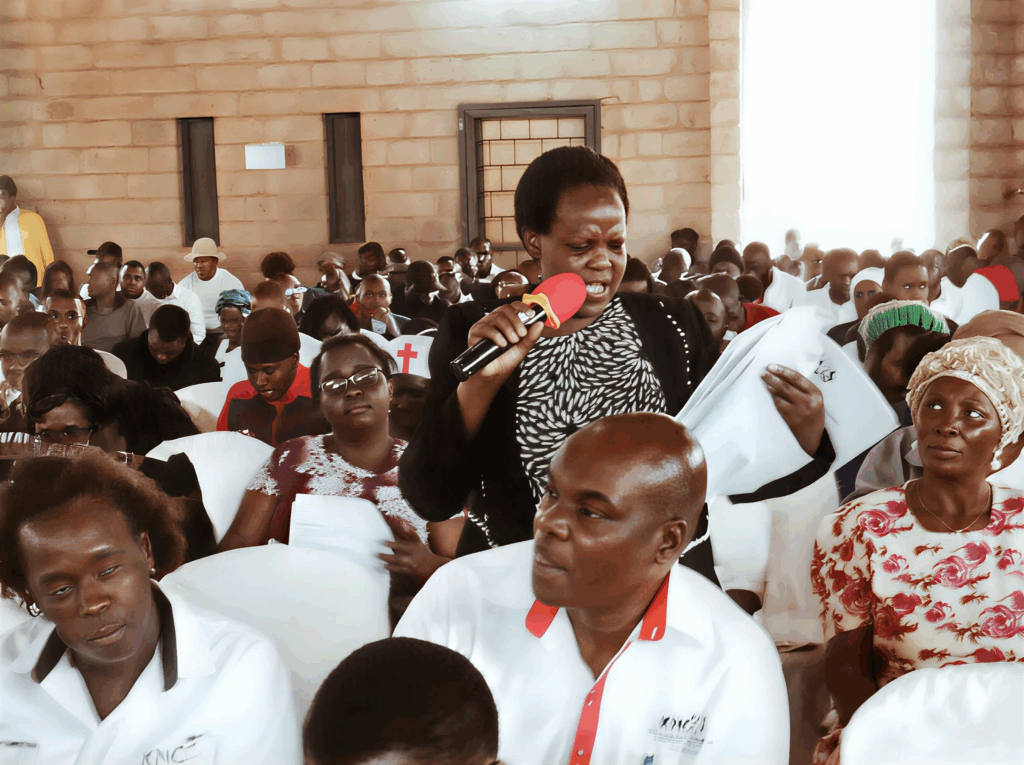
Meanwhile, in another public engagement meeting held in Kiminini, CEC for Sports, Gender, Youth, Culture and Tourism Eliud Tormoi reiterated the value of community participation in policy formulation. Photo/Courtesy
By Ruth Sang
Trans Nzoia County has announced a significant reduction in the Single Business Permit fee as part of a wider effort to spur economic activity, ease the financial pressure on traders, and deepen public participation in shaping county fiscal policy. The changes were unveiled on Tuesday by Finance and Economic Planning CEC Pepela Wanjala during a highly attended consultation forum on the proposed Finance Bill 2025/26 at the Kitale Museum.
According to Wanjala, the county has reviewed and adjusted several permit categories that mainly affect small- and medium-sized traders. The intention, he explained, is to promote compliance, stimulate growth among entrepreneurs, and respond to concerns raised over the cost of doing business. Among the sectors benefiting from the reductions are beauty parlours, small timber yards, medium-sized entertainment joints, kiosks, and various roadside traders—groups that have repeatedly voiced challenges over high operational expenses.
Wanjala reiterated that the county’s intention is to support local enterprise and ensure that the people are actively contributing to the decisions that touch on them. “These changes are designed to uplift our people and encourage business expansion,” he said. “We want wananchi to be part of every stage of managing county affairs, and your views will strongly influence the final Finance Bill.”
He added that the county was not just working on adjusting the fees but also seeking to update revenue collection systems in tandem with evolving business and community needs. The goal, he added, is to create a better business climate without sacrificing the revenues required to provide the critical public services.
Citizen Participation to the Forefront
Meanwhile, in a different public engagement meeting held in Kiminini, the CEC for Sports, Gender, Youth, Culture and Tourism, Eliud Tormoi, reiterated the importance of community participation in policy formulation. Tormoi reminded those present that participation is a constitutional requirement and also vital to efficient planning, prudent resource allocation, and open governance.
He explained that the revenue collected within the county funds essential development operations such as health facility construction and maintenance, improving roads, water supply, and upgrading of sports facilities. Tormoi called on the residents to give frank, practical suggestions that would assist the county in designing balanced revenue measures that encourage, rather than depress, economic activity.
“The growth of Kiminini lies in the hands of its own people,” he said. “Development can only be realized when residents support revenue systems and guide us toward what works best for all.”
County Advances Toward Fully Digital Revenue System
The County’s Acting Director of Revenue, Ibrahim Chisaka, also disclosed that Trans Nzoia is almost fully adopting a cashless revenue collection framework aimed at sealing loopholes, reducing corruption, and increasing efficiency. He called on traders to embrace digital payment systems and warned against cases where some individuals reverse mobile transactions after paying fees.
“When payments are reversed, it is the community that loses,” Chisaka cautioned. “These funds are important in the building of better infrastructure, improvement of service delivery, and maintaining clean and organized urban centers.”
Chisaka said the county plans to automate all major revenue streams, including markets, parking, land rates, and permit issuance.
Residents call for improved services and fair prices.
During the forums, residents brought forward various issues they felt the county should handle to make the environment supportive for business. Among these proposals were:
Enhancing market infrastructure, such as drainage, roofing, and stall layout
Digitization of payment systems to reduce congestion and increase transparency.
Reduced daily fees for petty traders
Installing more streetlights to improve safety and allow longer trading hours.
Providing reliable clean water and sanitation in trading hubs.
Offer clear information on how the community benefits from the revenue collected.
Some traders also suggested additional interventions, like business training programs for youth, easier access to credit, and continuous improvement in market hygiene.
County Reaffirms Its Commitment to Inclusive Development
County leaders were appreciative of the great public turnout, indicating that resident input is going to play a critical role in refining the final Finance Bill. They reassured citizens that their ideas stand to play an integral role in shaping fairer revenue measures reflecting local priorities. CEC Wanjala reiterated that work in the county goes beyond writing financial legislation. “Our objective is not just to approve a Finance Bill,” he said. “We want a system where residents feel valued, supported, and encouraged to grow their enterprises.” As Trans Nzoia advances reforms in permit fees, revenue automation, and public engagement, county officials hope these steps will pave the way for a more dynamic business sector and inclusive economic growth across all sub-counties.
About Author