Sudan Lifts 20-Month Ban on Kenyan Tea, Reopening Sh4.5 Billion Export Market
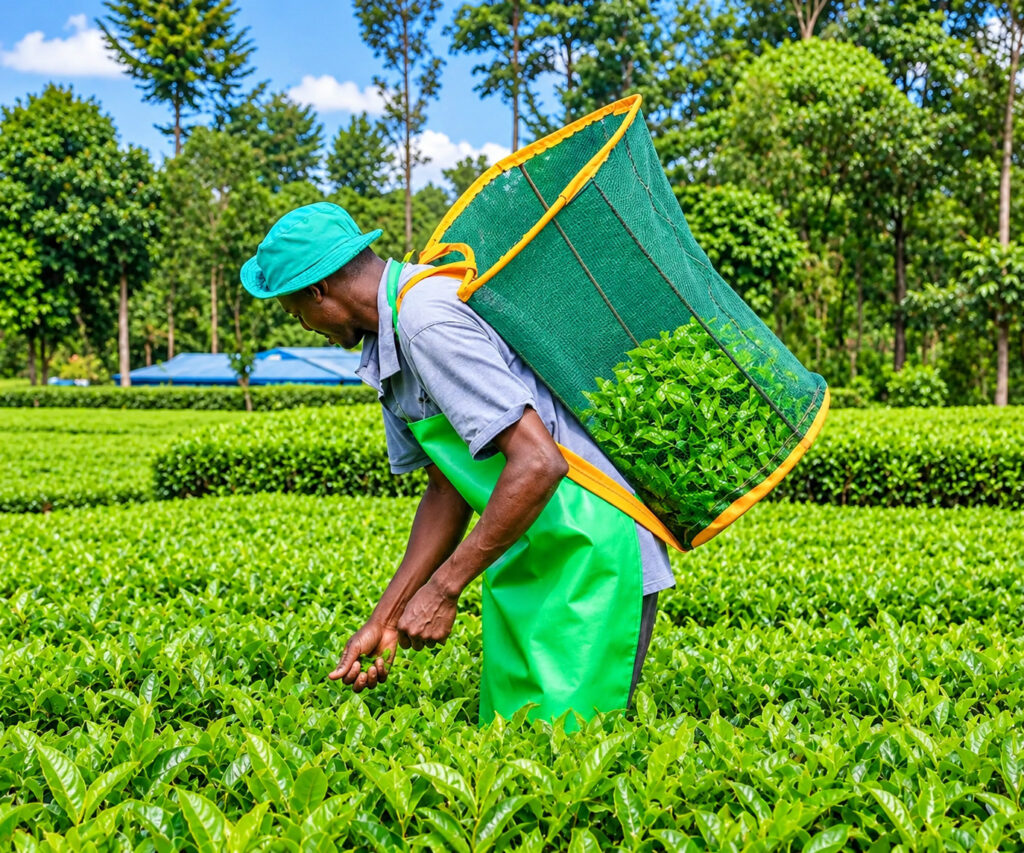
A tea farmer harvesting green leaves in a Kenyan tea plantation, highlighting the livelihoods supported by the country's multibillion-shilling tea industry.
By James Gitaka
Sudan has officially lifted its ban on tea imports from Kenya, ending a 20-month trade restriction that disrupted commercial relations between the two countries and cost Kenyan exporters billions of shillings in lost business.
The decision, formalised through Ministerial Order No. 25 of 2026 issued by Sudan’s Ministry of Industry and Trade on November 8, 2026, restores access to an important market for Kenyan tea and offers renewed prospects for farmers, processors, exporters and other players across the agricultural value chain.
The order, signed by Sudan’s Minister of Industry and Trade, Mahasin Ali Yaqoub, expressly lifts the prohibition on tea imports from Kenya and directs all relevant government authorities to implement the decision.
“The ban on tea imports from Kenya is lifted,” states the second section of the ministerial order, which further directs all relevant authorities to implement the decision.
The directive follows approval by Sudan’s Sovereignty Council through a letter dated November 2, 2026, and a subsequent Cabinet communication dated November 5, paving the way for the restoration of tea trade between the two countries.
The decision takes effect from the date of signing, November 8, and marks a significant diplomatic and economic breakthrough for Kenya, whose tea sector remains one of the country’s leading agricultural export earners.
The reopening is particularly significant for smallholder farmers in the Rift Valley, Central Kenya and other tea-producing regions, where millions of households depend on the crop for income and livelihoods.
Ruto credits diplomacy for lifting of ban
President William Ruto welcomed Sudan’s decision, attributing the breakthrough to diplomatic engagements with Sudanese Prime Minister Professor Kamil Idris on the sidelines of the Common Market for Eastern and Southern Africa (COMESA) Heads of State and Government Summit in Harare, Zimbabwe.
In a statement issued on November 11, the President said the development had restored an important market for Kenyan tea exporters and created renewed opportunities for farmers.
“Kenya welcomes and appreciates this decision, which reopens an important market for our tea, restores opportunities for our exporters and supports the livelihoods of our farmers and their families,” Ruto said.
He described the development as evidence of the value of diplomatic engagement in resolving trade disagreements and strengthening regional economic cooperation.
“This progress demonstrates what dialogue and constructive diplomacy can achieve. We look forward to strengthening our bilateral relations, expanding trade and working together for peace, stability and shared prosperity in our region,” he added.
The diplomatic breakthrough followed a series of engagements involving senior Kenyan officials, including Prime Cabinet Secretary and Foreign Affairs Cabinet Secretary Musalia Mudavadi and National Intelligence Service Director-General Noordin Haji.
The engagements culminated in the formal reversal of the trade restriction, which had become one of the most consequential economic outcomes of the diplomatic disagreement between Nairobi and Khartoum.
Tea exports to Sudan fell by more than half
Data released by the Tea Board of Kenya (TBK) following the lifting of the ban provides an indication of the economic impact of the trade restrictions.
According to the regulator, Kenyan tea exports to Sudan declined from approximately 20 million kilogrammes to 8.7 million kilogrammes during the restriction period.
The decline represented a contraction of about 56.5 per cent in export volumes.
Export earnings from the Sudanese market consequently fell from approximately KSh4.5 billion to KSh1.93 billion, representing a reduction of KSh2.57 billion, or about 57 per cent.
The figures illustrate the extent to which the trade dispute affected one of Kenya’s important tea export destinations.
In a statement welcoming the decision, the Tea Board of Kenya said the reopening offered an opportunity to rebuild export volumes, recover lost earnings and strengthen Kenya’s international market position.
“The lifting of the ban presents renewed opportunities to restore export volumes, recover earnings, strengthen bilateral trade and expand market access for Kenyan tea,” the regulator said.
The board described the development as positive for the country’s tea industry, exporters, producers and the wider tea value chain.
The recovery, however, will depend on how quickly exporters re-establish commercial relationships with Sudanese importers and how much demand the market can absorb.
A multibillion-shilling industry gets a new opportunity
Sudan’s decision comes at a time when Kenya’s tea industry continues to play a critical role in the country’s foreign exchange earnings, agricultural employment and rural economic development.
According to the Tea Board of Kenya’s 2025 Industry Performance Report, the country exported 652.80 million kilogrammes of tea during the year, compared with 594.50 million kilogrammes in 2024.
The export volume represented a 9.81 per cent increase.
Despite fluctuations in international commodity prices and market conditions, Kenya generated approximately KSh186.91 billion from tea exports in 2025, compared with KSh181.69 billion in the preceding year.
The total marketed value of the tea industry, including exports, local sales and committed stocks, reached KSh218.79 billion.
Kenya shipped tea to 100 international destinations, underscoring the industry’s importance to the country’s export diversification strategy.
The restoration of the Sudanese market could strengthen these figures by providing an additional outlet for Kenyan tea, particularly the black Crush, Tear and Curl (CTC) variety widely consumed in Sudan and other Middle Eastern and African markets.
What the reopening means for Kenyan tea farmers
For smallholder farmers, the significance of the decision extends beyond diplomatic relations and international trade statistics.
Kenya’s tea industry is heavily dependent on smallholder production, with farmers delivering green leaf to processing factories before the finished product is sold through the Mombasa auction and other export channels.
When a major export destination becomes inaccessible, the consequences can spread across the entire production and marketing chain.
Reduced demand can affect factory sales, inventory management, auction participation and the prices exporters are willing to pay for Kenyan tea.
The loss of a market can also increase pressure on exporters seeking alternative buyers, particularly when tea grades and blending specifications have been tailored to particular consumer markets.
The restoration of Sudanese demand could therefore provide several benefits.
First, increased competition among buyers could improve demand for Kenyan black tea and help exporters dispose of accumulated stocks.
Second, improved export orders could strengthen factory cash flows, supporting operations and the capacity of factories to meet their financial obligations to farmers.
Third, renewed business could increase foreign exchange earnings and reinforce the economic importance of tea-producing communities.
However, the lifting of the ban does not automatically translate into higher payments to farmers.
The prices farmers receive depend on several factors, including the Mombasa auction performance, international demand, production costs, factory management and the distribution of earnings through the tea payment system.
The extent to which farmers benefit will therefore depend on whether renewed export business translates into stronger prices and improved returns at the farm gate.
Sudan’s trade restrictions followed diplomatic dispute over RSF
The trade dispute dates back to March 2025, when Sudan suspended imports of Kenyan products following Nairobi’s hosting of political meetings involving representatives of the Rapid Support Forces (RSF), the paramilitary organisation engaged in a devastating conflict against Sudan’s national army.
Sudan’s military-led authorities viewed Kenya’s engagement with the RSF and its allied political groups as interference in the country’s sovereignty and internal affairs.
The diplomatic disagreement subsequently spilled into commercial relations, with Khartoum announcing restrictions on Kenyan-origin goods entering Sudan through its ports, airports and land crossings.
The original restrictions affected more than tea, although tea was among the most economically significant Kenyan exports to the Sudanese market.
The conflict between Sudan’s army, led by General Abdel Fattah al-Burhan, and the RSF, commanded by Mohamed Hamdan Dagalo, has devastated the country since April 2023.
The war has triggered a major humanitarian emergency, displacement, economic disruption and the breakdown of essential public services.
The diplomatic tensions surrounding Kenya’s engagement with Sudanese political actors consequently exposed Kenyan businesses to the economic risks associated with the conflict.
The lifting of the tea restriction now provides an opportunity for Nairobi and Khartoum to rebuild commercial relations, although it does not necessarily resolve all outstanding political disagreements.
Kenya’s export concentration highlights importance of market diversification
The Sudanese development also draws attention to Kenya’s dependence on a relatively small number of international tea buyers.
The Tea Board of Kenya’s 2025 performance report identifies Pakistan as the country’s largest tea export destination, importing approximately 235.13 million kilogrammes during the year.
Egypt imported approximately 90.70 million kilogrammes, while the United Kingdom accounted for 56.39 million kilogrammes.
Pakistan alone represented approximately 36 per cent of Kenya’s total tea export volume.
Although Kenya exported tea to 100 destinations, the concentration of purchases among a handful of major markets exposes the industry to geopolitical tensions, currency fluctuations, shipping disruptions and changes in consumer demand.
The Sudanese market’s return could help improve diversification and reduce the pressure on exporters to depend on a limited number of major destinations.
It also reinforces the need for Kenya to pursue stronger commercial relationships across Africa, the Middle East, Asia and emerging international markets.
Shipping disruptions and geopolitical tensions remain a threat
Sudan’s decision comes against the backdrop of wider geopolitical challenges affecting Kenya’s agricultural exports.
In April 2026, Reuters reported that shipping disruptions linked to the Iran conflict had affected Kenyan tea exports, leaving approximately eight million kilogrammes of tea in warehouses in Mombasa.
The report quoted East Africa Tea Traders Association head George Omuga, who estimated that the industry was losing approximately US$8 million weekly following disruptions that began in March.
The Middle East accounts for a substantial share of Kenya’s tea export market, making shipping routes through the region particularly important to exporters.
Disruptions along key maritime routes increase freight charges, insurance premiums and delivery times, potentially reducing the competitiveness of Kenyan tea in international markets.
The experience demonstrates that restoring access to Sudan is only one part of a wider challenge facing Kenya’s tea industry.
The country must also safeguard its shipping routes, strengthen trade diplomacy and diversify its international customer base.
Implementation and commercial negotiations will determine the gains
Although Sudan’s ministerial order provides the legal basis for resuming tea imports, the next stage will involve translating the decision into actual commercial transactions.
Kenyan exporters will need to reconnect with Sudanese importers, negotiate new supply agreements, establish payment arrangements and confirm applicable customs and quality-control requirements.
The Kenyan government, through the Ministry of Investments, Trade and Industry, the Ministry of Agriculture and the Tea Board of Kenya, will also have a role in supporting exporters and facilitating the restoration of trade.
Sudan’s continuing conflict presents another important consideration. Insecurity, economic instability, disrupted infrastructure and financial constraints could affect the speed and scale of renewed imports.
The ministerial order does not specify the volume of tea Sudan intends to purchase, the value of new contracts or the timetable for the arrival of the first consignments.
Consequently, the immediate economic benefits will depend on the willingness and ability of Sudanese buyers to resume purchasing Kenyan tea.
For farmers, the most important indicator will be whether the reopening translates into sustained demand, stronger factory sales and improved returns for their produce.
About Author