Stronger Institutions Key to Realising 2010 Constitution’s Promise, Leaders Say on Katiba Day
The President reminded the gathering that the 2010 Constitution was designed both to limit power and to ensure the government uses that power to serve the people.
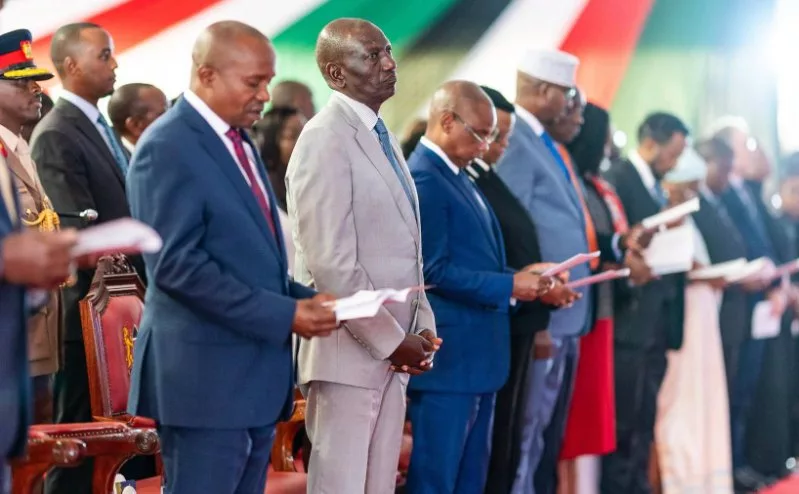
Photo: Courtesy.
By Robert Mutasi
Kenya marked the 16th anniversary of its 2010 Constitution on Thursday with a clear message from the country’s top leaders: stronger institutions and deeper accountability are essential if the document’s promises are to become everyday reality for ordinary citizens.
The Katiba@16 celebrations, held at the Kenyatta International Convention Centre in Nairobi, brought together President William Ruto, Deputy President Kithure Kindiki, and heads of key constitutional and accountability bodies. Speakers repeatedly stressed that the Constitution’s success cannot rest on its text alone. It depends on institutions that function effectively, cooperate with one another, and deliver tangible results.
President Ruto set the tone by declaring that Katiba Day must go beyond ceremonial speeches. “Katiba Day, sixteen years later, must be more than an annual anniversary. It must be a day of national accounting,” he said. He called on the Executive, Parliament, Judiciary, county governments, constitutional commissions and independent offices to honestly assess whether they have used their powers responsibly and fulfilled the rights the Constitution guarantees.
The President reminded the gathering that the 2010 Constitution was designed both to limit power and to ensure the government uses that power to serve the people. “Our responsibility is to uphold both obligations: power must be managed and rights must be assured,” he said. He highlighted Article 43, which guarantees rights to healthcare, housing, food, clean water, social security and education, describing these as “fundamental rights” rather than decorative clauses.
Ruto insisted that the real test of constitutional implementation is not how often officials quote the document or publish statistics, but whether the daily lives of Kenyans reflect its promises. He pointed to progress under the Bottom-Up Economic Transformation Agenda, including the registration of more than 32.4 million people with the Social Health Authority, the recruitment of over 100,000 Community Health Promoters, the construction of more than 274,000 affordable homes, the hiring of more than 100,000 teachers and the building of 23,000 classrooms. Yet he openly acknowledged that much work remains unfinished.
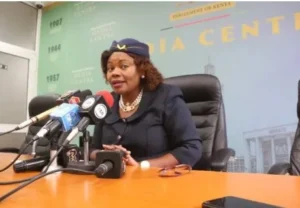
Attorney General Dorcas Oduor focused on the institutional architecture created by the Constitution. She described constitutional commissions and independent offices as vital guardians of democracy, accountability and the rule of law. While these bodies are independent, she cautioned, they are not meant to operate in isolation. “Our institutions are independent, but they are not isolated,” Oduor said. “Independent, yes, but interdependent. Different mandates, but one constitutional mission. Different institutions, but one people. And ultimately, one Constitution.”
She stressed that true institutional strength lies not merely in legal powers but in the ability to exercise those powers lawfully, fairly and effectively — resisting improper influence while remaining open to legitimate scrutiny.
Auditor General Nancy Gathungu reinforced the citizen-centred view of accountability. Kenyans, she said, no longer accept official claims of progress at face value. They judge government performance through their own lived experiences. She also raised a practical concern: chronic underfunding of constitutional commissions and independent offices risks weakening their capacity to carry out their mandates.
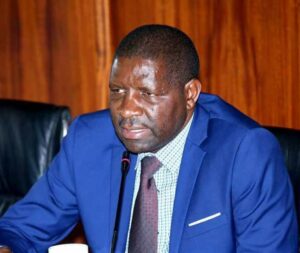
Ethics and Anti-Corruption Commission Chairman David Oginde turned the spotlight on corruption. He called for a fundamental change in how public officials regard state resources, insisting they must be treated as a public trust rather than personal opportunity. “The resources that come to us are not for us to use. It is for the public good,” he said. Stronger laws alone would not end graft, he argued, unless officials accept personal responsibility. He also urged cooperation with constitutional bodies investigating wrongdoing, noting that requests for information come from the Constitution itself, not from any individual official.
The speeches at Katiba@16 revealed both progress and persistent gaps. While the Constitution provides a robust framework, its full realisation depends on institutions that are properly funded, free from improper interference, and focused on delivering results that citizens can feel in their daily lives. Sixteen years on, the central challenge remains clear: turning constitutional ideals into lived experience for all Kenyans.
About Author