State to Reclaim Leased Sugar Mills After 30 Years, CS Kagwe Tells Parliament
The CS further addressed MPs’ concerns on possible monopolisation of the sugar industry, insisting the fears were misplaced.
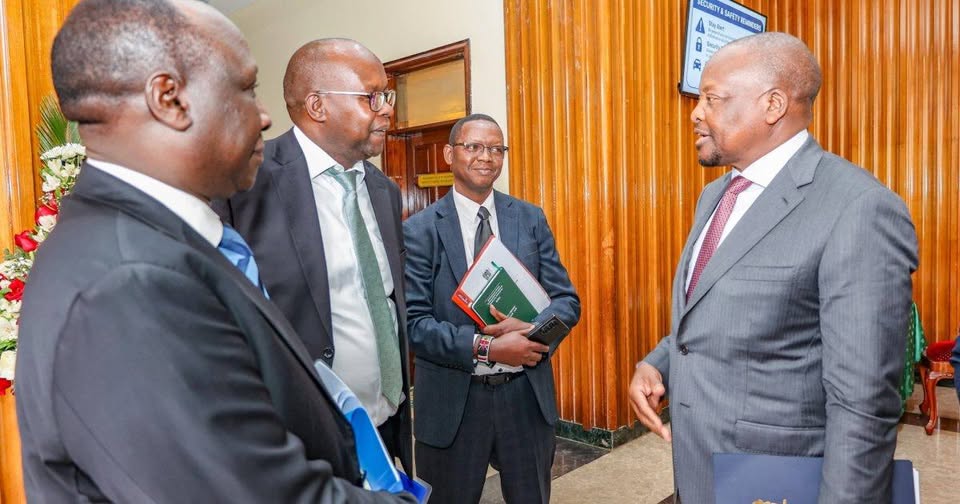
Agriculture Cabinet Secretary (CS) Mutahi Kagwe .Photo/Courtesy
By Ruth Sang
Agriculture Cabinet Secretary Mutahi Kagwe has assured MPs that the Government will fully repossess all leased assets and investments made in four state-owned sugar mills at the expiry of their 30-year concession period. Speaking before Parliament, Kagwe said that both the original infrastructure and any additional investments undertaken by private millers during the lease tenure will revert to the State in line with the agreements signed.
The four mills — Sony, Nzoia, Chemelil and Muhoroni — were officially handed over to private operators on 10 May 2025 under long-term concessions intended to modernise factory operations, boost cane development and revive Kenya’s struggling sugar sector. The CS revealed that Busia Sugar Industry Ltd took over the running of Sony, West Kenya Sugar Company Ltd assumed control of Nzoia, Kibos Sugar & Allied Industries Ltd won the lease for Chemelil, while Muhoroni was allocated to West Valley Sugar Company Ltd.
Kagwe outlined the financial obligations of the lessees, noting that each investor is required to pay an annual rent of Sh40,000 per hectare for Chemelil, Muhoroni and Sony, while Nzoia will attract Sh45,000 per hectare. In addition, millers must remit concession fees of Sh4,000 per tonne of sugar and Sh3,000 per tonne of molasses, as well as make a one-off goodwill payment during the first year of the agreement.
He said the lease terms require millers to invest heavily in cane development, factory rehabilitation, new technologies and diversification into cogeneration, bioethanol and other value-added sugar by-products. Kagwe said the entire factory ecosystem including nucleus estates and standing cane was leased as a composite asset. “The Government leased the entire factory ecosystem as a composite asset, meaning nucleus land and standing cane were not valued separately,” he said.
The CS further addressed MPs’ concerns on possible monopolisation of the sugar industry, insisting the fears were misplaced. He cited the Sugar Act, 2024 that set up the Kenya Sugar Board with wide-ranging regulatory powers over milling operations. He also referred to the Competition Act prohibiting any single firm from controlling over 50 percent of the national sugar market. “No miller exceeds this threshold,” Kagwe asserted, adding that proceeds from the leases will directly benefit the farmers through bonuses, cane development and infrastructure projects.
Kagwe also addressed the perennial Miwani Sugar land dispute, saying that conflicting court decisions on the ownership of LR No. 7545/3 have delayed the implementation of the project. The matter, he said, is now pending before the Court of Appeal, adding that the Cabinet has instructed the Ministry and the AG to pursue an out-of-court settlement with Crossley Holdings to ensure public interest is protected and the way forward for the redevelopment of the land ensured. Reassuring Parliament, Kagwe reiterated that the leasing model aims to revive production, reduce losses, attract private investment, and secure the livelihoods of sugar farmers. At the end of the 30-year lease term, he noted, all factory assets and improvements made by private operators will revert to full State ownership, marking what the Government hopes will be a revitalized future for Kenya’s sugar belt.
About Author