Ruto Defends Nairobi Drainage Reforms, Warns Cartels Amid Flood Crisis Crackdown
The announcement comes weeks after the city recorded over 40 fatalities following the heavy downpours that triggered flash floods.
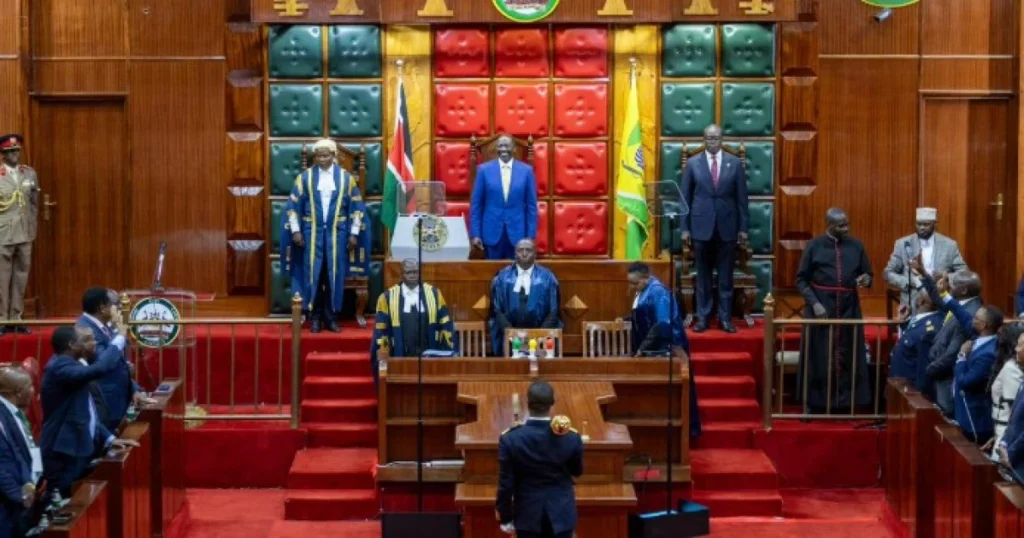
President William Ruto addresses the Nairobi County Assembly on April 9, 2026.Photo/Courtesy
By Ruth Sang
President William Ruto has defended ongoing efforts to restore Nairobi’s drainage systems, questioning criticism from residents even as the government moves to address persistent flooding in the capital.
Speaking on the matter, the Head of State said meaningful reforms would require residents to endure temporary disruptions, warning against resistance to measures aimed at fixing long-standing infrastructure challenges.
“If we’re not prepared to bear the temporary inconvenience of fixing this city, then we must stop pretending that we’re serious about changing it,” Ruto stated.
The President said the interventions demonstrate his administration’s determination to restore order in Nairobi, even if they involve difficult decisions that may affect key installations and communities.
At the same time, Ruto issued a stern warning to what he termed as “Nairobi cartels,” accusing certain individuals and groups of benefiting from disorder within the city.
“There are people who benefit from this dysfunction… there are cartels who profit from disorder, interests that thrive in illegal connections, illegal dumping, illegal occupation, illegal construction, and broken systems. We must, as a leadership, confront cartels and brokers and those who wish to benefit unjustly from the people of Kenya,” he said.
The President’s remarks follow a letter dated April 7, 2026, from the Nairobi Rivers Commission to State House Comptroller Katoo Ole Metito, seeking access to a protected area to facilitate proper demarcation of riparian land.
Part of the notice indicated that adjustments would be required to align with official guidelines.
“You will be requested to adjust the wall in compliance with the demarcation notice issued by the Multi-Agency team in compliance with the gazette notice,” read part of the communication.
The push for reforms comes in the wake of recent heavy rains that caused flash floods in Nairobi, resulting in more than 40 deaths and widespread destruction.
In response, Nairobi Governor Johnson Sakaja ordered the demolition of illegal structures built along riverbanks and directed the relocation of individuals occupying riparian land as part of a broader flood mitigation strategy.
“This is not a one-off exercise. It is a sustained effort to reclaim our rivers and prevent further loss of life and property,” Sakaja said in a statement issued on March 19, 2026.
Authorities say the ongoing interventions are aimed at improving drainage systems, restoring river channels, and enhancing the city’s resilience to extreme weather events as part of long-term urban planning reforms.
About Author