Ruto Defends Finance Act 2026, Says New Law Introduces No Additional Taxes on Kenyans
The President further said the Act was the product of extensive public participation and consultations conducted across the country.
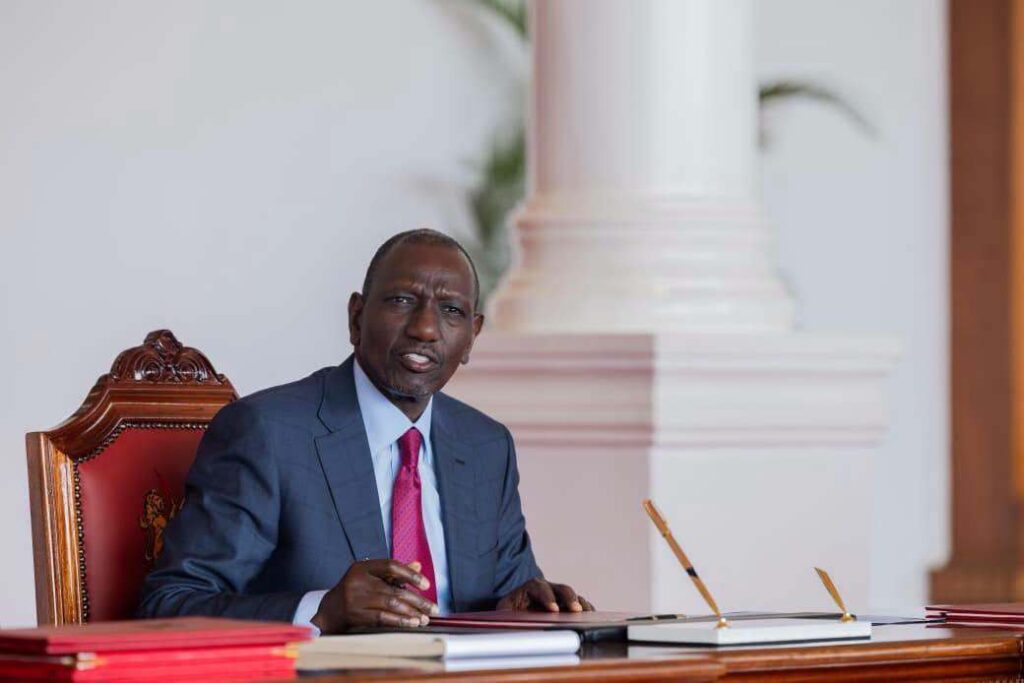
President William Ruto. Photo: Courtesy.
By Fredrick Oseko
President William Ruto has defended the newly enacted Finance Act 2026, stating that the legislation does not introduce any new taxes on ordinary Kenyans but instead focuses on improving tax compliance, enhancing accountability and sealing loopholes that have led to revenue losses.
Speaking after assenting to the Bill, the President said the law is intended to create a fairer tax system by ensuring that individuals and businesses pay taxes already required under existing laws while protecting citizens from additional financial burdens.
Ruto maintained that the government’s objective is to broaden the tax base through improved compliance rather than increasing tax rates or introducing fresh levies.
“The Finance Act 2026 is about fairness, accountability and ensuring that everyone pays what is legally due. It does not impose new taxes on ordinary Kenyans,” the President said.
According to the Head of State, the reforms contained in the legislation are expected to strengthen revenue collection and provide the government with resources needed to finance development projects, improve public services and create employment opportunities.
He noted that enhanced tax administration would help address revenue leakages that have historically reduced the amount of funds available for national development.
The President further said the Act was the product of extensive public participation and consultations conducted across the country, adding that views submitted by Kenyans played a key role in shaping the final legislation.
Ruto argued that the government had listened to public concerns and adjusted several proposals to ensure that the law reflects the interests of citizens while supporting economic growth.
The President also dismissed reports circulating on social media and other platforms claiming that the Finance Act 2026 introduces taxes on freehold land, second-hand clothing commonly known as mitumba, bottled water and rental income.
He described the reports as misleading and urged the public to seek information from official government sources.
“There are claims that the Act introduces taxes on freehold land, bottled water, mitumba and rental income. Those claims are false and misleading,” he said.
The Head of State emphasized that the legislation seeks to promote equity within the tax system by ensuring that taxpayers contribute fairly according to existing legal obligations.
He added that improved compliance mechanisms and the closure of tax loopholes would enable the government to increase revenue without resorting to punitive taxation measures that could affect low-income earners.
The Finance Act 2026 forms part of the Kenya Kwanza administration’s broader economic strategy aimed at strengthening public finances, supporting business growth and creating a sustainable framework for revenue generation.
Government officials have argued that improved tax administration will help reduce dependence on borrowing while providing resources for infrastructure development, healthcare, education and other public services.
The legislation comes at a time when the government is under pressure to balance revenue collection with concerns over the cost of living, following widespread public opposition to tax proposals contained in previous finance bills.
Ruto, however, insisted that the new law strikes the right balance between raising government revenue and protecting citizens from additional tax burdens, describing it as a key component of the country’s long-term economic transformation agenda.
About Author