Religious Leaders in Uasin Gishu Raise Objections to Proposed Church Regulations
They were warning against overregulation or ill-considered regulation, which might negatively impact such roles and affect social fabrics.

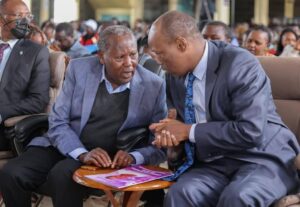
They said meaningful participation requires clear, simplified, and accessible information to enable the public to engage effectively.Photo/Courtesy
By Ruth Sang
Religious institutions in Uasin Gushu County have strongly disagreed with draft rules aimed at controlling churches and other religious institutions in Kenya. The religious bodies have expressed discontent in a manner described in the draft rules, which they claim does not meet the standards enshrined in the Constitution of Kenya, especially with regards to public participation and freedom of religion.
These sentiments arose during a public forum that took place in December and saw religious leaders and other people in society come together. The forum was facilitated by the chair of the Law Society of Kenya in the North Rift region, named Oscar Oduor, who faulted the way in which the rules were presented. The proposals were basically developed in government offices without consulting major stakeholders such as religious leaders and followers.
The religious leaders participating in this forum emphasized that all people have a right to freedom of religion, belief, and expression under the Constitutions. They noted that all matters pertaining to places of worship were supposed to be developed in a way that all people participated freely in such matters.
Mr. Oduor observed that the whole process seemed hurried and not well-arranged, with public notifications being done late in a manner that did not allow sufficient time for consideration of the proposed rules by the people. Such a manner, he says, affects the constitutional requirement of people participation, which is a vital part of democratic governance in Kenya.
“The Constitution is quite clear on issues of religious freedom and belief. Places of worship are shielded institutions, and any control over them must be in line with both letter and spirit of the law,” Oduor stated. “Public participation must have depth and not be reduced to a mere formality,”
Additionally, they were concerned with the memorandum used to inform the public on how to make their comments. They considered this document to be very long and technical, making it incomprehensible to common people. As stated by religious leaders, information ought to be simplified in order to allow common people to take part in a given process.
During this forum, a number of people raised questions concerning the intent of this regulation and whether this regulation will aid in ensuring a public interest or will rather detrimentally regulate churches. Additionally, ill-designed or overly broad regulatory guidelines might impact freedom of religion with respect to worship, church governance, and other programs conducted by religious institutions.
The leaders emphasized the critical role religious institutions have in society, such as providing spiritual guidance, education, social support, and humanitarian aid to people in need. They were warning against overregulation or ill-considered regulation, which might negatively impact such roles and affect social fabrics.
The views of citizens in this case were echoed by those in the public forum, where they were inadequately briefed on the proposals being put forth in regulation form.
Religious bodies threatened that they may resort to using public interest litigation if their fears are not ignited. They emphasized that the Constitution offers ways and channels through which people can contest laws and/or regulations enacted without engaging the public.
“We do not have a problem with regulation,” a spokesperson stated. “But any form of regulation must be legal, consultative, and constitutional. Consent and dialogue are vital in arriving at a consensus on how all Kenyans can have their freedoms protected,” The various groups have now called upon the relevant authorities to put a halt to the existing process and reopen consultations with religious bodies and the general public in order to allow for incorporation of constitutional values in the final rules.
About Author