MTAKA App: The Tech-Driven Waste Revolution Transforming Lives in Kisumu
Eldoret Media Hub April 8, 2026 0“The city generates between 400 and 600 tones of waste ,driven by a population of over one million residents. However only 20 to 30 percent of this waste is formally collected,”
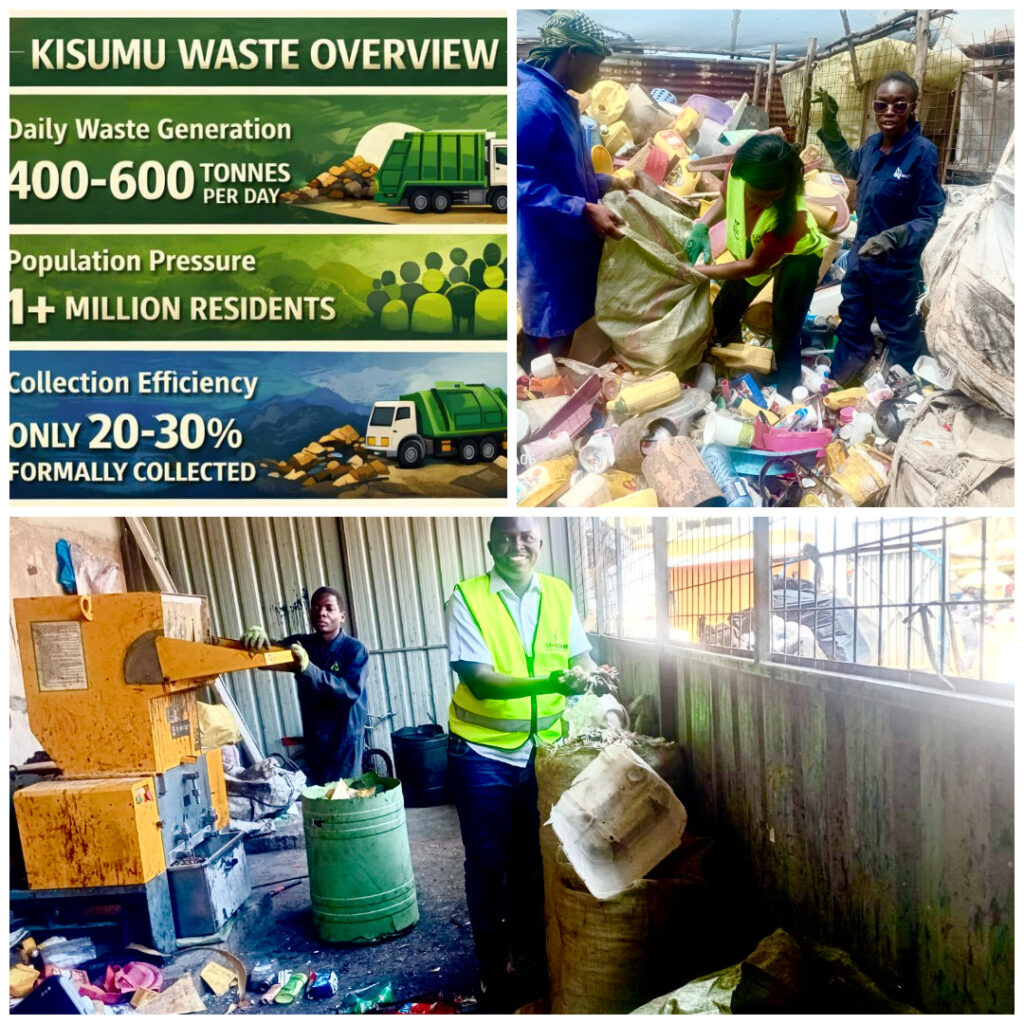
Renise Atieno Olwala and members of Amazing Grace Youth Group sort and segregate recyclable waste at their aggregation centre in Nyalenda, Kisumu. Photo by Grace Wafubwa.
By Grace Wafubwa, Feature Writer
In the informal settlements of Kisumu, where waste management has long posed a significant environmental and public health challenge, a quiet revolution is taking shape—powered by technology and driven by community innovation. At the heart of this transformation is MTAKA, a mobile application that is streamlining waste collection, enhancing data visibility, and unlocking new economic opportunities across the waste value chain.
For Renise Atieno Olwala, a 27-year-old operations manager at Amazing Grace Youth Group in Nyalenda, the impact of this innovation is deeply personal. The group, established in 2020 and comprising 17 members, specializes in household waste collection, handling everything from organic waste and plastics to paper and glass. Operating from an aggregation center within the estate, the group coordinates a network of waste pickers and community members who supply recyclable materials. On a typical day, deliveries range from used cartons and plastic bottles to glass and organic waste, all of which are sorted, graded, recorded, and prepared for transfer to processing centers. Despite the labor-intensive nature of the work, which requires strict use of protective gear to prevent infections, the initiative has become a vital source of income for many.
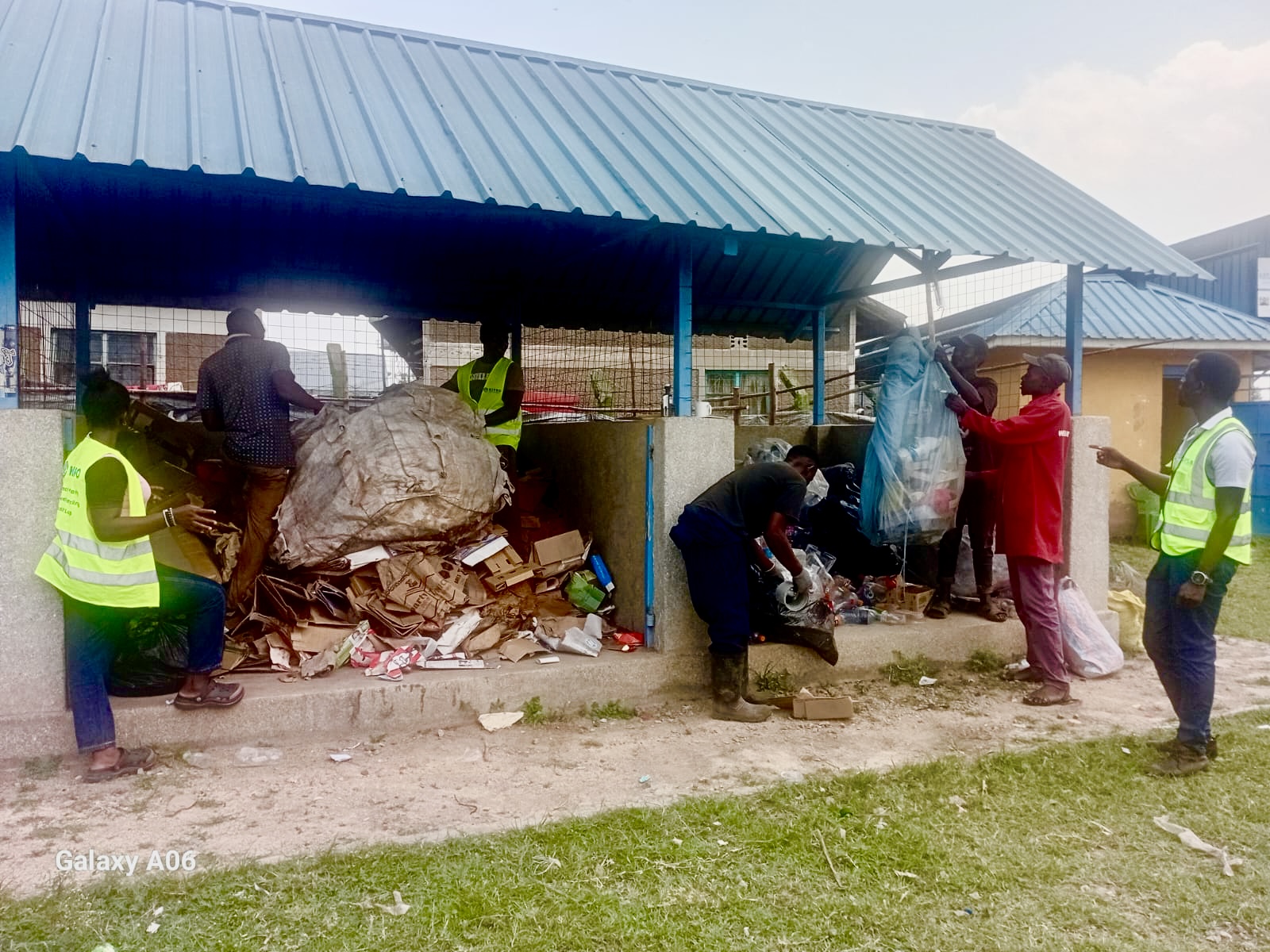
Through this model, the group has directly employed more than 200 young people while also supporting at least two women-led groups. However, managing such a complex operation presented logistical challenges, particularly in record-keeping and coordination. The introduction of the MTAKA app has since transformed these processes. According to Renise, the platform has significantly improved the tracking of waste volumes, enhanced data visibility, and streamlined record-keeping, all of which are critical for ensuring both sustainability and financial accountability. The app provides real-time data, capturing client details and waste quantities, thereby strengthening transparency across the entire operation.
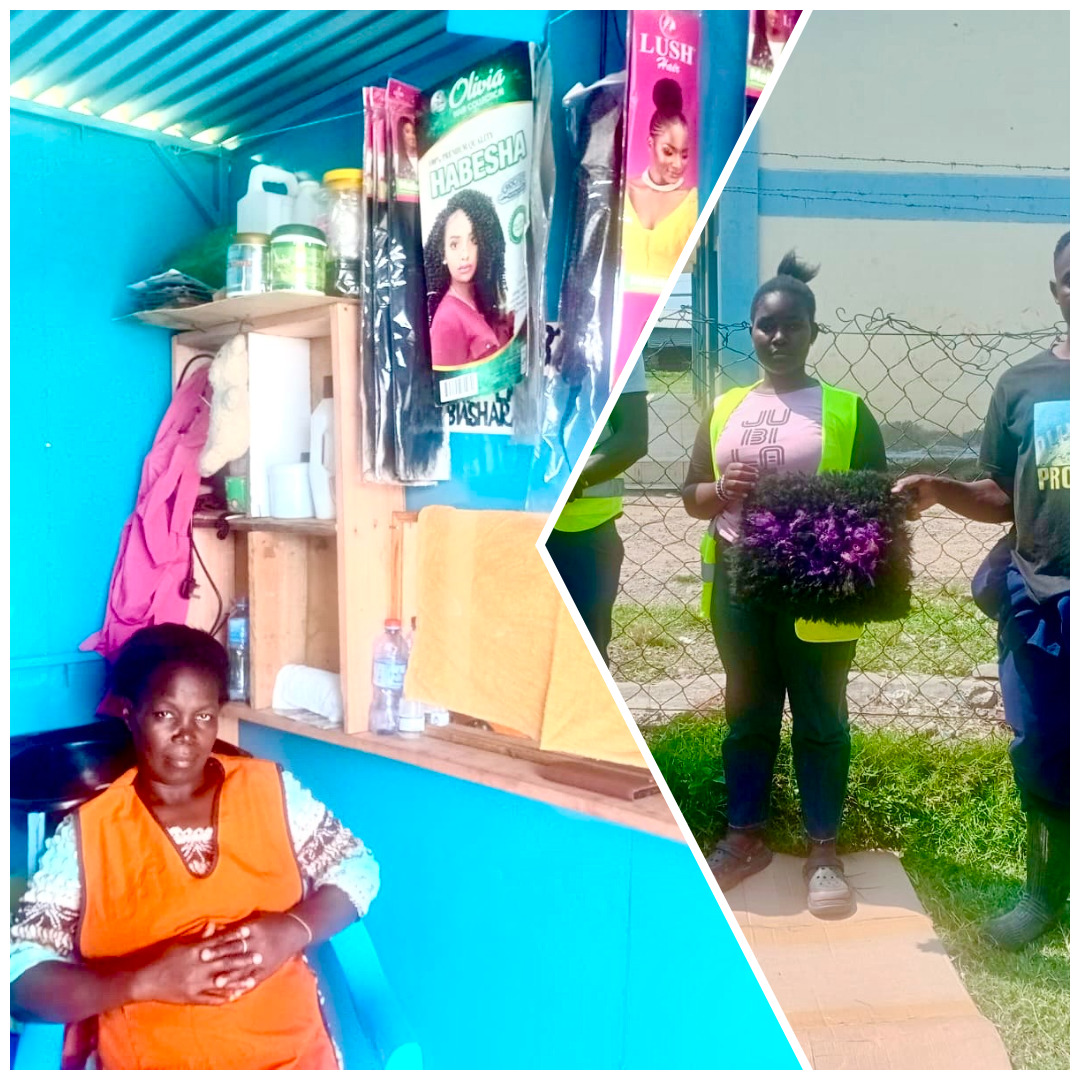
Across Kisumu, similar stories of innovation are emerging. In the Manyatta area, 22-year-old entrepreneur Dennis Omondi has built a growing enterprise through his organization, Green Core International. His initiative engages youth in recycling, reuse, and material recovery, extending services to households, schools, and institutions. By adopting a multi-sectoral approach that integrates clean-up exercises, tree planting, and circular economy practices, Dennis is not only addressing waste management but also promoting environmental restoration within the community. One of his most unique innovations involves recycling used human hair extensions into products such as doormats, carpets, and liner bags—a concept that has created new value from materials previously considered waste.
This model has also fostered partnerships with local businesses, particularly salons. Joyce Ingata, the proprietor of Blessings Salon in Kasawino, is among those who have embraced the initiative. By setting aside a collection point for used hair extensions, she contributes to the recycling chain while maintaining a cleaner working environment. She notes that the initiative has helped prevent littering and drainage blockages near her premises. On average, her salon generates at least three kilograms of recyclable waste each month, all of which is tracked and managed through the MTAKA platform. She has since encouraged fellow salon operators to adopt similar practices as a sustainable alternative to conventional waste disposal.
Behind the MTAKA app is Benson Abila, a 32-year-old founder whose journey reflects resilience and vision. Having grown up as an orphan, Abila once worked as a waste picker at the Kachok dumpsite in Nyalenda. He later pursued civil engineering at the University of Nairobi, equipping himself with the technical expertise that would eventually shape his entrepreneurial venture. Driven by a desire to dignify waste workers and reposition waste as a valuable resource, he developed MTAKA as a digital solution to formalize and optimize waste management systems. His concept gained support from the Kisumu County Government, which facilitated access to aggregation facilities near the main bus park, accelerating the app’s implementation.
The MTAKA system operates by connecting households directly to aggregation centers through a structured digital platform. Youth and women groups are registered, vetted, and assigned specific zones where they manage waste collection and sorting. Materials are categorized into plastics, glass, paper, and organic waste before being sold to recycling companies, generating income for the groups. The system also incorporates performance monitoring and compensation mechanisms, ensuring accountability and efficiency in service delivery. Through its integrated ERP framework, the platform enables real-time tracking of waste collection, providing accurate data that supports both operational and financial decision-making.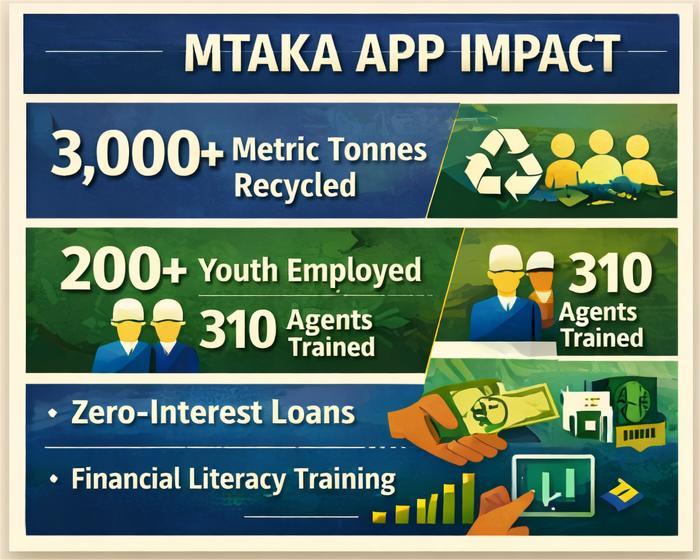
Beyond logistics, MTAKA is also addressing financial exclusion within the waste sector. Many waste pickers have historically struggled to access credit due to the informal nature of their work. To bridge this gap, the platform has introduced an innovative credit scheme that offers zero-interest loans to registered members, alongside financial literacy training. This approach has empowered workers to invest in protective equipment and expand their operations, further enhancing the dignity and sustainability of their work.
The impact of the initiative is already evident. To date, more than 310 waste agents have been trained in financial literacy and credit management, while over 3,000 metric tonnes of waste have been recycled through aggregation centers. These achievements highlight the growing role of technology in transforming waste management into a viable economic sector.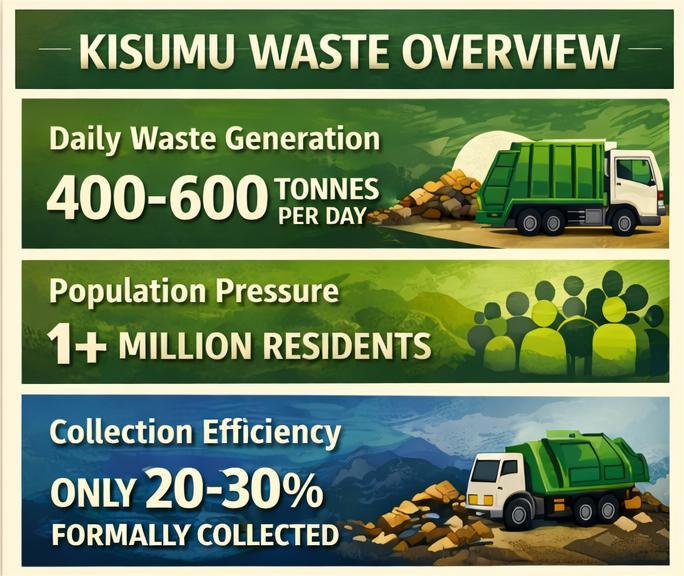
At a broader level, the initiative is contributing to environmental conservation, particularly in safeguarding Lake Victoria from pollution. By reducing plastic waste and promoting proper disposal practices, the system is helping to minimize contamination that threatens aquatic life and human health. Improved waste management at the household level has also created opportunities for community advocacy, including clean-up campaigns, tree planting, and behavioral change initiatives. Digital platforms such as Facebook and Twitter have further amplified these efforts, reshaping public perceptions and positioning waste management as a legitimate and valuable profession.
Regulatory support has also played a key role in sustaining these gains. The National Environment Management Authority (NEMA) in Kisumu County has recognized the app’s contribution to improving waste segregation and disposal practices. Through collaboration with county authorities and waste handlers, systems have been put in place to ensure compliance with environmental laws, including the separation of waste into organic, general, and recyclable categories. The implementation of Extended Producer Responsibility regulations has further strengthened accountability, requiring producers to take part in the disposal of their products. Increased inspections and enforcement measures have helped deter illegal dumping while promoting responsible waste handling across the city.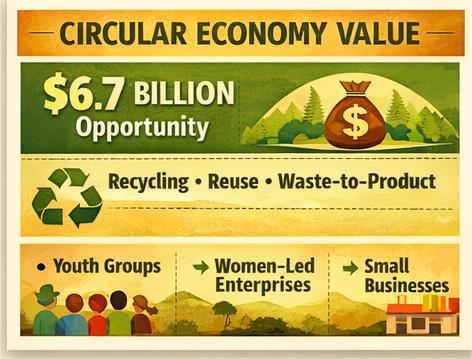
Despite these advancements, Kisumu continues to face significant waste management challenges. The city generates between 400 and 600 tones of waste , driven by a population of over one million residents. However, only 20 to 30 percent of this waste is formally collected, leaving a large portion to be disposed of through informal methods such as open dumping, burning, or burial. These practices contribute to environmental degradation, air pollution, blocked drainage systems, and the spread of diseases such as cholera and typhoid.
It is within this context that MTAKA stands out as a scalable and transformative solution. By integrating technology with community-driven approaches, the platform is not only improving efficiency in waste management but also unlocking a multi-billion-dollar circular economy opportunity. Through enhanced data systems, market access, and value chain integration, it is empowering youth and women while redefining how urban waste is managed.
As Kisumu continues to grow, the success of MTAKA offers a compelling model for other cities grappling with similar challenges. It demonstrates that with the right combination of innovation, policy support, and community engagement, waste can be transformed from a persistent problem into a powerful engine for economic and environmental progress.
About Author

Eldoret Media Hub
Eldoret Media Hub, a working space for journalists based in Uasin Gishu County set up by the Uasin Gishu Journalists Association (UGJA) through a Media Council of Kenya (MCK) grant.
The facility was officially opened in August 2021 by the MCK Chief Executive Officer David Omwoyo.