Kenyans Return Home From South Africa Amid Unrest
Bailan Wambogo, who had lived in South Africa for several years, said he was relieved to be back home after a period of uncertainty.
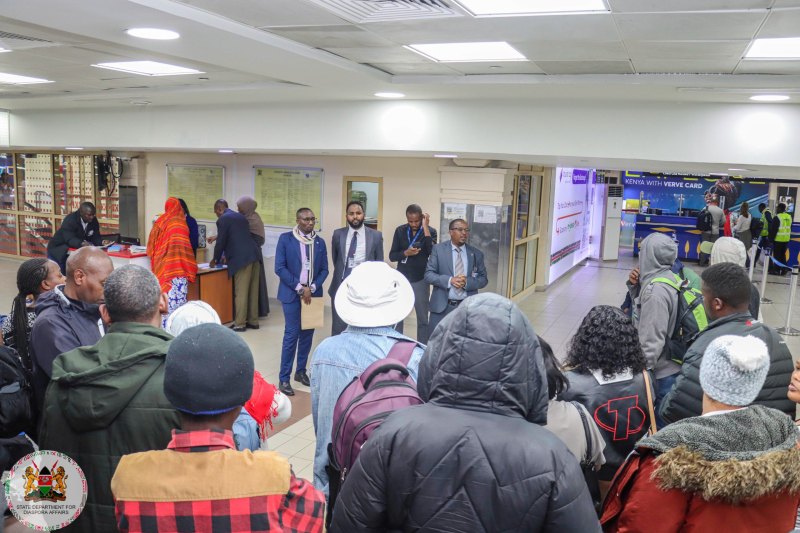
Photo: Courtesy.
By Robert Mutasi
Kenyans repatriated from South Africa have described losing jobs, witnessing attacks on foreign nationals and abandoning their livelihoods as anti-migrant protests intensified, prompting the Kenyan government to organize their return home.
The returnees, who arrived in Kenya after a government-led repatriation exercise, expressed gratitude to the government and the Kenyan High Commission in Pretoria for coordinating their safe return. They said embassy officials assisted them with travel documentation, temporary accommodation and transport throughout the evacuation process.
Bailan Wambogo, who had lived in South Africa for several years, said he was relieved to be back home after a period of uncertainty.
“My name is Wambogo, and I’m happy to be home. I’ve been in South Africa for quite some time, and I thank God that He has brought us back home safely,” he said.
Wambogo credited the Kenyan mission in Pretoria with ensuring citizens from different provinces were able to travel safely to the embassy by issuing travel authorization letters.
“Everyone from every province received soft-copy letters that allowed us safe passage to the embassy. The repatriation process has been successful because of the High Commission office in Pretoria,” he said.
Although he described South Africa as a country with many opportunities, Wambogo said the recent unrest had left many foreign nationals vulnerable.
He said many Kenyans had been forced to leave their jobs, while businesses owned by migrants had been disrupted or destroyed during the protests.
“I’ve been affected because I have had to leave my job. I don’t want to disclose too much, but let me say our government has done a good job,” he said.
Wambogo also urged South African investors to consider Kenya as an investment destination, saying increased investment could create employment opportunities for young people.
Another returnee, Anthony Gathura, said he relocated to South Africa last year in search of better economic opportunities but found life far more difficult than he had anticipated.
“I came to South Africa last year thinking my life would improve, but in the end, I felt like a slave,” he said.
Despite the hardships, Gathura thanked the Kenyan government for facilitating his return.
“I thank God, and I thank the government,” he said.
Ali Sambul, who had spent about two and a half years working in South Africa, said he also lost his job during the unrest.
“First of all, I thank God. Secondly, I thank our fellow Kenyans. We’ve been through a lot, but I thank God because we are back safely,” he said.
According to Kenya’s Principal Secretary for Diaspora Affairs, Roseline Njogu, the government launched the repatriation exercise after receiving requests for assistance from more than 200 Kenyans stranded by the escalating unrest.
The government said the operation was coordinated through the Kenyan High Commission in Pretoria, which facilitated emergency travel documents, transport arrangements and safe passage for citizens returning to Kenya.
The repatriation comes amid growing concern over the impact of anti-migrant demonstrations in parts of South Africa, where foreign nationals have reported intimidation, violence and disruption to their businesses and employment. Kenyan authorities said they will continue monitoring the situation while providing support to citizens affected by the unrest.
About Author