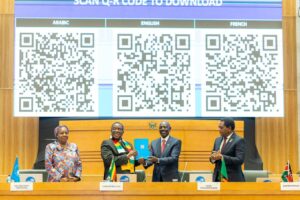
Kenya Deepens U.S. Nuclear Cooperation as Delegation Joins Global ATLAS Launch in Washington
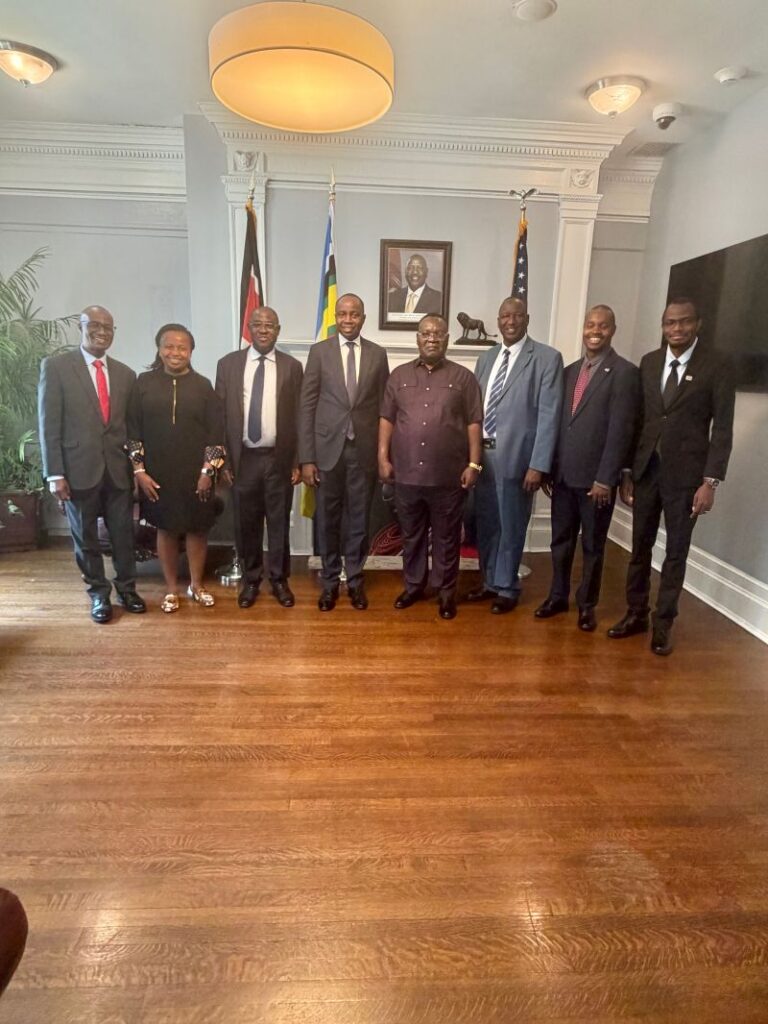
Members of Kenya's nuclear energy delegation during a meeting with Ambassador Christopher Kirigua, MBS, and officials at the Embassy of Kenya in Washington, D.C., where they discussed international cooperation and support for Kenya's civilian nuclear energy programme ahead of the ATLAS ministerial launch.
By Hubzmedia Reporter
Kenya has intensified efforts to build international partnerships for its civilian nuclear energy programme, with a high-level delegation holding consultations at the Kenyan Embassy in Washington, D.C., ahead of the launch of a major International Atomic Energy Agency initiative on nuclear technologies for maritime applications.
The delegation, drawn from Kenya’s nuclear energy sector, was hosted by the Chargé d’affaires a.i., Ambassador Christopher Kirigua, MBS, as the country seeks to strengthen diplomatic, technical and commercial links with the United States.
The engagement focused on Kenya’s progress towards developing its first nuclear power plant, opportunities for cooperation with American institutions and companies, and the role of the Kenyan Mission in Washington in supporting the country’s long-term nuclear ambitions.
The delegation was led by the Chair of the Board of the Kenya Nuclear Regulatory Authority, Hon. Edick Anyanga, and Nuclear Power and Energy Agency Chief Executive Officer Justus Wabuyabo.
Ambassador Kirigua and Mission officials were briefed on progress in Kenya’s nuclear power programme and ongoing preparations for the proposed inaugural nuclear power plant in Siaya County.
“The discussion provided an opportunity to exchange perspectives on Kenya’s nuclear energy programme, explore emerging opportunities and consider how the Embassy can support efforts to harness nuclear technology for energy security, economic development and a sustainable energy future,” said Dr Henry Rotich, a member of the Kenyan delegation.
Rotich said the delegation was encouraged by what he described as the Mission’s strong interest in supporting the implementation of Kenya’s nuclear programme.
“Such engagement and coordination are essential as Kenya advances the responsible adoption of nuclear technologies,” he said, thanking Ambassador Kirigua and the Mission team for their hospitality and engagement.
The discussions also focused on expanding links between Kenya and U.S. nuclear technology providers, academic and research institutions, engineering firms and supply-chain companies.
Kenya’s Nuclear Power Ambitions
Kenya is pursuing nuclear power as part of a broader strategy to secure reliable electricity for industrialisation and long-term economic growth.
Government agencies have identified Siaya County as the focus of the country’s first nuclear power project. Recent parliamentary proceedings indicate that Lenya Village has been identified as the preferred site, although detailed site characterization, environmental and social assessments, licensing, financing and other approvals remain necessary before construction can proceed.
The proposed first phase is expected to have a capacity of about 2,000 megawatts, potentially making it one of the most significant additions to Kenya’s electricity generation system. KenGen was formally designated as the prospective owner and operator of the country’s first nuclear power plant, while NuPEA coordinates the national nuclear power programme and the Kenya Nuclear Regulatory Authority serves as the independent regulator.
Kenya’s current roadmap targets the start of nuclear power generation in 2034, although officials have stressed that the programme will proceed through internationally recognised milestones and regulatory processes.
NuPEA says Kenya’s nuclear programme has been developed using the International Atomic Energy Agency’s phased approach, covering areas including feasibility studies, human-resource development, electricity-grid assessments, strategic environmental assessment, regulatory development and public engagement.
Delegation Joins Global ATLAS Initiative
The Washington consultations came as the Kenyan delegation participated in the ministerial launch of the International Atomic Energy Agency’s Atomic Technologies Licensed for Applications at Sea (ATLAS) initiative.
The high-level forum was hosted by the United States in Washington, D.C., on August 26 and 27, 2026, bringing together ministers, policymakers, regulators, industry leaders, technical experts, maritime stakeholders and international organisations.
ATLAS was launched to support international cooperation on the safe, secure and peaceful application of nuclear technologies in civilian shipping and floating nuclear power plants.
According to the IAEA, the initiative responds to growing global interest in technologies such as nuclear-powered ships and floating nuclear power plants, which require closer coordination between the nuclear and maritime sectors. The Washington forum brought together around 600 participants from more than 50 countries, according to information released during the launch.
The initiative is expected to examine complex questions surrounding safety, security, safeguards, regulation, environmental protection, legal frameworks and financing as countries and industry explore nuclear applications at sea.
For coastal and remote communities, floating nuclear power plants are being explored internationally as a potential source of reliable, low-carbon electricity and, in some cases, energy for desalination and industrial activities. However, deployment remains subject to rigorous international safety, security, regulatory and environmental requirements.
Rotich Brings Quality Infrastructure Perspective
Dr Rotich, a seasoned expert in metrology, testing, research and development, brings more than 26 years of experience in the quality and regulatory environment to the discussions.
He has published scientific papers and professional articles and currently serves as President of the Intra-Africa Metrology Organization, which works to strengthen the traceability of measurements in Africa to the International System of Units, commonly known as the SI.
Rotich has also been a strong advocate for the development of robust quality infrastructure across Africa through the Pan-African Quality Infrastructure framework.
His participation highlights the broader institutional requirements associated with the development of advanced technologies, where reliable measurements, testing, standards, technical competence and effective regulatory systems are critical.
“Building a sustainable nuclear future requires more than technology and infrastructure. It requires strong institutions, competent regulators, credible measurement systems, scientific expertise and international cooperation,” he said.
Safety, Regulation and Public Confidence
Kenya’s nuclear ambitions are advancing alongside growing scrutiny of safety, environmental protection, financing and community participation.
The Senate Standing Committee on Energy recently sought detailed assurances on the proposed Siaya project, including site safety, environmental safeguards, regulatory preparedness, financing arrangements and benefits to host communities. Parliament said several milestones must be completed before construction, including land acquisition, environmental and social impact assessments, financing arrangements, vendor selection and licensing documentation.
Kenya has also been working to strengthen its international nuclear governance framework. Parliament reported that Cabinet approved accession to four international nuclear safety conventions on June 30, 2026, with the instruments awaiting consideration by the National Assembly.
Under the government’s emerging policy framework, Kenya has placed emphasis on financing, institutional capacity, development of local nuclear expertise and public awareness as part of the preparations required for a national nuclear power programme.
The Washington engagement therefore comes at a significant moment for Kenya’s energy sector, as the country seeks to convert its nuclear ambitions into a programme backed by strong institutions, international partnerships and rigorous safety standards.
As Kenya deepens cooperation with the United States and other international partners, officials say the focus remains on ensuring that nuclear technology is developed for peaceful purposes and contributes to energy security, industrial growth and long-term sustainable development.
“Kenya remains committed to developing its civilian nuclear energy programme in accordance with the highest international standards of safety, security and peaceful use,” the delegation said, as it called for stronger international collaboration to support the country’s nuclear journey.
About Author