Hundreds Arrested as Families of 2024 Protest Victims March to Kenya’s Parliament Seeking Justice
Families of the victims say the government’s compensation process has been slow and lacks transparency despite earlier promises to provide reparations.
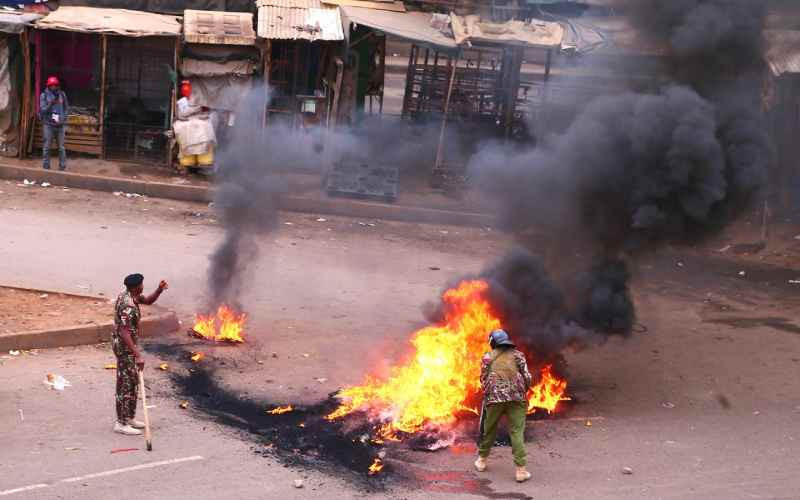
Photo: Courtesy.
By Robert Mutasi
Kenyan police arrested hundreds of people and fired tear gas Thursday as families of those killed during the 2024 anti-government protests marched toward Parliament to demand justice and compensation for victims of the deadly crackdown.
The demonstration marked two years since the June 25, 2024, protests, when thousands of mostly young Kenyans stormed Parliament in opposition to proposed tax increases under the Finance Bill. Police opened fire outside the parliamentary complex, killing at least 60 people, according to rights groups and activists.
Families of the victims say the government’s compensation process has been slow and lacks transparency despite earlier promises to provide reparations.
Authorities mounted a heavy security operation across Nairobi, erecting roadblocks on major highways leading into the city and restricting access to Parliament, which was surrounded by barbed-wire barricades. Many businesses remained closed as police patrolled the capital.
Interior Cabinet Secretary Kipchumba Murkomen said police arrested 355 people in Nairobi and other towns, describing them as “criminals” and defending the security operation as necessary to protect businesses and prevent disorder.
“The measures were necessary to protect businesses and avert chaos,” Murkomen said.
Journalists and witnesses, however, reported that many of those detained appeared to be ordinary Kenyans taking part in the commemorative march.
Police also fired tear gas at demonstrators outside Nairobi’s Central Police Station after protesters attempted to deliver a petition demanding justice for victims of the 2024 shootings.
The march drew support from opposition leaders, including former Vice President Kalonzo Musyoka, former Justice Minister Martha Karua and former Chief Justice David Maraga. The leaders joined families and civil society activists in laying wreaths at police barricades surrounding Parliament in memory of those killed.
The opposition has called for greater transparency in the government’s $15 million compensation program established for victims of the protests.
Last week, President William Ruto said the anniversary demonstrations would be allowed to proceed peacefully but warned against attempts to disrupt normal activities.
“We will protect schoolchildren, workers and businesses,” Ruto said, adding that the government would not permit efforts to “shut down the country.”
Ruto also defended the compensation program, saying it represented “a state acknowledgment that harm occurred” but should not be interpreted as an admission of legal liability.
He said the payments were not intended to reward “violence or criminality.”
For many families, however, financial compensation has done little to ease their demand for accountability.
Edith Wanjiku, whose 19-year-old son Ibrahim Kamau was fatally shot in the neck during the 2024 demonstrations, said her family has yet to receive compensation despite submitting all required documents to the state-backed compensation process.
“Only two out of 10 families whose children were shot that day near Parliament have been compensated, and we are wondering what criteria the government is using,” she said.
Gillian Munyao, whose son Rex Masai was also among those killed, said justice remains more important than financial compensation.
“Arrest the killer cops. That’s my message to the government,” she said.
Makau Mutua, who chairs the compensation panel, said Wednesday that the verification process is still underway and pledged that every eligible claim would be paid.
So far, three police officers have been charged in connection with the deaths of protesters, although investigations into many of the killings remain ongoing.
The 2024 protests marked one of the deadliest episodes of civil unrest in Kenya’s recent history and became a defining moment for the country’s youth-led movement demanding greater government accountability, economic reforms and police accountability.
About Author