High Court Declares Ksh12 Billion Riruta-Ngong Railway Project Unconstitutional
This means Parliament, which represents the people and approves use of public money, was not asked to approve the project.
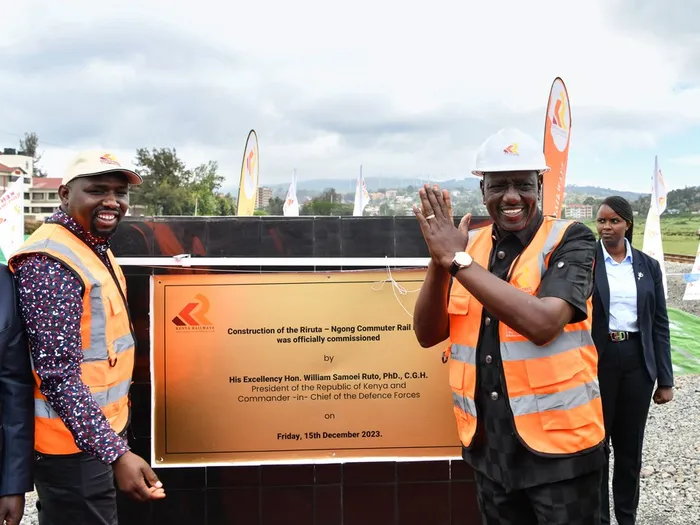
Photo: Courtesy.
By Robert Mutasi
The High Court has declared the government’s Ksh12 billion Riruta-Ngong commuter railway project unconstitutional, ruling that even though construction is ongoing, the project broke several provisions of the law.
In a judgment delivered on Friday, July 17, Justice Gregory Mutai suspended the metre gauge railway project, finding that the government failed to follow the correct legal process before starting it.
What the Court Found Wrong
The court found three major problems:
First, the government failed to obtain parliamentary approval. This means Parliament, which represents the people and approves use of public money, was not asked to approve the project.
Second, the government failed to conduct a competitive procurement process. Competitive procurement means advertising the project openly so that different companies can bid and the government can choose the best and cheapest offer. This was not done.
Third, the government failed to undertake a feasibility study and carry out meaningful public participation before starting construction. A feasibility study is research to check if a project is possible, useful, and affordable. Public participation means asking the opinions of the people who will be affected by the project, which is required by the Constitution.
The court, however, declined to permanently halt the project. This means the court did not order the project to be cancelled forever. Justice Mutai noted that the project may proceed once the government fully complies with the law. The project is currently 40 percent complete.
Funding Issue
Justice Mutai ruled that the project was illegally funded through the Railway Development Levy Fund before March 27, 2026, and said later legal changes could not undo that violation. The Railway Development Levy is money collected to develop railways in Kenya.
The case was filed by Busia Senator Okiya Omtatah, who argued that the government illegally funded the project through the Railway Development Levy Fund and failed to conduct public participation.
The court also faulted the Kenya Railways Corporation and other government agencies for failing to disclose crucial project documents despite court orders directing them to make the information public. Justice Mutai held that consultations conducted after construction had already started could not fix the constitutional violations.
What Happens Next
As part of the orders, the judge directed the government to, within 90 days, either conduct a fresh tender for the remaining works or demonstrate that the existing contracts can withstand constitutional scrutiny. This means the government has three months to show it has followed the law.
Background of the Project
Commissioned by President William Ruto in December 2023 alongside former Transport CS Kipchumba Murkomen, the 12.5 kilometre project was intended to ease congestion along Ngong Road by improving rail services between Riruta, Lenana and Ngong. The area suffers heavy traffic jams daily.
The case has had many court battles. In January 2026, Justice Bahati Mwamuye issued interim conservatory orders temporarily suspending the project after the government failed to file its legal responses on time.
In March 2026, the High Court ordered the state to surrender eight critical project documents, including environmental impact assessments, ruling that withholding the information violated the constitutional right to access information.
About Author