Fresh Storm Erupts Over Athletics Kenya Constitution Review
The latest controversy centres on a constitution recently ratified by an Annual General Meeting and forwarded to the Registrar of Sports for registration.
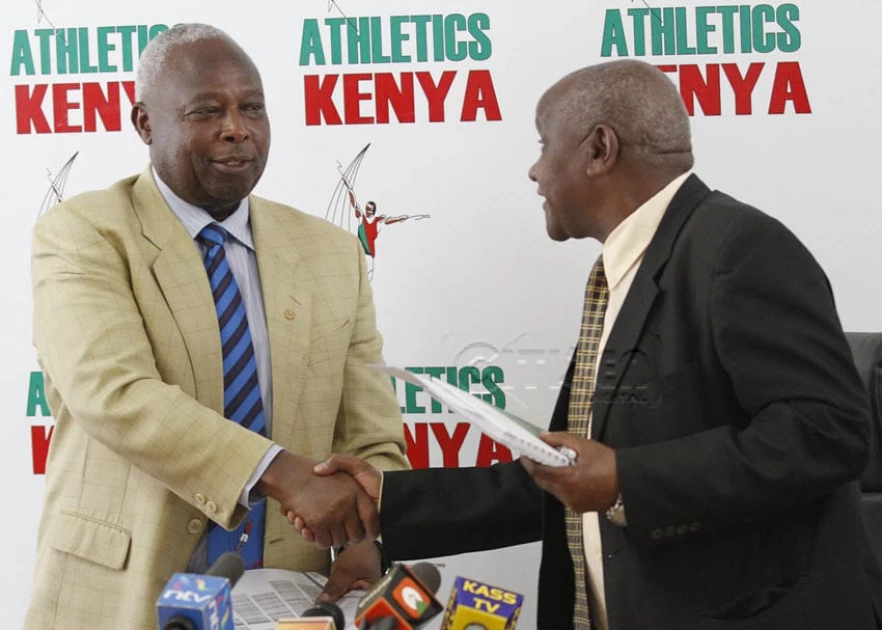
Athletes and former athletics stars raise concerns over the proposed review of the Athletics Kenya constitution. Photo: Citizen Digital.
By Robert Mutasi
A fresh dispute has emerged over the proposed review of the Athletics Kenya (AK) constitution, with athletes and former stars raising concerns about the document submitted to the Registrar of Sports.
The disagreement comes after years of legal and administrative delays over reforms at the federation. A push to align the AK constitution with the Sports Act 2013 and the Constitution of Kenya 2010 has been ongoing for about a decade, with the prolonged process also delaying federation elections.
The latest controversy centres on a constitution recently ratified by an Annual General Meeting and forwarded to the Registrar of Sports for registration.
Some stakeholders say the document does not adequately reflect proposals raised during nationwide public participation conducted in 2025. They have particularly questioned the retention of regional structures and the delegate system used to elect federation officials.
The approved constitution provides for national, regional and county structures. It retains 13 regional associations covering areas including North Rift, Central Rift, Western, Nyanza, Nairobi, Coast and Eastern regions.
Stakeholders who participated in the public forums had proposed a different structure, with some calling for a two-tier system based on national and county levels.
Athletics legends Moses Tanui, Hosea Kogo and Christopher Koskei are among those questioning the process. Tanui, a two-time Boston Marathon champion, said athletes who are central to the federation should have a direct role in electing its leadership.
Tanui and other stakeholders have also called for the removal of the delegate system and greater representation of athletes from all 47 counties.
The disagreement has also drawn the involvement of Abraham Mutai, the allegedly suspended Central Rift chairman. Mutai said thousands of athletes registered by AK should be allowed to participate directly in the election of federation officials.
Tanui and other stakeholders have given AK seven days to withdraw the constitution submitted to the Registrar of Sports and engage them in further discussions. They have warned that failure to address their concerns could lead to legal action.
In a letter dated September 30, 2026, Tanui and others, through their lawyers Kinoti and Kibe Advocates, asked the federation to review several provisions, including those concerning regional associations.
The current dispute follows a March 2025 Court of Appeal decision that directed Athletics Kenya to review its constitution and align it with the Sports Act and the 2010 Constitution. The order had been expected to clear the way for fresh federation elections.
The constitution review has been closely followed by athletes and former competitors who have for years demanded changes to the way the federation is governed.
The latest developments have therefore reopened questions over whether the long-running reform process can deliver a constitution acceptable to the different groups within Kenyan athletics.
For now, the dispute remains centred on the contents of the reviewed constitution, the role of athletes in elections and the structure through which Athletics Kenya will be governed.
About Author