Eldoret Comes to a Standstill Over Saba Saba Protests: 35 Arrested, Business Paralyzed
“Today I can’t pay my chama loan. Business is dead. The government should listen to the youth—and the youth should also listen to the government.”
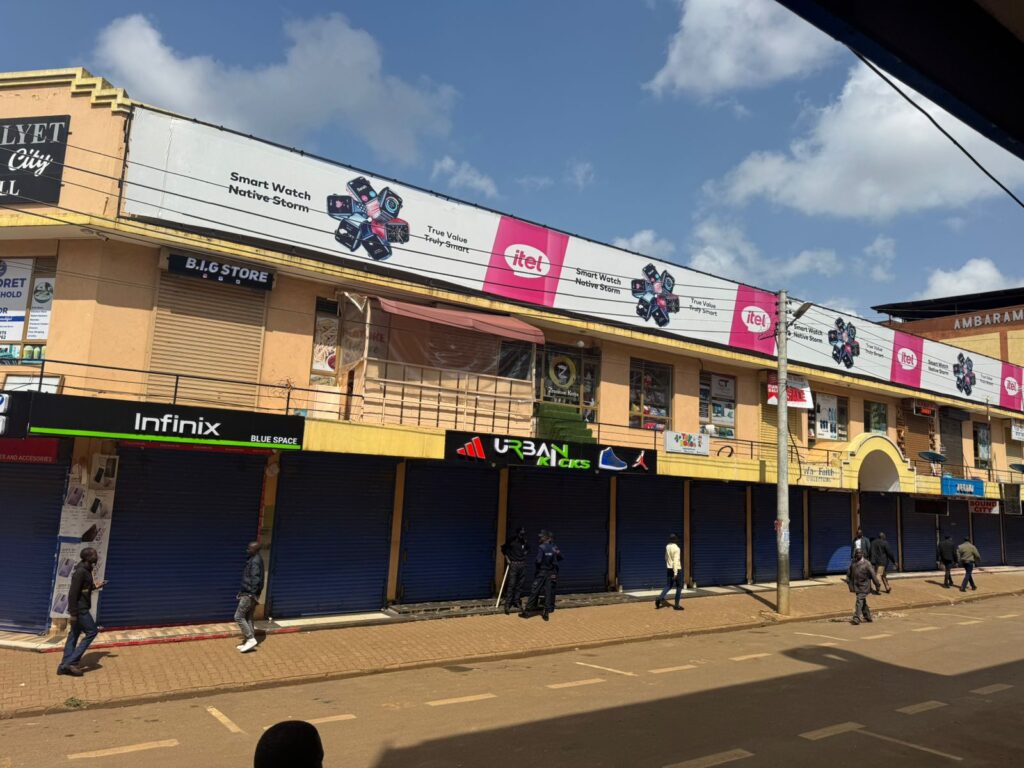
Business activities in Eldoret City ground to a halt on Monday amid rising tensions and anxiety over the nationwide Saba Saba protests, with at least 35 people arrested—many of them in Huruma Ward—following clashes between demonstrators and police.
Shops remained shuttered across the city, while streets that are usually bustling with activity were eerily deserted. Tear gas filled the air in parts of Eldoret especially in Huruma ward as security forces attempted to disperse protesters. In a symbolic act, a lone demonstrator was spotted carrying a banner that read “Ruto Kumi Bila Break,” expressing support for President William Ruto amid the unrest.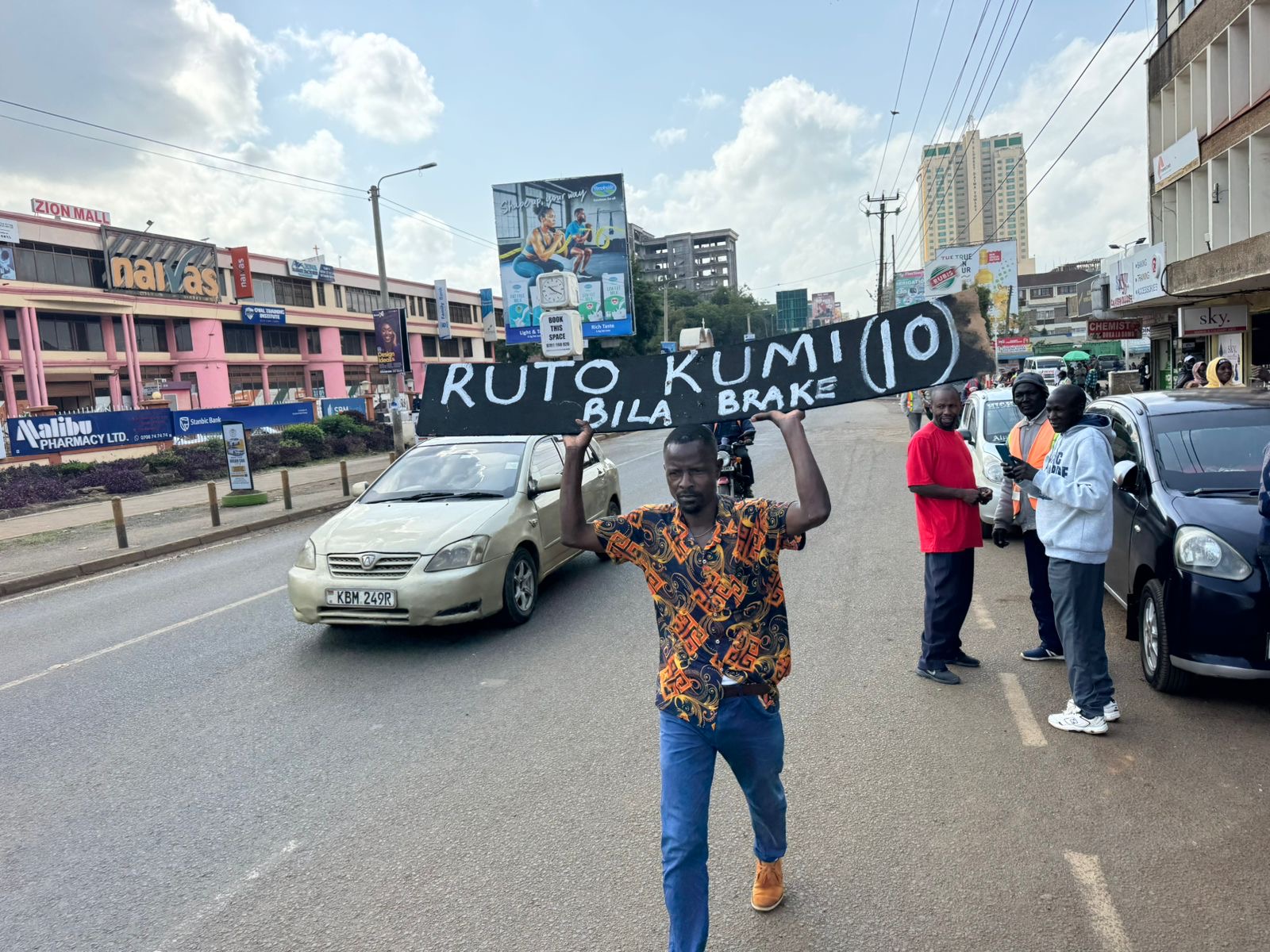
The protests, spearheaded by a new wave of youth activists identifying as “Gen Z,” have sparked sharp debate and concern among local leaders and business owners, especially following the violent scenes witnessed on June 25 that led to the destruction of businesses, loss of lives, and widespread looting in Eldoret.
Businesses Shuttered, City Grinds to a Halt
“Today, Eldoret has lost millions of shillings in revenue,” said Robert Lelei, a youth leader in the city. “The business community has chosen to remain closed in fear of repeat chaos. Even people from surrounding villages have refused to come into town because of fear.”
Lelei also urged the youth to end the protests, saying, “Gen Z needs to understand that the only way to remove a government is through the ballot, not street protests. Saba Saba had historical meaning, but what we’re seeing now is completely different. It’s being hijacked for the wrong reasons.”
Appeals for Dialogue and Calm
Many residents and traders have voiced concerns over the growing disruption and the lack of open dialogue between the youth and the government. Wycliffe Khaemba, a boda-boda rider, expressed his frustration, saying, “Today I can’t pay my chama loan. Business is dead. The government should listen to the youth—and the youth should also listen to the government.”
Khaemba added that the total closure of shops had badly affected riders like him who rely on daily income. “We are struggling,” he said.
Similarly, Mary, a businesswoman in Eldoret, appealed to young people to think of the future. “We have no other country to call home. If we destroy our businesses, our cities, what will we be left with? We must protect our peace,” she said.
The Changing Face of Protest
While Saba Saba has historically been associated with the 1990 pro-democracy movement that challenged the autocratic regimes of past leaders like the late President Daniel Arap Moi, residents and analysts argue that the current Gen Z-led protests are taking a different tone.
“This isn’t the Saba Saba of 1990,” said Lelei. “Back then, it was about constitutional reforms and human rights. Today, it feels less focused and more infiltrated by chaos agents.”
As tension continues to build in Eldoret and other parts of the country, local voices are calling for de-escalation, responsible leadership, and renewed dialogue to avoid further disruption and to safeguard peace and economic stability.
About Author