Ebola Preparedness: PS Mary Muthoni Assures Kenyans of Enhanced Surveillance at Busia and Malaba Borders
She urged residents to maintain high hygiene standards, seek medical attention when unwell, and support surveillance efforts as authorities intensify screening, public awareness campaigns, and healthcare worker training to prevent the disease from entering the country.

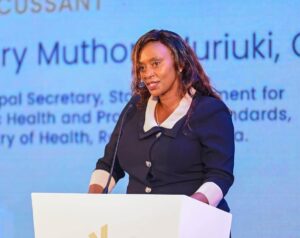
PS Mary Muthoni assures Kenyans of heightened Ebola surveillance at Busia and Malaba border points. Photo/Courtesy
By Mercy Otieno
Principal Secretary for Public Health and Professional Standards Mary Muthoni has assured Kenyans that the government has intensified preparedness measures at the Busia and Malaba border points to prevent the possible spread of Ebola into the country.
Speaking on Saturday during an inspection tour of the two border crossings, Muthoni urged residents living along the Kenya-Uganda border to maintain high standards of hygiene and remain vigilant as neighboring countries continue to report Ebola cases.
She noted that Kenya’s strategic location and close links with countries that have recorded infections place the country at risk, making prevention efforts critical.
“Some African countries have already confirmed Ebola cases and, because of our geographical position, we are also at risk. We must maintain high levels of hygiene and avoid non-essential travel to affected countries so that we can protect our people and contain the disease,” Muthoni said.
The PS highlighted the heavy movement of people and goods through the two border points, explaining that hundreds of trucks enter Kenya daily through Busia and Malaba, carrying thousands of passengers who must undergo health screening.
“About 400 trucks enter the country through the Malaba and Busia border points every day, carrying between 1,500 and 2,000 people. These are the individuals we are screening to ensure they are healthy before entering the country,” she said.
According to Muthoni, some travelers may be arriving from regions that have reported Ebola outbreaks, making strict surveillance measures essential.
She said the Ministry of Health is strengthening coordination among government agencies operating at the border points to ensure a unified response and effective monitoring.
“We are working closely with all agencies stationed at the borders to ensure they are well coordinated and fully informed about the situation,” she stated.
Muthoni further revealed that healthcare workers are undergoing continuous training to enhance their capacity to identify and manage suspected Ebola cases.
“We are continuing to train our healthcare workers on how to respond should any cases arise. At the same time, we are carrying out public awareness campaigns to keep communities informed,” she said.
As part of the preparedness strategy, the ministry will also hold weekly sensitisation meetings with truck drivers operating through the two border crossings to educate them about Ebola prevention and detection.
The PS called on residents, particularly those living near the Uganda border, to seek medical attention whenever they feel unwell instead of relying on self-medication.
“I urge communities bordering Uganda to observe high standards of hygiene and visit health facilities whenever they experience symptoms rather than seeking treatment from local chemists,” she said.
She also encouraged members of the public to promptly report individuals displaying symptoms associated with Ebola to health authorities or guide them to the nearest health facility for assessment.
“We will continue enhancing vigilance along the border and across the country while providing more training opportunities for healthcare workers,” Muthoni added.
The PS further urged county governments to strengthen their preparedness by establishing isolation centres and ensuring health personnel are adequately trained to respond to Ebola-related emergencies.
About Author