DCI Boss Amin Reaffirms Kenya’s Commitment To Global Police Cooperation As East Africa NCB Chiefs Meet In Nairobi
“When we share information, we share strength; when we cooperate, we deny criminals the opportunity to exploit our borders,” he said in his keynote address.
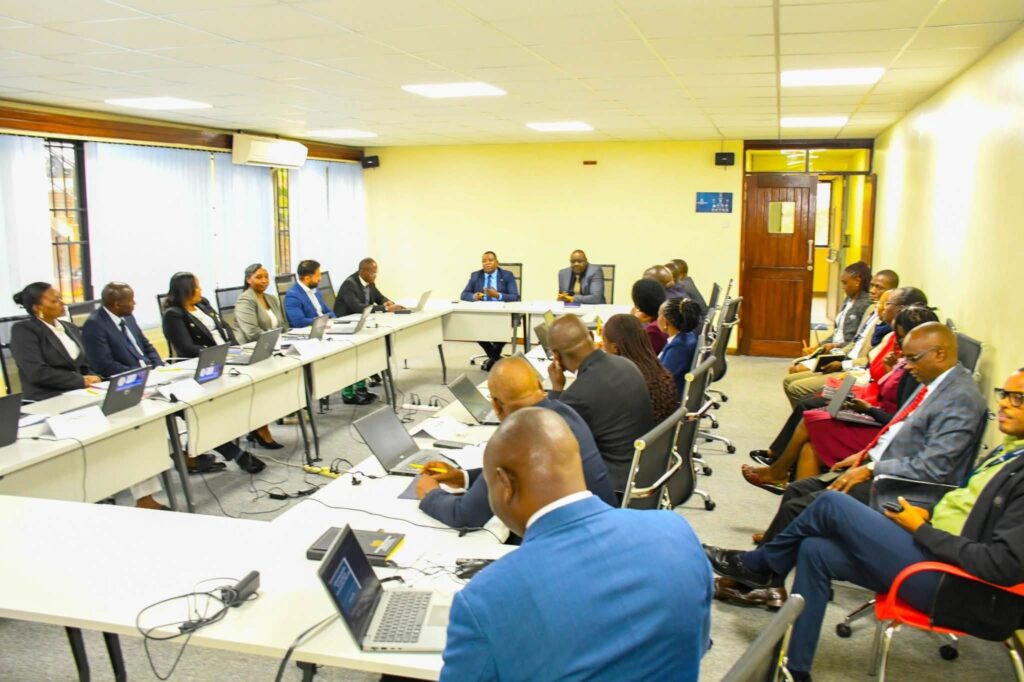
Photo: Courtesy.
By Robert Mutasi
The Director of Criminal Investigations, Mr. Mohammed I. Amin, who also serves as Africa’s Delegate to the INTERPOL Executive Committee, has reaffirmed Kenya’s commitment to strengthening international police cooperation in the fight against transnational organised crime.
In a speech delivered on his behalf by the Deputy Director DCI, Mr. John Onyango, during the opening ceremony of the INTERPOL Capabilities Mentorship Programme for New Heads of National Central Bureaus (NCBs) and Senior Staff, held at the INTERPOL Regional Bureau in Nairobi today, 18th August 2026, the Director DCI emphasized that modern threats transcend national borders and cannot be effectively confronted by any country acting alone.
The programme brings together senior law enforcement officials from across East Africa at a time when criminal networks are becoming increasingly sophisticated, technology-driven and borderless, exploiting jurisdictional gaps and advances in technology to expand their reach.
Threats such as terrorism, human and drug trafficking, cybercrime, money laundering, migrant smuggling and wildlife trafficking are now more complex than ever, Amin said, calling for a united front.
The Director DCI underscored the critical role of INTERPOL and its National Central Bureaus in facilitating the timely, secure and effective exchange of criminal intelligence, including information on wanted persons, stolen travel documents and vehicles, fingerprints, DNA profiles and other critical investigative data.
He called for stronger professional relationships among NCBs, enhanced intelligence sharing, joint investigations, coordinated operations and greater utilisation of INTERPOL databases and secure communication systems.
He also emphasized the need for sustained investment in capacity building, specialised training and the continuous professional development of law enforcement personnel to keep pace with evolving crime trends.
The Director DCI further urged law enforcement agencies to embrace proactive, intelligence-led and preventive policing approaches, while continuously adapting to emerging threats, particularly cybercrime, financial crime and other technology-enabled forms of organised crime.
“When we share information, we share strength; when we cooperate, we deny criminals the opportunity to exploit our borders,” he said in his keynote address.
He reaffirmed Kenya’s commitment to international, regional and bilateral partnerships that strengthen information sharing, coordinated law enforcement action and professional development, noting that effective international police cooperation remains indispensable in disrupting criminal networks that operate across borders.
The mentorship programme is designed to equip new NCB Heads and senior staff with practical skills on how to leverage INTERPOL’s global policing capabilities, including its secure I-24/7 communication network, databases and operational support tools.
As Africa’s representative on the INTERPOL Executive Committee, the Director DCI continues to champion stronger continental and international police cooperation, enhanced information sharing and collective action against transnational organised crime.
Kenya hosts the INTERPOL Regional Bureau for East Africa, which serves as a critical hub for coordinating operations targeting terrorism, human trafficking, drug trafficking and cybercrime across the region.
The week-long mentorship programme is expected to enhance interoperability among East African law enforcement agencies and strengthen their capacity to respond to cross-border crime through joint action.
About Author