Community urged to engage in health financing as DRM Training culminates in Uasin Gishu
Organizers expressed optimism that enhanced knowledge in DRM and PFM will empower more community-based organizations to secure resources and strengthen health systems at the grassroots.
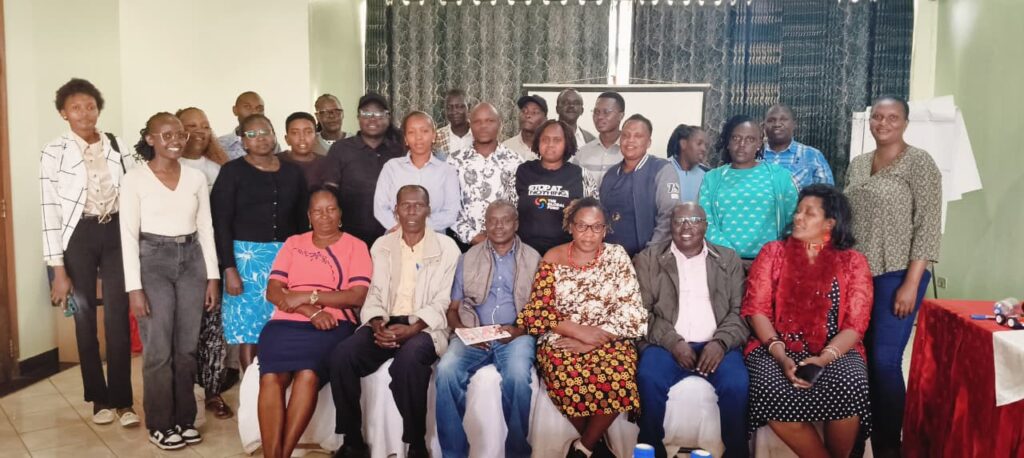
Participants were taken through the fundamentals of DRM, Kenya’s Public Finance Management (PFM) framework, and the national and county budgeting timelines. Photo/Courtesy
By Ruth Sang
Residents of Uasin Gishu County are being urged to take a more active role in understanding how public health services are funded, following a two-day Domestic Resource Mobilization (DRM) training that opened on Monday in Eldoret.
The training, hosted at Winster Hotel, was organized by the Health NGO Network (HENNET) in partnership with Neighbours In Action–Kenya (NIAK) and the AMREF. It brings together civil society groups, health sector stakeholders, and community representatives to strengthen capacity on health financing and improve funding opportunities for grassroots health programmes.
Call for Greater Public Participation
Speaking during the opening session, Caren Mutai from the Global Fund HIV Grant under the Kenya Red Cross emphasized that strengthening health outcomes requires stronger community oversight.
“We cannot improve the health of our people if communities do not understand how health funds are mobilized, allocated, and utilized,” she said.
Her sentiments were echoed by Grace Muthoni, Vice Chair of the Community Systems Health Strengthening Technical Working Group (CSST-WG), who urged participants to hold county structures accountable and ensure the health sector receives adequate attention.
HENNET’s Monitoring and Evaluation specialist, Eliud Kiprop, added that understanding resource flows empowers organizations to advocate for increased investment in health.
Deep dive into public finance and budgeting
Participants were taken through the fundamentals of DRM, Kenya’s Public Finance Management (PFM) framework, and the national and county budgeting timelines.
Experts highlighted provisions of the Public Finance Management Act (2012) and the County Governments Act (2012), which guide planning, expenditure, and delivery of essential services including health. Trainers also outlined the four key stages of the budgeting process: planning, formulation, implementation, and reporting/audit.
Discussions examined the factors influencing county budget allocations, including the CIDP, sector priorities, and auditor reports.
Health among Uasin Gishu’s top priorities
A review of Uasin Gishu County’s development agenda revealed health as one of its top ten priorities. The county’s position that “a healthy nation is a wealthy nation” emphasizes the need to invest in well-equipped facilities, disease prevention, and community health systems.
Other priority areas include agriculture, ICT and e-government, education and youth, infrastructure, water and environment, public service management, and urban development.
Strengthening Community Participation
Residents were reminded of the critical role of the County Budget and Economic Forum (CBEF) , a platform established under Section 137 of the PFM Act to involve professionals, business leaders, women, persons with disabilities, and the elderly in county budgeting.
Stakeholders noted that informed communities can challenge low-priority allocations and advocate for adequate health funding during public participation forums.
Key challenges raised
Participants raised concerns over stalled health infrastructure projects, including the multi-billion shilling Ziwa Hospital, low service delivery, and the county’s lack of a designated County Referral Hospital an absence that denies Uasin Gishu nearly KSh 500 million in annual allocations and increases congestion at Moi Teaching and Referral Hospital.
Eliud Kiprop noted that Kenya is yet to meet the 2001 Abuja Declaration requirement of allocating 15% of the national budget to health currently standing at just 10%.
He also explained that the government is increasingly turning to Zero-Based Budgeting to justify expenditure and enhance accountability.
Shrinking donor funding and the push for self-reliance
With the withdrawal of USAID support in some areas, facilitators warned that Kenya’s health sector is at risk unless domestic financing becomes a priority. Discussions highlighted the ALM 2019 Declaration on Domestic Health Financing, which calls for reduced reliance on foreign aid.
Participants explored how domestic resources are mobilized, the role of the private sector, revenue utilization, and sustainability. Communities and CSOs were encouraged to engage in budget tracking, public sensitization, and planning processes.
Digital health, data protection, and emerging trends
The facilitation also covered the Digital Health Act (2023), which provides a framework for digital health information and patient privacy. The Digital Health Authority, in collaboration with the Data Governance and Protection Act (2019), oversees integrated health systems and cross-border data sharing.
Members were trained on e-waste management and the Primary Health Care Act, which outlines the structure of health service delivery from community health units (Level 1) to referral hospitals (Level 4 and above). The Social Health Insurance Act (2023) was also discussed.
Advocacy as a driver of change
The session concluded with a focus on SMART Advocacy an evidence-based approach designed to influence decisions, budgets, and policies. Facilitators emphasized that informed communities can drive meaningful reforms in health financing.
Organizers expressed optimism that enhanced knowledge in DRM and PFM will empower more community-based organizations to secure resources and strengthen health systems at the grassroots.
About Author