African Ministers, Aviation Leaders Demand Action on Open Skies Ahead of Kigali Forum
The consistent message: the legal and policy architecture for liberalised air travel already exists. Africa’s challenge now is implementation, financing and political will.
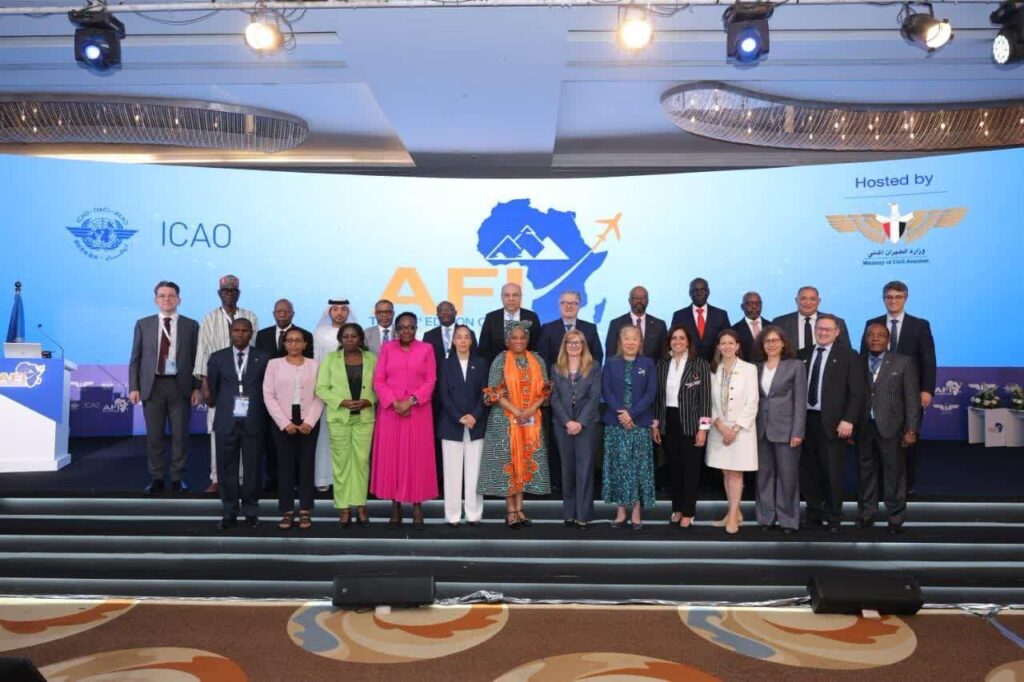
Photo: Courtesy.
By James Gitaka
Ministers, regulators, airline executives and continental institutions have issued a pointed call for Africa to move beyond declarations on open skies and deliver a genuinely connected continent, ahead of the Africa Mindset Reset Forum taking place on 25 and 26 August at the Kigali Convention Centre.
The call came from a high-level pre-Forum virtual working session convened under the theme “Accelerating African Economic Integration Through Open Skies,” which brought together voices from government, the AfCFTA Secretariat, the African School of Governance (ASG), the African Development Bank, the African Civil Aviation Commission, RwandAir, the African Airlines Association and Africa’s entrepreneurship ecosystem.
The consistent message: the legal and policy architecture for liberalised air travel already exists. Africa’s challenge now is implementation, financing and political will.
Rwanda’s Minister for Trade and Industry, Antoine Kajangwe, framed the stakes in continental terms, describing the African Continental Free Trade Area (AfCFTA) as a strategic instrument for transformation that depends on reliable, affordable connectivity.
“We must work towards affordable, frequent, and reliable air connectivity that allows a manufacturer in Kigali to ship cargo across Africa without excessive costs, unnecessary delays, or complicated routes,” Kajangwe said.
Dr Tsotetsi Makong, Director of Coordination and Programmes at the AfCFTA Secretariat, said implementation must move beyond adoption and ratification to practical benefit. “Those rules must be domesticated, brought to life, and translated into practical benefits for African people and businesses,” he said.
Professor TK Pooe of the African School of Governance said the business case for open skies is already settled, and the real test is political will.
“Where we would ideally like to get to is what we term ‘Nonstop Africa’ – our preferred scenario of enforceable rights, rationalized costs, and a four-hour continent. However, we must also guard against a scenario in which we have what is called ‘open skies,’ but in reality it remains a closed-wallet system,” Prof. Pooe said.
Ellen Manga of the Gambia Civil Aviation Authority pressed for full implementation of the Yamoussoukro Decision, including fifth-freedom traffic rights, alongside progress on the Free Movement Protocol.
“We cannot discuss the Single African Air Transport Market while leaving the Free Movement Protocol behind. The two initiatives must advance together,” she said.
Financing emerged as a major bottleneck. Dr Lufeyo Banda of the African Development Bank’s Infrastructure Consortium for Africa said open skies cannot be achieved through policy commitments alone. “Financing, fleet modernization, stronger institutions, and improved connectivity must all be addressed together,” he said.
Raphael Kuuchi of the African Airlines Association disclosed that nearly $800 million in airline revenue remains blocked across roughly fourteen African countries, undermining carriers’ ability to sustain operations.
“We cannot expect carriers to continue serving these markets while using revenues from elsewhere to finance operations; governments must ensure that these blocked funds are released,” Kuuchi said.
Getachew Mengistie Alemayehu of the African Civil Aviation Commission noted that Africa’s aviation connectivity index stands at roughly 23 percent, and that affordability, not just infrastructure, is the continent’s greatest barrier.
RwandAir CEO Yvonne Manzi Makolo said stronger partnerships between African carriers are essential, pointing to the paradox of intercontinental fares undercutting intra-African routes. “In some cases, flying from Kigali to a destination outside Africa is cheaper than travelling to a nearby African city because additional charges can account for nearly half of the ticket price,” she said.
Arnold Kwizera of Norrsken East Africa spoke for a younger generation pressing for measurable pilots over further declarations. “As young African business leaders, we are less interested in another declaration and far more interested in practical implementation that produces visible results,” he said.
Dr Joy Kategekwa of UNDP and AfDB proposed an “Africa Zone”, a coalition of willing countries offering visa-free or visa-on-arrival access as a single, connected destination.
Closing the session, Dr Makong called for a proof-of-concept approach led by willing states. “We must go to the forum with solutions, not only analysis,” he said.
The Africa Mindset Reset Forum, hosted by ASG co-founded by President Paul Kagame and former Ethiopian PM Hailemariam Desalegn, will be held on 25-26 August at the Kigali Convention Centre to advance a shift from Pan-Africanism to Meta-Africanism – a practical, delivery-focused mindset for integration.
About Author