Senate Summons Duale and Wandayi Over 11-Year-Old Thange Oil Spill as KPC Boss Fined KSh500,000
The Thange oil spill occurred on May 12, 2015, after a KPC petroleum pipeline ruptured in Thange Village, Kibwezi East, Makueni County.
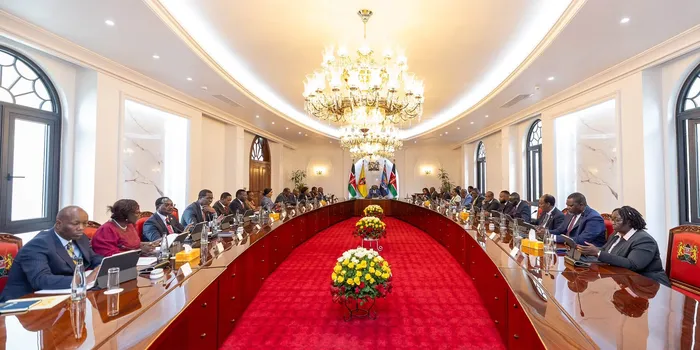
The Senate has summoned Health CS Aden Duale and Energy CS Opiyo Wandayi over the unresolved 2015 Thange oil spill in Makueni County. Photo: Kenyans.co.ke.
By Robert Mutasi
The Senate has summoned Health Cabinet Secretary Aden Duale and Energy and Petroleum Cabinet Secretary Opiyo Wandayi over the unresolved 2015 Thange oil spill in Makueni County, which continues to raise environmental and public health concerns more than 11 years after the incident.
The two Cabinet Secretaries were expected to appear before the Senate Energy Committee on Thursday, November 19, 2026, but failed to honour the invitation, prompting senators to issue fresh summons.
The committee, chaired by Elgeyo Marakwet Senator William Kisang, also fined Kenya Pipeline Company (KPC) Acting Managing Director Pius Mwendwa KSh500,000 for failing to attend the parliamentary hearing.
Mwendwa had reportedly informed the committee that he was unavailable because he was attending an interview for the substantive managing director position scheduled for the same morning.
Besides Duale and Wandayi, the committee summoned the Cabinet Secretary for Environment and the Cabinet Secretary for Water, alongside officials from the National Environment Management Authority (NEMA) and the KPC Board, to explain the progress made in addressing the environmental disaster.
The Thange oil spill occurred on May 12, 2015, after a Kenya Pipeline Company petroleum pipeline ruptured in Thange Village, Kibwezi East, Makueni County.
The incident released petroleum products into the surrounding environment, contaminating the Thange River and nearby water sources that residents depended on for domestic use.
Despite more than a decade having passed, the contamination remains a major concern, with senators told that pollution has affected approximately 42 kilometres of the river.
The waterway flows towards the Athi River before eventually reaching the Kenyan coast, raising concerns about the wider environmental impact of the spill.
During Thursday’s Senate hearing, Makueni Governor Mutula Kilonzo Junior presented a water sample collected from the river, which reportedly still had a strong smell of petroleum products.
The governor told senators that the Makueni County Government, working alongside the Ministry of Health, had spent approximately KSh62 million treating residents affected by the pollution.
He argued that Kenya Pipeline Company should be held accountable and potentially reimburse the county for the money spent addressing health complications linked to the disaster.
Makueni Senator Daniel Maanzo also called on the Energy and Petroleum Regulatory Authority (EPRA) to collect the water sample as evidence to support investigations into the continued contamination.
Committee chairperson William Kisang directed KPC’s acting managing director to appear before the committee again in December to respond to questions surrounding the spill and the company’s responsibility.
The latest developments come weeks after President William Ruto directed Kenya Pipeline Company to withdraw its court appeal that had blocked compensation for 3,075 victims of the 2015 oil spill.
In late October 2026, the President announced that the affected families should receive compensation amounting to approximately KSh3 billion, covering court-awarded damages.
Ruto also promised that payments would be made directly to the affected families while warning brokers against exploiting victims by collecting signatures or demanding a portion of their compensation.
The Senate’s renewed intervention is expected to increase pressure on government agencies and Kenya Pipeline Company to account for the prolonged environmental contamination, address the health concerns of affected residents and ensure that compensation reaches the intended beneficiaries.
For residents of Thange Village and surrounding areas, the long-running oil spill remains an unresolved environmental and public health challenge despite years of legal battles and government interventions.
About Author