Uasin Gishu Farmers in Focus as Global Leaders Push for Urgent Action to End Hunger at Nairobi Summit
Known as Kenya’s breadbasket, Uasin Gishu plays an important role in supplying food to different parts of the country.
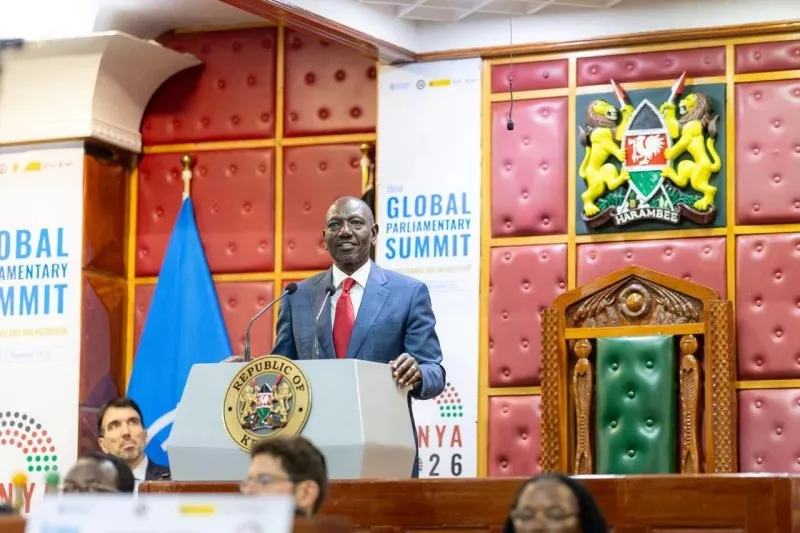
President William Ruto urges lawmakers to turn political commitments into practical action, highlighting Kenya's school feeding programme as part of efforts to improve nutrition and support local farmers. Photo: The Star.
By Robert Mutasi
Uasin Gishu County’s agricultural sector has been brought into focus following calls by global leaders for parliamentarians to move beyond promises and introduce stronger laws, policies and budgetary measures to tackle hunger and malnutrition.
The call came during the Third Global Parliamentary Summit against Hunger and Malnutrition, which opened at the Parliament of Kenya in Nairobi and brought together about 200 parliamentarians from 73 countries.
The two-day summit is being held for the first time in Africa, with discussions focusing on strengthening food security, improving nutrition and transforming agricultural production systems.
The meeting comes amid growing concerns over global hunger, with the latest United Nations figures indicating that approximately 645 million people experienced hunger in 2025, while 2.7 billion people could not afford a healthy diet, according to The State of Food Security and Nutrition in the World 2026 report.
For Uasin Gishu, one of Kenya’s leading agricultural counties, the discussions carry significant importance given the county’s contribution to the country’s food production through maize farming, dairy production and other agricultural activities.
Known as Kenya’s breadbasket, Uasin Gishu plays an important role in supplying food to various parts of the country. However, challenges such as unpredictable weather patterns, rising production costs and market instability continue to affect farmers.
The summit’s focus on sustainable and resilient agricultural systems therefore highlights the importance of strengthening support for farmers in counties such as Uasin Gishu.
Africa Faces Growing Food Security Challenges
Speaking during the opening ceremony on Monday, President William Ruto said it was timely for Africa to host the international gathering because the continent continues to experience the highest prevalence of hunger globally.
Ruto noted that approximately 309 million people in Africa, representing nearly one in every five Africans, experience hunger.
He urged parliamentarians to use their legislative responsibilities, budgetary allocations and oversight powers to make access to adequate food a reality.
The President also highlighted Kenya’s school meals programme, saying it plays an important role in improving children’s nutrition while creating a reliable market for agricultural produce from farmers.
Such programmes could provide opportunities for agricultural producers, including farmers in Uasin Gishu, by strengthening demand for locally produced food.
FAO Calls for Action Beyond Political Promises
Food and Agriculture Organization (FAO) Deputy Director-General Maurizio Martina said the Nairobi summit should focus on translating previous international commitments into practical action through national legislation and government budgets.
He explained that the meeting builds on the Global Parliamentary Pact against Hunger and Malnutrition adopted in Chile in 2023.
The agreement followed the Madrid Declaration of 2018, which established a shared commitment among parliamentarians to strengthen efforts against hunger and malnutrition.
Martina said the priority was no longer simply securing political commitments but ensuring those commitments influenced national policies and financial priorities.
“Today, we’re no longer asking how we generate political commitments. We ask how we help those commitments travel home, inform legislation and be reflected in national priorities and budget,” Martina said.
He also highlighted the International Year of the Woman Farmer 2026, calling for stronger policies and public investments to promote gender equality and empower women working in agriculture.
Climate Change Threatens Agricultural Production
The summit also addressed the growing impact of climate change, environmental degradation and biodiversity loss on global food production.
In East Africa, prolonged droughts and other climate-related shocks have continued to expose millions of people to food insecurity, particularly in vulnerable communities.
For Uasin Gishu farmers, unpredictable rainfall and changing weather patterns remain important concerns because agricultural production largely depends on favourable weather conditions.
The discussions are expected to strengthen attention on policies that support climate-resilient farming, improve access to agricultural resources and make food more affordable.
The summit is focusing on the right to adequate food, access to healthy diets, inclusive development and the creation of efficient, resilient and sustainable agricultural systems.
For Kenya’s agricultural counties, including Uasin Gishu, the outcome could reinforce the importance of investing in farmers, improving food distribution systems and strengthening agricultural policies.
The central message from the Nairobi gathering is that ending hunger will require more than international declarations, with governments expected to demonstrate their commitment through practical policies, legislation and adequate funding.
About Author