JOOTRH STEPS UP EBOLA SURVEILLANCE AND PREPAREDNESS IN WESTERN KENYA
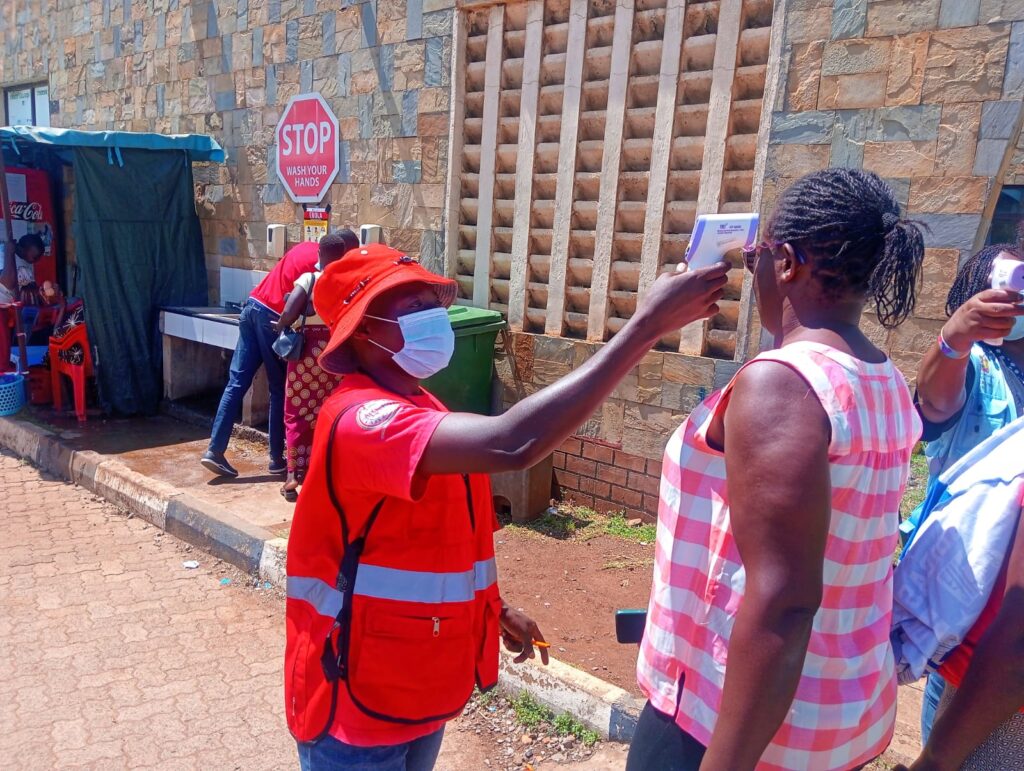
A healthcare worker screens patients entering the hospital as part of precautionary measures to enhance Ebola surveillance and prevent the possible spread of the virus.
By Grace Wafubwa | Kisumu
Jaramogi Oginga Odinga Teaching and Referral Hospital (JOOTRH) in Kisumu has intensified surveillance, screening and infection prevention measures as part of efforts to strengthen preparedness against a possible Ebola outbreak.
The hospital, which serves as a major referral facility for Western Kenya and receives patients from neighbouring regions, including Uganda, is enhancing surveillance at all entry points while working with the Kenya Red Cross and the Kisumu County Government to bolster its response capacity.
Patients, caregivers, visitors and other members of the public accessing the facility are now required to undergo temperature screening at the main gate and other designated entry points.
INSIDE THE HOSPITAL’S EBOLA RESPONSE PLAN
JOOTRH Facility Infection Prevention and Control Coordinator Pamela Opepo says the hospital has strengthened its preparedness through a multidisciplinary response team comprising public health, infection prevention and control, administration and other relevant departments.
“At all the entry points in the facility, we have those who screen. Everyone who is coming in, whether they are patients, whether they are caregivers, whether they are visitors, they have to pass through the screening,” Opepo explains.
Individuals who record unusually high temperatures are not automatically classified as suspected Ebola cases. Instead, they undergo further assessment, including a period of rest followed by a repeat temperature check.
Opepo notes that elevated body temperatures can result from several factors, including physical exertion and prolonged exposure to sunlight.
“After the temperature has been recorded high, then we have a holding room where we have all the next steps to be taken, like the triage, so that we see whether we could get a possible history of travel or a possible history of contact,” she says.
Where suspicion persists following the assessment, the surveillance team is notified to facilitate sample collection and laboratory testing.
According to Opepo, the hospital expects laboratory results within approximately six hours, after which appropriate action is taken depending on the findings.
“Then we see if the results are negative, we discharge the person to go, or if it turns positive, which we have not gotten any from that time, then the next step of action takes now the case management team to handle,” she says.
TRAINING HEALTH WORKERS FOR A POSSIBLE OUTBREAK
Beyond strengthening infrastructure and screening procedures, JOOTRH is also prioritising the capacity of healthcare workers to respond effectively to a potential Ebola case.
The hospital is conducting staff sensitisation sessions, with potential frontline responders being identified for further specialised training.
Opepo says selecting frontline response teams requires willingness and commitment, given the risks associated with handling highly infectious diseases.
“We are at the point of sensitisation, and so we are doing it because you can’t just pick people to go and be the frontline workers. They have to be willing. They have to volunteer,” she says.
The hospital is also reinforcing infection prevention and control practices, including the safe handling and disposal of potentially infectious materials.
Staff sensitisation and coordination among departments remain central to the preparedness exercise, with the public health department taking the lead in educating healthcare workers and the wider community.
COMMUNITY AWARENESS AS THE FIRST LINE OF DEFENCE
JOOTRH says containing a potential Ebola threat requires more than hospital-based interventions, making community awareness and outreach an integral part of its preparedness strategy.
The hospital’s Head of Public Health, Felister Oluoch, says the department is leveraging its existing community networks to ensure that information on Ebola prevention and response reaches the public beyond the hospital environment.
“My department is community linkage. We have mobilised and sensitise the community,” she says.
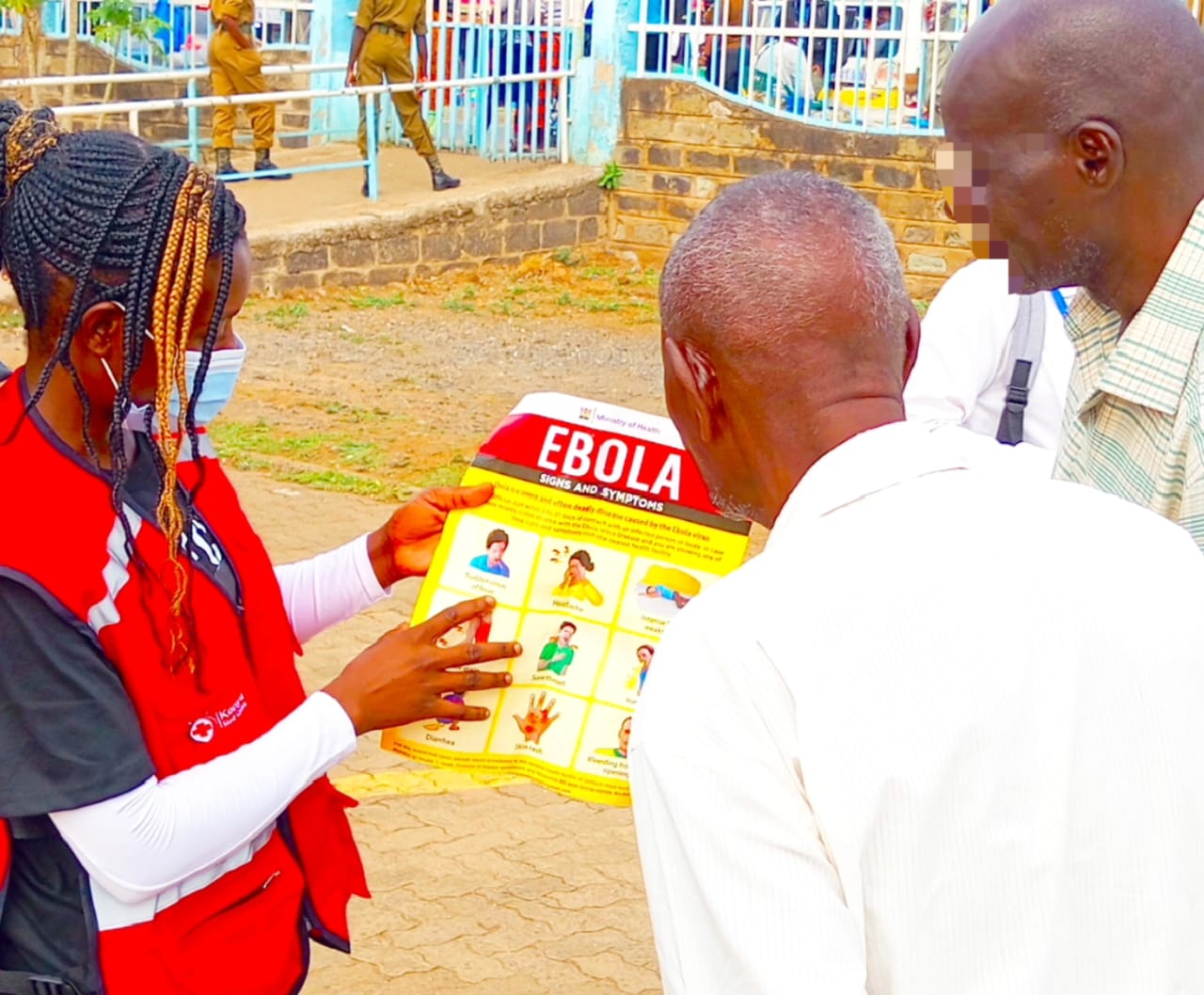
Oluoch says the hospital is using various communication channels, including educational posters, radio talk shows and social media platforms, to reach communities with information on Ebola prevention and the importance of early reporting.
Members of the public are also being encouraged to observe proper hand hygiene, cooperate with screening teams and promptly report any suspected symptoms or possible exposure through appropriate healthcare channels.
ISOLATION CENTRES: BUILDING CAPACITY TO RESPOND
Another key component of JOOTRH’s preparedness strategy is the establishment of dedicated isolation capacity to ensure suspected cases can be safely managed without exposing other patients and healthcare workers.
JOOTRH Chief Executive Officer Dr Joshua Okise says the hospital, in collaboration with the Kisumu County Government, has identified an eight-bed isolation facility at the former Kisumu County Referral Hospital.
Okise says the arrangement is intended to concentrate specialised resources and expertise at one designated location rather than establish multiple isolation centres that could overstretch available human and financial resources.
The hospital is working with both county and national governments to mobilise the resources required to equip the facility, including personal protective equipment (PPE), trained personnel and other essential supplies.
CONCERNS OVER ADEQUATE PROTECTION FOR FRONTLINE HEALTH WORKERS
Despite the enhanced surveillance and preparedness measures, concerns remain over the availability of adequate personal protective equipment for healthcare workers who may be required to handle suspected Ebola cases.
Oluoch reveals that the hospital currently has approximately 30 sets of PPE borrowed from the county government, while a budget has already been prepared to procure additional supplies.
“We only borrowed a few of them, of which we have already done some budget. We are still waiting if they can act on it. But as of now, we have very few,” she says.
The hospital is therefore engaging both county and national governments to address the existing resource gaps and ensure frontline healthcare workers have adequate protection as part of its wider Ebola preparedness efforts.
About Author