MTRH Isolates One Person for 21-Day Ebola Monitoring, CEO Reassures Public
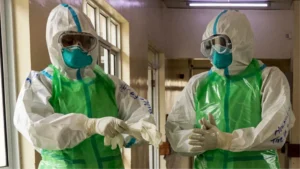
MTRH has previously announced enhanced preparedness measures, including infection-control protocols, staff training and improved systems for identifying and safely managing suspected cases.

Dr. Phillip Kirwa, CEO of MTRH, addresses the media at a past event .
By Hubz Media | Health News
Moi Teaching and Referral Hospital (MTRH) in Eldoret has isolated one person for a 21-day monitoring period as part of precautionary measures against Ebola, with Chief Executive Officer Dr Phillip Kirwa assuring the public that the individual should not be presumed to have the disease.
In a statement, Dr Kirwa clarified that isolation or quarantine for monitoring does not automatically mean a person is infected, explaining that individuals who may have been exposed to the virus are monitored for symptoms during the incubation period.
“We have no Ebola-infected patient. Quarantine is not equal to an infected person,” he said.
He explained that the individual would be monitored for 21 days and released if no symptoms developed during the monitoring period.
Dr Kirwa urged the public to remain calm, emphasising the importance of distinguishing between precautionary public-health measures and a confirmed Ebola infection.
The clarification comes as Kenya strengthens surveillance and contact-tracing efforts following confirmation of Ebola cases in the country. The World Health Organization (WHO) reported on October 16, 2026, that Kenya had confirmed three cases of Bundibugyo Ebola, including one death. Two subsequent cases were detected among close family contacts already under quarantine.
The Ministry of Health has also intensified preparedness measures, including surveillance, laboratory testing, infection prevention and control, and monitoring of people who may have been exposed to the virus. The ministry has urged Kenyans to remain vigilant without panic and to seek medical attention promptly if they develop symptoms or suspect exposure.
According to WHO, the incubation period for Ebola ranges from two to 21 days. Symptoms may include fever, fatigue, muscle pain, headache and sore throat, followed in some cases by vomiting, diarrhoea and other serious complications.
Ebola spreads through direct contact with the blood or body fluids of an infected person who is symptomatic, or with contaminated objects. It is not transmitted through the air.
MTRH has previously announced enhanced preparedness measures, including infection-control protocols, staff training and improved systems for identifying and safely managing suspected cases.
Members of the public are advised to rely on official updates from the Ministry of Health and recognised health facilities rather than unverified social media reports.
About Author