Mwea Rice Farmers Hit by Cold, Snails and Fertilizer Shortage as Planting Season Kicks Off
According to farmers and field reports, more than 90 per cent of farms within the Mwea scheme have been affected by the snails.
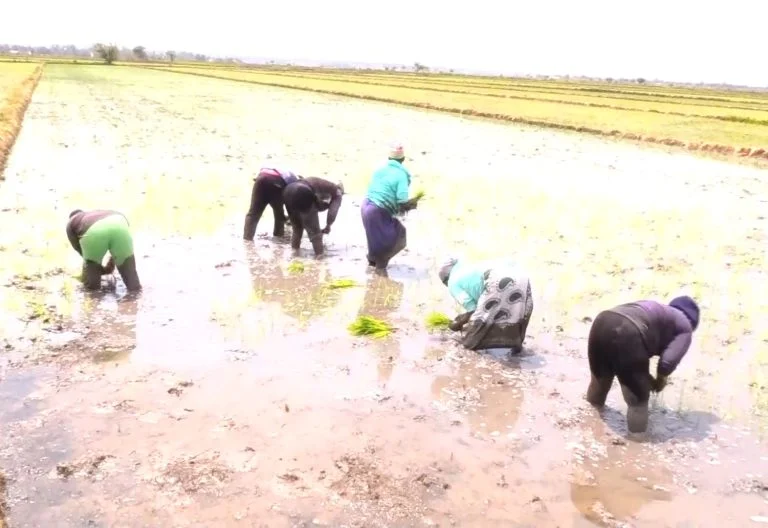
Photo: Courtesy.
By Anneth Chepng’etich
Rice farmers in Mwea Irrigation Scheme are staring at a difficult planting season as a combination of cold weather, an invasion of golden apple snails, and a shortage of fertilizer threatens to cut production in Kenya’s largest rice-growing hub.
The Mwea Irrigation Scheme in Kirinyaga County, which accounts for more than 80 per cent of the rice produced locally, is grappling with multiple challenges that farmers fear could severely reduce yields and worsen the country’s dependence on imported rice.
Farmers across several sections of the scheme say unusually cold conditions experienced in recent weeks have slowed the growth of seedlings in nurseries, forcing many to delay transplanting activities. The low temperatures have affected germination and early growth, disrupting the planting calendar.
The cold spell has coincided with a worsening invasion of the golden apple snail, an invasive pest that feeds on young rice shoots and is capable of destroying newly planted fields within days.
According to farmers and field reports, more than 90 per cent of farms within the Mwea scheme have been affected by the snails. Some growers have reported losses of up to 60 per cent of their crop, raising fears of a sharp drop in production this season.
The snail, which reproduces rapidly by laying hundreds of eggs at a time, has proven difficult to control. Its egg clusters, often pink in colour, are visible on rice stalks and bunds, but manual removal is laborious and costly for small-scale farmers.
Adding to the crisis is a shortage of fertilizer. Farmers say subsidized fertilizer is not readily available in local depots, while prices in the open market remain high. Many are struggling to prepare their fields on time, with fears that delayed application will further affect yields.
“We are facing many challenges at once. The cold weather has slowed seedling growth, snails are destroying our fields, and fertilizer is not readily available,” said one farmer from Tebere section of the scheme.
Agricultural experts have advised growers to adopt integrated pest management practices to contain the snail menace. These include periodic draining of fields to expose and kill snails, handpicking and destroying egg masses, proper land levelling, and use of approved molluscicides where recommended.
The National Irrigation Authority (NIA) and the Kenya Agricultural and Livestock Research Organization (KALRO) have previously warned that the spread of golden apple snails poses a major threat to rice production not just in Mwea but in other irrigation schemes across the country.
The agencies have called for coordinated efforts between county and national governments, researchers and farmers to contain the pest before it spreads further.
With rice consumption in Kenya continuing to rise against declining local production, farmers are now urging the government to intervene urgently by ensuring timely supply of affordable fertilizer, supporting mass snail control programmes, and helping farmers adapt to changing weather patterns.
For thousands of families in Mwea whose livelihoods depend on rice farming, the outcome of this season will not only determine their incomes but also the country’s progress towards rice self-sufficiency.
About Author