Religious Rights Groups Oppose Proposed Religious Organisations Bill 2024 Over Freedom Concerns
Civil society groups and religious rights advocates have urged the government to review the proposed Religious Organisations Bill 2024, warning that some provisions could exclude minority faith groups, duplicate existing laws and undermine constitutional protections on freedom of religion and belief.
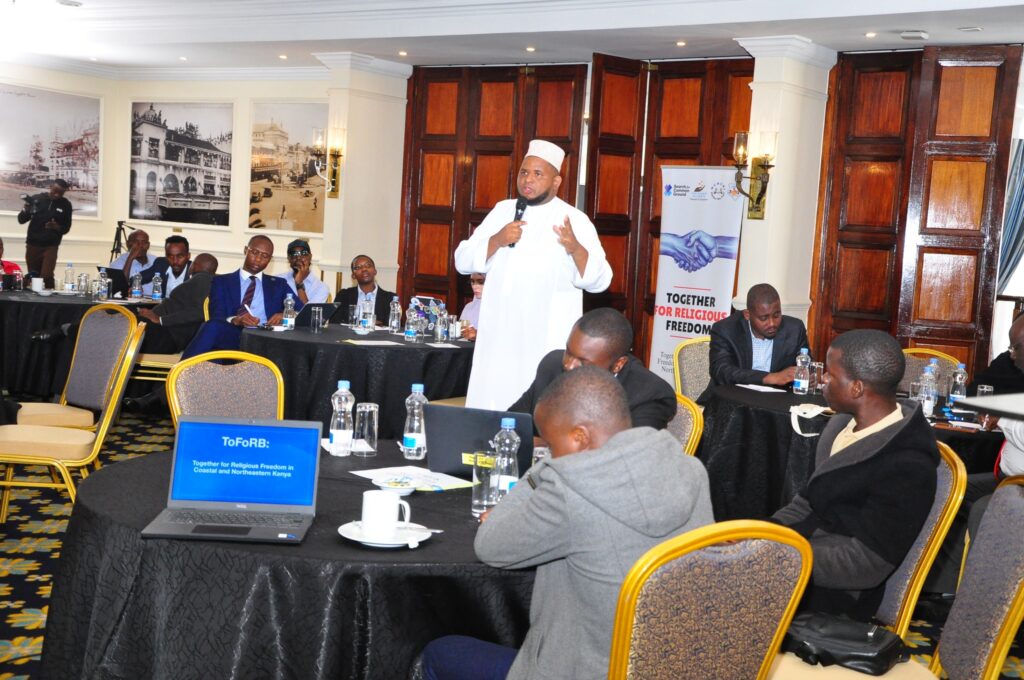
Religious rights groups and civil society organisations address the media in Nairobi, calling for a review of the proposed Religious Organisations Bill 2024 over concerns it could undermine freedom of religion and belief. Photo/Courtesy
By Ruth Sang
Civil society organisations and religious rights advocates have urged the government to review the proposed Religious Organisations Bill 2024, warning that some of its provisions could threaten constitutional protections on freedom of religion and belief.
Speaking during a Coalition Government Dialogue on Freedom of Religion or Belief (FoRB) forum in Nairobi, a consortium led by Search for Common Ground argued that the Bill introduces additional regulatory structures that may fail to address the real causes of religious abuse and extremism while undermining Article 32 of the Constitution.
The coalition, which includes KESHO Alliance, Muslims for Human Rights (MUHURI) and Kenya Community Support Centre (KECOSCE), said several provisions in the proposed law risk creating exclusion and duplicating existing legal mandates.
Executive Director of MUHURI Wallid Kassim warned that the Bill could marginalize minority faith communities and impose restrictive regulations on religious organisations.
“The proposed law could create exclusion by favouring certain religious groups while sidelining others, particularly African traditional belief systems and minority faiths,” Kassim said.
He noted that within Christianity, the proposed framework appears to recognise only selected religious bodies such as the Catholic Church, the Evangelical Alliance of Kenya and the National Council of Churches of Kenya, potentially excluding other denominations and faith expressions.
Kassim further argued that indigenous and minority belief systems, including African Traditional Religions, Kaya elders, Rastafarian communities and other traditional spiritual groups, appear to have been left out despite being part of Kenya’s cultural and religious heritage.
The consortium also questioned the proposal to establish a Religious Organisations Commission, saying the body would duplicate the mandate already assigned to the Office of the Registrar of Societies under the Office of the Attorney General.
“The Office of the Registrar of Societies is already mandated and institutionally equipped to undertake registration and administrative functions relating to societies, including religious organisations,” part of the recommendation stated.
The organisations instead called for strengthening the Registrar of Societies to improve oversight while avoiding duplication of roles and unnecessary public spending.
The groups further argued that Kenya already has adequate laws to deal with issues such as terrorism, money laundering, child protection and misuse of religion, adding that authorities should focus on enforcing existing laws rather than creating additional structures.
They also raised concerns over proposed registration requirements for religious institutions, including mandatory academic qualifications and recommendation letters from umbrella religious organisations.
According to the consortium, such measures could create unnecessary and disproportionate barriers to the enjoyment of freedom of religion and belief as guaranteed under Article 32 of the Constitution.
About Author