Mediheal Gets Relief as MPs Call for Conditional Lifting of Kidney Transplant Ban
“The suspension was necessary to protect vulnerable patients and restore order in the system. However, any decision to lift it must be based on full compliance with the law, proper oversight, and restoration of public confidence,” Nyikal said.

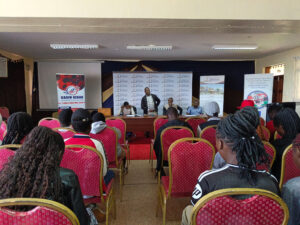
Dr. Swarup Mishra, founder of Mediheal Group, flanked by senior counsel Katwa Kigen, addresses the press at Mediheal Hospital, Eldoret, amid transplant scandal investigations. File Photo
The National Assembly Health Committee has recommended the conditional lifting of the suspension imposed on kidney transplant services at Mediheal Group of Hospitals, setting out strict legal, ethical, and regulatory thresholds that must be met before services can resume.
The suspension had been imposed by Health Cabinet Secretary Aden Duale in 2024, following mounting concerns over alleged malpractice in the hospital’s transplant program, including claims of unethical donor recruitment, transplant tourism, and possible exploitation of economically vulnerable individuals.
In its report, the committee states that the lifting of the sanctions will only take effect after the hospital undergoes a comprehensive and independent audit of its transplant operations, addresses all accountability concerns raised during the inquiry, and is formally certified by relevant regulatory authorities as compliant with both national laws and international ethical standards governing organ transplantation.
Chairperson of the committee, James Nyikal, said the recommendation seeks to strike a balance between enforcing accountability and safeguarding access to critical healthcare services, noting that any reinstatement must be anchored on transparency and strict adherence to medical ethics.
“The suspension was necessary to protect vulnerable patients and restore order in the system. However, any decision to lift it must be based on full compliance with the law, proper oversight, and restoration of public confidence,” Nyikal said.
The findings stem from an extensive parliamentary inquiry that examined the operations of Mediheal’s transplant programme and the broader regulatory environment in Kenya. The committee heard from a wide range of stakeholders, including Mediheal management, transplant surgeons, officials from the Ministry of Health, representatives of regulatory bodies, members of the Kenya Renal Association, as well as donors, recipients, and their families.
According to the report, more than 20 witnesses appeared before the committee, presenting both oral and written submissions that highlighted systemic weaknesses in oversight, gaps in enforcement of existing laws, and ethical concerns surrounding transplant procedures. The testimonies pointed to issues such as inadequate informed consent, the role of intermediaries in donor recruitment, and inconsistencies in documentation.
The committee also noted the scale of Mediheal’s operations, indicating that the hospital employs hundreds of medical and support staff across its facilities. It observed that while the institution plays a significant role in healthcare delivery, the seriousness of the allegations necessitated firm regulatory action to protect public interest.
Beyond the hospital itself, the report raises concerns over the conduct of public officers and institutions involved in enforcement and oversight. The committee recommends investigations into officers attached to Langas Police Station over allegations of inaction and possible interference in cases linked to the transplant controversy. It directs the National Police Service to take appropriate disciplinary and legal action against any officers found culpable.
At the same time, the Ethics and Anti-Corruption Commission has been tasked with investigating possible corruption, abuse of office, and any collusion that may have facilitated irregular transplant practices or undermined oversight mechanisms.
“Accountability must not be selective. All individuals and institutions found to have acted outside the law must be held responsible to restore integrity in the system,” Nyikal added.
The report further outlines far-reaching policy and institutional reforms aimed at addressing structural gaps exposed by the inquiry. These include the urgent enactment of a comprehensive legal framework governing blood, cell, tissue, and organ transplantation, as well as the establishment of a National Organ Transplant Authority to oversee licensing, compliance, and enforcement.
It also recommends the creation of a centralized national transplant registry to improve traceability and transparency in donor-recipient matching, alongside the immediate operationalization of regulations under the Health Act, which have remained pending for years.
Additional proposals include strengthening the capacity and oversight role of the Kenya Medical Practitioners and Dentists Council, tightening the vetting and monitoring of foreign medical practitioners, and developing a clear national policy on organ transplantation aligned with ethical standards and universal health coverage goals.
The Ministry of Health had suspended Mediheal’s transplant services indefinitely, redirecting patients to other licensed facilities as investigations commenced. The committee now maintains that any resumption of services must be guided by strict regulatory compliance, enhanced oversight, and the protection of vulnerable populations.
As the report moves to the implementation stage, attention now shifts to the Ministry of Health, investigative agencies, and regulatory bodies tasked with enforcing the recommendations.
Nyikal underscored that the outcome of the process will be critical in restoring public trust in Kenya’s healthcare system.
“This is an opportunity to fix systemic weaknesses and ensure that organ transplantation in Kenya is conducted within the highest ethical and legal standards,” he said.
The future of transplant services at Mediheal now hinges on the hospital’s ability to meet the conditions set out by the committee, as well as the outcome of ongoing investigations into the allegations that triggered the probe.
About Author