Gachagua Defends Criticism of Placement for Grade 10, Advocating for Inequality and Centralized Systems
His words rekindled national debate on equity, merit, and balance within regional confines concerning education in Kenya as the deadline for Grade 10 placements draws near.

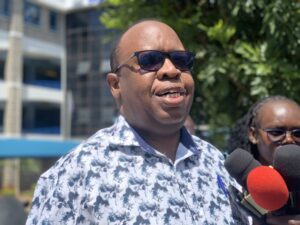
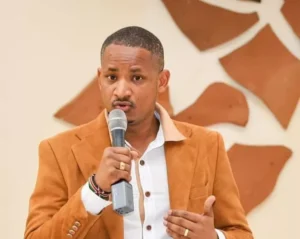
Former Deputy President Rigathi Gachagua. Photo/Courtesy
By Ruth Sang
Former deputy president Rigathi Gachagua defended himself against the recent remarks against the placement of Grade 10 learners into senior secondary schools arguing that the system was discriminatory, opaque and unfair to high performing learners and their parents.
Speaking on Friday afternoon at Outspan Hotel in Nyeri, Gachagua noted that the remarks were because of rising public outcry about the placement exercise that he argued had disadvantaged deserving students who had invested in education over many years. This remark comes just two days to when students in Grade 10 are expected to report for their senior schools.
Critique of Centralized Placement System
Gachagua has laid the blame for the problems bedeviling the placement exercise entirely on the centralization of the exercise at Jogoo House, trading it for a more transparent process in which principals played a significant role in the selection of learners.
He said, “The bureaucrats who handle these placements do not know anything at all about local situations, resulting in decisions most illogical and disruptive,” adding that there were instances when a student would have to go to a day school hundreds of kilometres from his or her home.
Gachagua went on, “The placement of our children has been centralised at Jogoo House, which is rooted in corruption because the bureaucrats sitting there have no capacity to place kids.” “That is why we have a crisis, where children are placed in day schools 300 kilometres from their homes.”
He further added that the disparities exposed by the placement process are further amplified by continued investment within the education system through devolution and the National Government Constituency Development Fund (NG-CDF). While Gachagua acknowledged the efforts of former presidents Mwai Kibaki and Uhuru Kenyatta in making huge improvements in education with Free Primary Education, with Free Day Secondary Education, and with improved infrastructure, he warned that such gains were being eroded by inequitable placement practices.
“Without a doubt, the education sector has steadily grown as the population and development priorities have increased. Nonetheless, there must be some unfortunate truths that need considering for reflection and national audit,” said Gachagua.
Merit, Equity, and the Debate on Affirmative Action
Gachagua said that since he went public on this issue last week, he had received grassroots feedback to the effect that parents from across the country were asking what criteria were used for placing students into senior schools. He dismissed claims that he raised the issue out of tribal or regional interests, insisting that he desired to see fairness and merit when admitting students.
“We demand that all children of Kenya be admitted to the best schools on merit,” he said. “I am not saying unqualified children should be admitted. I am saying that every Kenyan child who meets the cut-off should be given an equal opportunity.”
To reinforce his argument, Gachagua told of a case of a pupil from Thogoto who scored 71 out of a possible 72 but could not access a nearby national school even though he met the cut-off points, while more students who scored much lower were admitted.
The ex-Deputy President also responded to a barrage of attacks from leaders in Northern Kenya, who accused him of nurturing regional tensions. According to Gachagua, national interest guides his position and recommended reconsidering the continuing application of affirmative action in school admission.
Gachagua argued that although the Equalisation Fund, devolution, and equitable revenue sharing set out to address past injustices, special treatment should be relooked at over a decade later. Additionally, he accused leaders in other regions for not prioritising the establishment of educational institutions, having received considerable amounts of funding.
Giving figures, he said that between 2013 and now, Wajir, Marsabit, Garissa and Mandera received tens of billions of shillings that could have opened high-standard schools.
About Author