100 Nigerian Students Freed, but Majority of Kidnapped Group Still Missing
The country is also grappling with jihadist insurgents in the northeast and heavily armed criminal gangs—known locally as bandits—in the northwest.
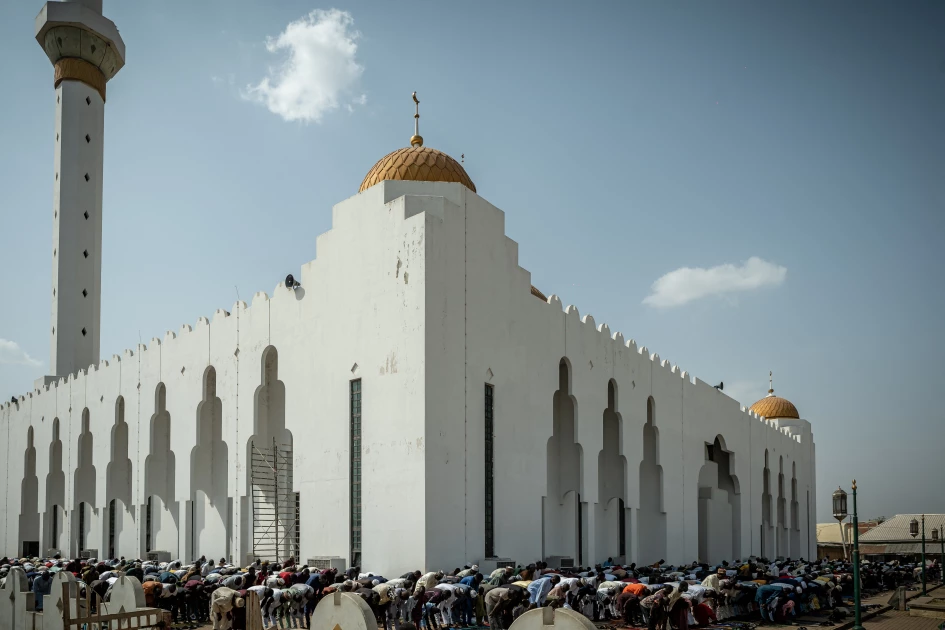
Worshippers perform their ablutions before attending the Friday prayer outside the Central Mosque in Minna on December 5, 2025. Photo/Courtesy
By Ruth Sang
About 100 children kidnapped from a Catholic boarding school in Niger state have been released, a United Nations official and several Nigerian news organizations reported. The release comes more than a month after armed attackers stormed St. Mary’s co-educational boarding school and kidnapped hundreds of students and staff.
The raid, carried out by gunmen in late November, forced 315 students and staff away in one of the largest school kidnappings to hit the country in years, with similarities to the 2014 Chibok abductions. While nearly 50 hostages managed to escape shortly after the attack, around 265 were believed to be still in captivity.
UN sources confirm that the newly freed children have already been moved to Abuja, where they will temporarily stay, ahead of an official handover to Niger State authorities on Monday. “They will be handed over to the state government tomorrow,” the official confirmed to AFP.
Local media also reported the development, though key questions remain unanswered—including whether their release followed negotiations, a rescue mission, or pressure on the abductors. The whereabouts and condition of the remaining students and staff remain unknown.
Presidential spokesperson Sunday Dare confirmed the release to AFP. Relief was also expressed by Daniel Atori, spokesman for Bishop Bulus Yohanna of the Kontagora Diocese, which oversees the school. “If this information is accurate, it is indeed encouraging news,” he said, though he noted the church had not yet received official communication from federal authorities.
A Nation Under Pressure
Kidnapping for ransom had become an entrenched criminal enterprise across Nigeria, but the spate of mass abductions this month threw a fresh spotlight on the country’s worsening security woes. The country is also grappling with jihadist insurgents in the northeast and heavily armed criminal gangs—known locally as bandits—in the northwest.
In the same month as the St. Mary’s attack, gunmen abducted Muslim schoolgirls, dozens of church congregants, a bride and her bridal party, and several villagers—underscoring the scale and diversity of victims targeted.
It remains unknown which group exactly conducted the St. Mary’s kidnappings.
The kidnappings came against the backdrop of a fresh diplomatic spat between Nigeria and the United States, after U.S. President Donald Trump charged that Christians in Nigeria were falling victim to “genocide” and implied America might take military action. Nigerian officials and independent analysts have denied the claim is true, cautioning that such rhetoric oversimplifies a complex conflict landscape where Christians and Muslims alike have been victimized.
An Increasing Kidnapping Economy
Since the incident in Chibok, mass abductions have become increasingly systematic. According to Lagos-based research firm SBM Intelligence, an estimated $1.66 million was generated from these kidnapping operations between July 2024 and June 2025-a testament to how ransom-taking has become a lucrative, organized industry.
Some experts warn Trump’s comments may embolden armed groups who seek to use rising international tensions to their advantage, while others say Nigeria has seen spikes in kidnappings many times before.
A local official in Borno State told AFP that militants might now be holding captives as potential human shields, should the U.S. make good on threats of airstrikes. Analysts have also reported that U.S. surveillance aircraft have flown over suspected militant hideouts in northern forests in recent weeks. The freeing of 100 schoolchildren provides reason to be optimistic; however, hundreds of others remain unaccounted for—a reminder of the magnitude of the kidnapping crisis facing Nigeria and of formidable challenges yet ahead.
About Author