Placing Arts at the Heart of CBC for Culture, Creativity, and Livelihoods
The real question is not whether CBC is worth the effort, but whether it will give learners the tools to safeguard their culture and build their own futures.
Governments and stakeholders will need to prioritize teacher training in creative disciplines, engage local craftspeople as mentors, and align school projects with real markets. Photo/ Courtesy
By Juliet Jerotich
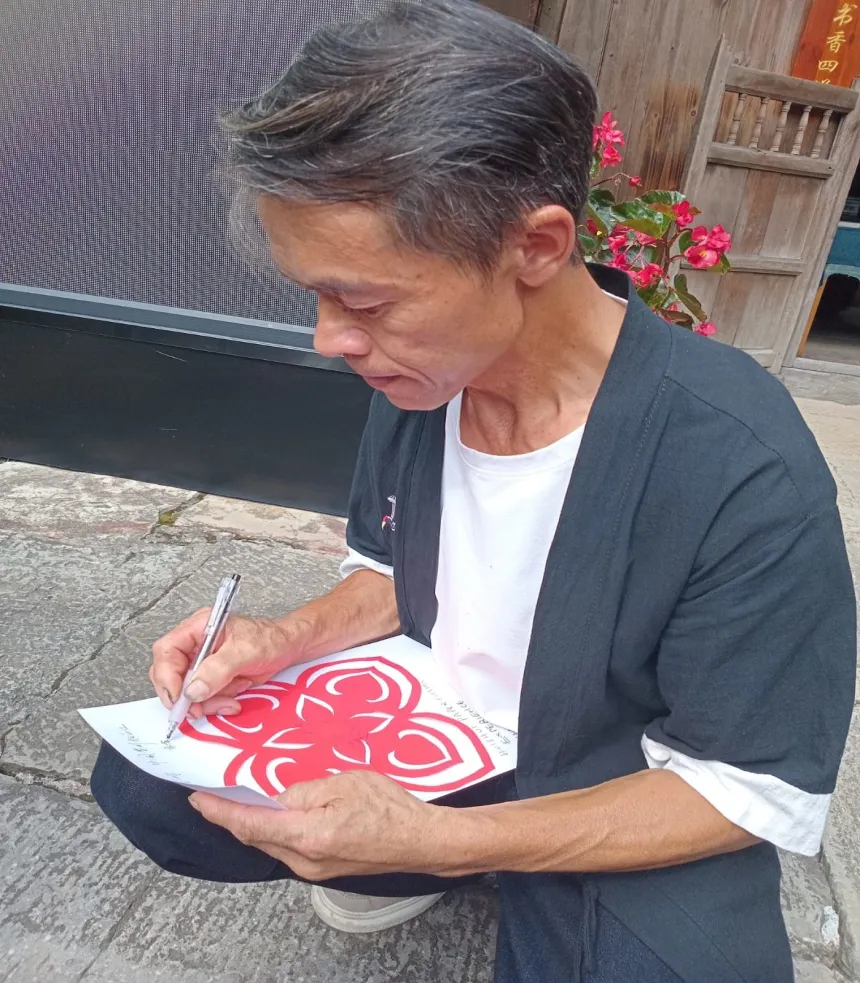
Kenyan journalists who recently traveled to China’s Yexin Haohuahong Academy to see the center first-hand arrived looking for a cultural feature, but what they learned was beyond entertainment. Through Master Li, a skilled papercutting master, they learned an art that demanded patience, creativity, and nitpicky focus. What was at first a simple exercise on red paper quickly turned into intricate masterpieces filled with centuries of legacy and heritage. It wasn’t just a question of folding paper—it was a question of sustaining culture, passing on heritage, and building livelihoods through skill.
Papercutting, which in China is also known as Jianzhi, has existed for more than 1,500 years. Its themes—ranging from dragons and flowers to phoenixes—carry immense symbolism tied to wealth, strength, and resurrection. The art has transcended global bounds, becoming listed on UNESCO’s intangible cultural heritage list in 2009. For the visiting journalists, though, the strongest lesson was not so much its looks. They saw how intensely it got linked with survival and progress of communities. Artisans earn a living not only from touristic sales, but also through teaching, innovation, and selling their skills overseas. It was a demonstration of how education, entrepreneurship, and tradition can harmonize.
This is exactly what Kenya’s Competency Based Curriculum (CBC) was meant to reflect. Unlike the 8-4-4 system that it replaced, CBC is designed to value creativity, hands-on skills, and innovation. But the Kenyan public discourse tends to be about the cost and intricacy of implementing the system, overshadowing its potential. The connection of CBC to arts education is inherent: by placing arts and crafts at the center, CBC had the potential to unleash Kenya’s diverse cultural resources and prepare learners to thrive in a thriving creative economy.
The Chinese papercutting model has three useful lessons. First, culture must be preserved and passed on via education. Kenya is endowed with vibrant traditions in woodcarving, music, beadwork, pottery, and weaving, which must be taught in schools as living heritage and not limited to extracurricular activity. Second, arts develop creativity. A white sheet may work as art, and students may be empowered to transform ideas into sustainable solutions. Third, cultural competence earns one a living. Kenya boasts an emerging creative industry in crafts, film, and fashion. With development through education, these sectors hold the promise to enable youth to create businesses instead of relying on limited formal employment.
Governments and stakeholders will need to prioritize teacher training in creative disciplines, engage local craftspeople as mentors, and align school projects with real markets. CBC cannot achieve its full promise if the arts remain sidelined. The real question is not whether CBC is worth the effort, but whether it will give learners the tools to safeguard their culture and build their own futures. Just as Master Li’s scissors turned plain paper into possibilities, a strong arts-centered CBC can turn Kenya’s learners into innovators, creators, and custodians of culture.
About Author