UDA Kicks Off Preparations for January 2026 Grassroots Elections
To UDA, such divisive practices would not be practiced; rather, they are, throughout the process, strengthened by unity and mutual respect.

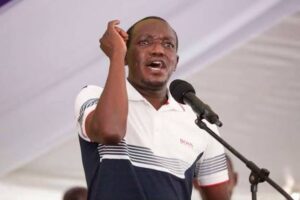
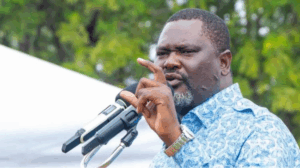
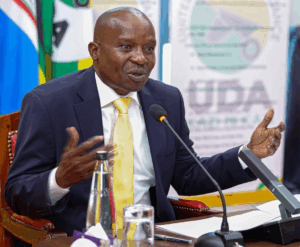
From left: National Assembly Majority Leader Kimani Ichung’wah, Igambang’ombe MP Patrick Munene, and Tharaka Nithi Senator Gitonga Murugara.Photo/Courtesy
By Ruth Sang
The𝐓𝐡𝐞 𝐔𝐧𝐢𝐭𝐞𝐝 𝐃𝐞𝐦𝐨𝐜𝐫𝐚𝐭𝐢𝐜 𝐀𝐥𝐥𝐢𝐚𝐧𝐜𝐞 UDA has kick-started preparations for its early grassroot party elections, which are slated for January 10, 2026. The move aims at cementing internal democratic practices in preparation for future national political contests from the ruling party’s grassrooted leadership.
Party members have intensified awareness campaigns throughout the country concerning the elections and the importance of active involvement. It is expected to cover newly elected party officials as per law while conducting a unifying exercise with organizational strength across the nation.
While addressing a sensitization forum for UDA grassroots elections in Chuka Town at Kathwana Stadium, National Assembly Majority Leader Kimani Ichung’wah reaffirmed that the party will conduct free and fair elections, as per Political Parties Act, which the party intends to do bona fide practice with empowering the members to choose their leaders from the lowest structures to the national level.
“The party would have a bottom-up type election process, beginning at the polling station level, with the elected leaders at this level participating in a delegates’ system that would progressively elect officials at the ward, sub-county, county, and ultimately national level,” Ichung’wah said. He noted that this made scheduling inclusive, while also putting ordinary party members directly into the debate as to how their party is being run.
“Under the political parties’ law, every registered political party is required to have elected officials at all levels,” said Ichung’wah. “These leaders will be central to mobilisation and will form the backbone of our campaigns during election periods.”
According to Majority Leader, grassroots mobilisers constantly liaise with voters to enhance their understanding of party politics and actualize political activities at the community level. This will thus create a people-responsive and people-driven party whose aspirations mirror those of its supporters.
Ichung’wah also asked party members to practice peaceful and responsible participation in the upcoming elections, emphasizing the primacy of internal democracy as a long-term factor of stability and credibility of any political organization. To UDA, such divisive practices would not be practiced; rather, they are, throughout the process, strengthened by unity and mutual respect.
All those present at the forum included party officials who echoed his sentiments that the grassroots elections will help recognize dedicated leaders who understand local issues and mobilize support for the party. The space is also an opportunity for new leadership, especially for youth and women, to take leadership positions within the party.
The forums, which have begun to spread across regions, are intended to expound on electoral procedures, eligibility requirements, and timelines to create transparency and resolution of disputes among party officials. Clear communication is expected to eliminate misunderstandings and build confidence in the process.
UDA leaders emphasized that, indeed, the grassroots elections for January 2026 are part of advancing a broader strategy by the party to enhance its capacity of organization in upcoming elections. In addition, it will perform effectively at public levels by having a stronghold countrywide, relying on well-structured grassroots leadership to espouse political dominance while directly integrating the citizens with the politics.
Keeping preparations on track, the party has emphasized that credible internal elections are, thus, expected to be above board and would not only comply with the law but strengthen the image of UDA as a people-cantered party committed to democratic values.
About Author