U.S. Tourism Set for Major Boost as 2026 FIFA World Cup Approaches
“Cities hosting these teams should brace for heavy interest,” said Sébastien Long, president of the Texas Short-Term Rental Association.
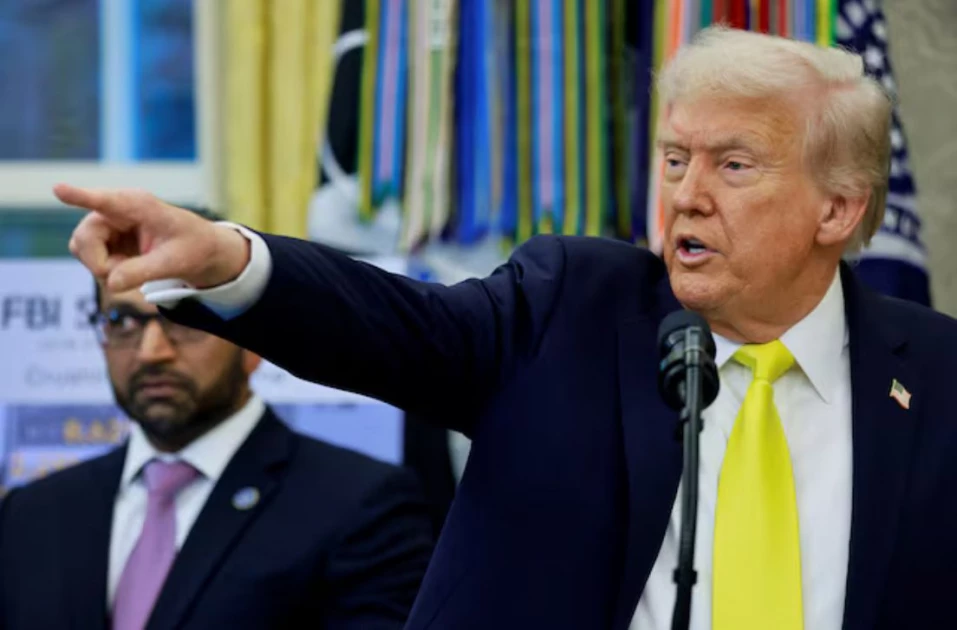
U.S. President Donald Trump points a finger as he speaks at a press conference in the Oval Office at the White House in Washington, D.C., U.S., October 15, 2025.Photo/Courtesy
By Ruth Sang
The United States is set for a major boost in international tourism when it hosts the 2026 FIFA World Cup-a pleasant turnaround after what proved to be a lackluster 2025 travel year. The fall in visitors was blamed on global unease over President Donald Trump’s trade policies and stricter border enforcement, seen to discourage many travelers.
Data from the National Travel and Tourism Office recorded foreign arrivals to the U.S. as being down 4% through July, while analysts at Tourism Economics predict a full-year drop of approximately 6.3% in 2025. But projections indicate next year’s global tournament may reverse this dramatically, drawing well over one million international visitors as matches unfold across 16 host cities in North America, including 11 locations in the United States.
It is scheduled to take place from June 11 until July 19, and will dramatically increase demand for travel to the U.S. According to forecasts from Tourism Economics, the World Cup could account for one-third of all incremental foreign visitors to the U.S. in 2026.
Flights and Accommodation Already Seeing a Surge
Interest in travel around the tournament is already growing steeply. Searches for flights and hotel stays during the period of the World Cup have grown by nearly 70% compared to searches from the same period in 2025, according to Jaroslaw Grabczak, eSky’s head of commercial product. Grabczak said he also expects a steep rise in accommodation prices, by as much as 30% at the start of the tournament and 60% as it approaches the final stages.
Estimates of the total number of foreign visitors range from 1 million to as high as 6 million, depending on a variety of forecast models. One joint estimate from FIFA and the World Trade Organization estimates that international fans will stay in the United States for an average of 12 days, buy two tickets to matches each, and spend an average of $416 per day.
Short-term rental platforms, too, are gearing up for high demand. According to a commissioned survey by Airbnb, around 232,000 guests are expected to book accommodations via its platform in host cities, with an average nightly cost of $142.
Bookings may be influenced only with the official World Cup draw on December 5, which will set match pairings and host cities. However, exceptionally strong demand is foreseen for teams such as Brazil, Argentina, England, France, and Portugal, who have huge global followings.
“Cities hosting these teams should brace for heavy interest,” said Sébastien Long, president of the Texas Short-Term Rental Association. He said that many fans travel even without match tickets, just to celebrate in live viewing zones and team-friendly venues.
One such obstacle could be visa requirements. Citizens from 22 participating countries are not part of the US Visa Waiver Program, which includes Brazil, Argentina, and Mexico. This can be discouraging for fans. On another note, President Trump has announced that he will fast-track visas for international visitors holding valid match tickets as a means to maximize attendance and travel spending. The 2026 World Cup, expected to attract millions of fans, is shaping up as a major catalyst for U.S. tourism, potentially delivering one of the most significant visitor booms in recent years.
About Author