Trump Escalates Anti-Immigrant Attacks as Racially Charged Remarks Resurface
Terri Givens, a Canadian political scientist specializing in immigration, said that any filter he previously had “is completely gone.”
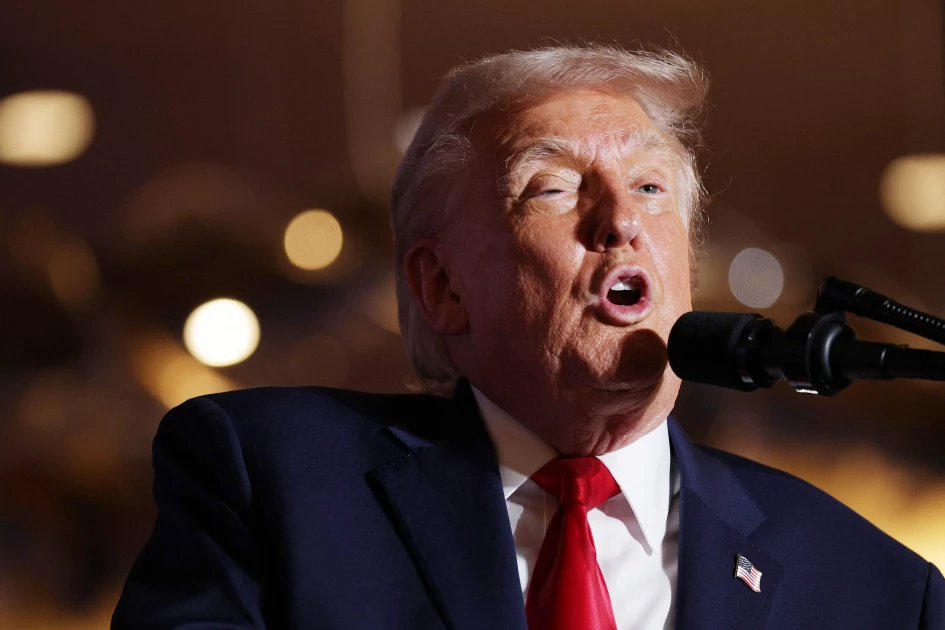
President Donald Trump . Photo/Courtesy
By Ruth Sang
Former US President Donald Trump has doubled down on using inflammatory language against non-white immigrants, resurrecting several remarks he previously backtracked from and positioning them at the core of his political messaging. The comments that sparked international outrage in 2018 have been made regularly at his rallies.
Speaking in Pennsylvania on Wednesday-at what was billed as an address on economic priorities-the 79-year-old Republican pivoted sharply to immigration, this time candidly using the very slur he earlier denied using. Trump told his supporters that during a past policy meeting, he wondered aloud why the United States accepts immigrants from what he called “shithole countries,” asking instead why more people from nations like Norway and Sweden were not coming to America.
He continued to pinpoint Somalia as a nation that is “dirty,” “full of crime,” and “disgusting.” He repeated recent comments where he called Somali immigrants “trash.” The comments sparked outrage from critics who classify such language as part of a broader racist agenda against immigrants of color.
Senator Ed Markey of Massachusetts denounced the comments on X as confirmation of Trump’s “well-documented record of hostility toward immigrant communities of color”. Politicians are not universally outraged, however. Florida Republican Randy Fine took to CNN to defend Trump, saying the former president simply “speaks bluntly” and that “all cultures are not equal”.
Historians and political analysts caution that such rhetoric has great impact, particularly as projected from the highest office in the land. Carl Bon Tempo, a professor at the University of Albany, said that anti-immigrant language has long existed on the far right, but the difference now is that “the voice delivering it comes directly from the White House,” giving it unprecedented reach.
This is not new, since during the 2023 campaign trail, Trump said immigrants were “poisoning the blood of our country,” and such rhetoric could be compared to fascist ideologies. Now in office, his administration has given way to increased deportation operations and immigration freezes from 19 of the poorest countries in the world. Meanwhile, Trump has expedited entry for white South African farmers who he claimed are being persecuted.
Experts say Trump has abandoned the little restraint he once showed. Terri Givens, a Canadian political scientist specializing in immigration, said that any filter he previously had “is completely gone.” According to Mark Brockway of Syracuse University, the president’s approach no longer distinguishes between longtime residents, lawful immigrants, or business owners—everyone becomes part of what Trump portrays as a threat.
Members of his administration have sought to further drive these narratives home. Recently, Homeland Security Secretary Kristi Noem labeled certain immigrant groups “killers” and “leeches,” deflecting public frustration about economic pressures onto vulnerable communities.
Bon Tempo emphasizes that immigration frequently serves as a flashpoint during times of economic strain but also because of deeper national questions about identity and belonging. Trump’s call for “reverse migration” in the wake of an incident involving an Afghan national reflects a growing alignment with far-right European ideas that advocate mass expulsions of foreigners.
Scholars say Trump’s message mirrors American nativism of the 1920s, a time that put white, Anglo-Saxon, Protestant identity on a pedestal and spurred restrictive immigration policy. Powerful voices around Trump today, among them senior adviser Stephen Miller, make the case that mass migration imports entire “societies” which will replicate the problems of their homelands. With Trump continuing to inflame fears and tensions over immigration, analysts have cautioned that these narratives are rewriting the landscape of American political discourse in ways that may have very enduring consequences.
About Author