Silent Scars: The Hidden Crisis of SGBV in East African Sports
Sexual and gender-based violence (SGBV) looms over female athletes in Kenya, Uganda, and Tanzania, risking their careers, their sanity, and their lives.
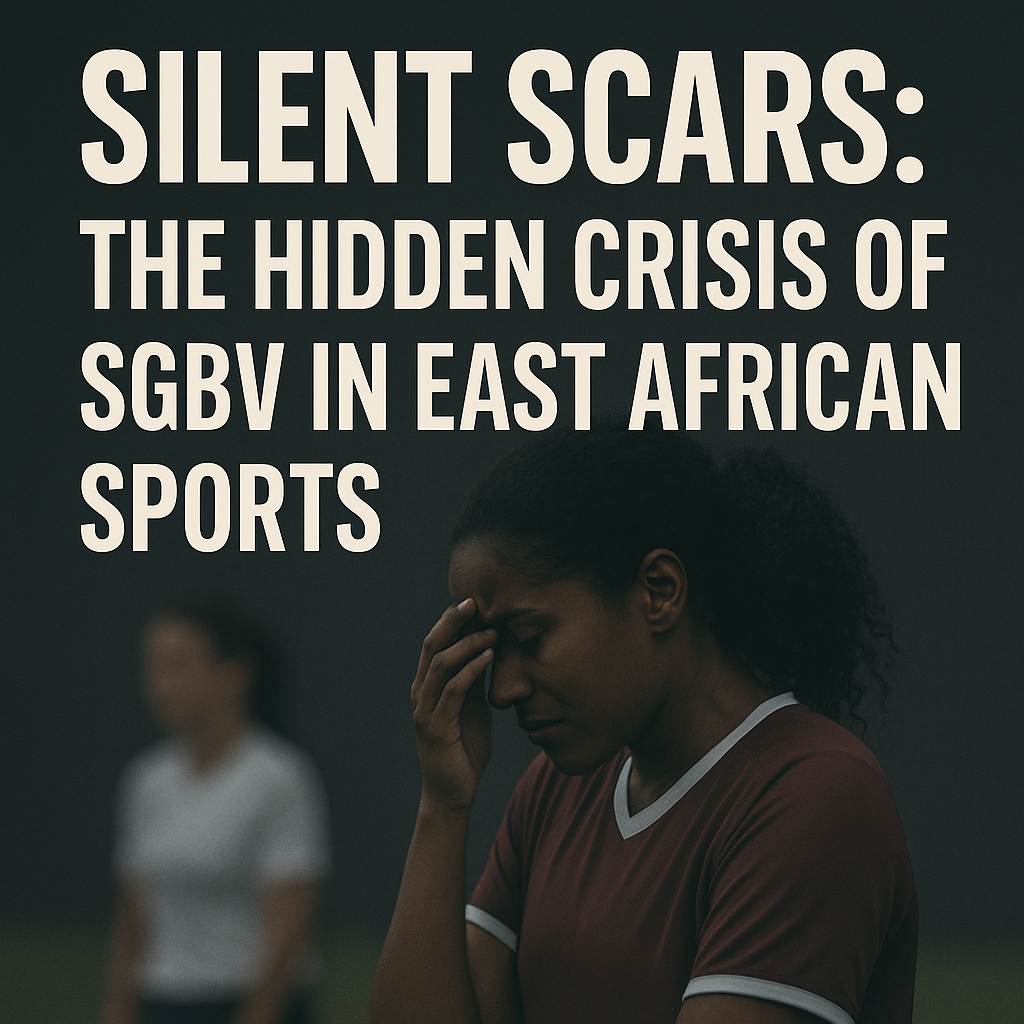
Hidden SGBV crisis threatens East African female athletes, revealed by 2025 Aga Khan University study.
By Robert Assad
Beneath the colourful facade of East African sport, where the likes of Kenya’s Faith Kipyegon and Uganda’s Joshua Cheptegei dazzle on the world stage, a darker truth lurks.
Sexual and gender-based violence (SGBV) looms over female athletes in Kenya, Uganda, and Tanzania, risking their careers, their sanity, and their lives.
A landmark research study by the Aga Khan University’s Graduate School of Media and Communications, conducted in 2025, uncovers the shocking extent of SGBV in sport, revealing a systemic crisis underpinned by patriarchal ideologies, power, and a culture of silence.
The research, Sexual and Gender-Based Violence Against Women in Sports: Prevalence, Impact, and Interventions in East Africa, surveyed 748 athletes, officials, and coaches from 32 sports federations across the three nations.
Its conclusions are stark: SGBV is not just a matter of isolated incidents but a structural issue ingrained in the sports system. Verbal abuse, emotional manipulation, sexual harassment, and exploitation are rampant, and 55% of the perpetrators are coaches, team officials, or teammates—individuals whom female athletes should be able to trust.
“It’s just hard, you know, to get women to come forward,” one participant said. “There is no tangible evidence to take this person down because of the culture we’ve developed.”
For some women athletes, the hope to compete is tainted by fear. Research has established that top-level athletes, and especially professional or competitive athletes, are most at risk.
Their dependence on officials and coaches for the advancement of their careers renders the power dynamics vulnerable to manipulation. Young and hopeful athletes, often isolated from family support, are even more susceptible.
“When you are protesting and nothing is happening, or even worse, you are being punished for protesting, that silence becomes a wound that will not heal,” a Kenyan athlete exclaimed, her voice resonating with the desperation of many.
The impact is devastating. Psychological trauma, which 47% of those interviewed cited as the most damaging effect, leaves permanent scars. Depression, anxiety, and loss of self-esteem haunt the survivors, as many are forced to abandon sport altogether (17%) or experience performance deterioration (17%).
Emotional trauma was reported by 52% of the Tanzanian respondents, closely followed by Uganda (50%) and Kenya (40%). Those abhorrent crimes, including the 2024 immolation killing of Ugandan Olympian Rebecca Cheptegei by her former partner and the 2021 stabbing to death of Kenyan athlete Agnes Tirop by her husband, serve as proof of the lethal extremes of the crisis.
These femicides and many more that remain unpunished highlight a systemic breakdown in the safeguarding of women in sport.
Why does SGBV persist? The research identifies a toxic brew of causes: patriarchal attitudes (39%), absence of punishment for perpetrators of violence (21%), and a culture of silence (14%).
Gender inequality is particularly drastic in Uganda and Tanzania, entrenching male domination and female subordination. Authoritarian management techniques, too frequently justified as “win-at-all-costs” policies, obscure the distinction between discipline and violence. Substandard facilities and denial of basic needs, including sporting kits, further heighten vulnerability, compelling players into exploitation.
“They are given promises that after a while, we’ll make sure that you sign for the first team,” a respondent shared confidentially. “But all these are traps.”
The silence on SGBV is deafening. Victims are silenced by fear of retaliation, stigma, and a lack of trust in reporting mechanisms. In Kenya, where 43% of the athletes suffer GBV in silence, incidents often occur on tours or in locker rooms, out of view.
At the regional level, 63% of those surveyed pointed to insufficient or confusing support systems, with poorer performance from Kenya (53%) and Uganda (42%) compared to Tanzania (17%).
“You speak out, and all of a sudden you’re the problem,” one athlete said. “You’re the troublemaker. You lose opportunities.”
Yet, amidst this grim reality, there is hope.
The research ranks education and awareness as the most effective intervention, receiving support from 52% of the respondents.
“The tragedy is that most young women find that it’s the norm,” one respondent said. “They don’t even think they are being abused.” Educating athletes about their rights and what constitutes abuse through awareness campaigns could reverse this narrative.
Tanzania’s comparatively stronger interventions—close to 50% of the respondents described satisfactory support mechanisms—provide a ray of optimism, indicating that visible, context-sensitive frameworks can indeed be beneficial.
The research calls for a three-pronged solution: tighter policy, secure reporting avenues, and increased female representation in leadership. In Kenya, initiatives such as those by former Sports Cabinet Secretary Ababu Namwamba to involve women on national team technical benches are welcome but only at elite levels.
At grassroots levels, where abuse is most rampant, protective policies do not exist. Having more women in management and coaching roles can help dismantle the patriarchal status quo and create safer spaces.
“Women in leadership can be a powerful force,” the study states, advocating for programmes like the African Women in Sports Initiative to amplify such efforts.
The path forward is challenging but not insurmountable. Governments, federations, and clubs must invest in education, hold individuals accountable, and offer counselling and legal support to survivors.
Collaboration with agencies such as UN Women and the African Union can enhance protection. As one participant asserted, “It’s about changing culture… because it doesn’t matter how much you do at the top if that culture is not being challenged.”
For East African women athletes, sport must be a source of empowerment, not a gauntlet of violence. This report is a call to action to dismantle the structures of SGBV so that all athletes can compete with safety and dignity. The scars are silent, but the cry for change is loud and clear.
About Author