Ruto Orders Police to Use Non-Lethal Force Against Looters
He also labeled attacks on police stations and officers as terrorism, vowing a “firm” response to any assault on security installations.

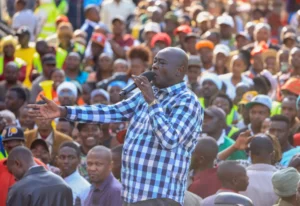
President William Ruto. Photo/Nairobi Leo.
By Mercy Chelangat
President William Ruto has directed police officers to shoot looters and vandals in the leg, rather than killing them.
The directive was made during the launch of a Kilimani housing project on July 9, 2025.
According to the President, individuals who engage in looting or vandalism during protests should be treated as criminals, not protesters.
“Anyone who goes to burn another person’s business… should be shot in the legs, taken to the hospital, and then taken to court,” he said. “They should not be killed, but their legs should be broken so they go to the hospital, and afterward, they should be taken to court.”
This directive comes in the aftermath of the June 25 and Saba Saba demonstrations, which witnessed widespread unrest and the targeting of public property and police installations.
Human rights groups have reported at least 31 fatalities and over 100 injuries during the unrest, with many attributing the deaths to the use of live ammunition and heavy-handed tactics.
President Ruto accused unnamed political figures of sponsoring “paid agitators” to hijack peaceful protests, warning that the government would take action against them.
He also labeled attacks on police stations and officers as terrorism, vowing a “firm” response to any assault on security installations.
However, civil society organizations have condemned the directive, saying it amounts to state-sanctioned brutality and risks further loss of life.
Opposition leaders and rights defenders have also warned that encouraging police to deliberately injure suspects could deepen public mistrust in law enforcement.
For months, Kenyans, particularly young people, have been taking to the streets to protest the rising cost of living, lack of jobs, and what they perceive as the government’s attempts to silence their voices.
While the government points to new job opportunities through programs like the Affordable Housing project and the Digital Superhighway, many young people say they are still struggling to find real opportunities and feel left behind.
The government faces the challenge of balancing the need to maintain order with the need to safeguard civil liberties.
While President Ruto’s “shoot in the leg” policy aims to show the administration’s commitment to stopping violence, observers warn that without close monitoring, this approach could increase tension and weaken the delicate relationship between the government and the people.
About Author