Rift Valley Muslim Leaders Urge DCI and NCIC to Probe Preacher Over Alleged Hate-Filled Sermons
Sheikh Bini said such messaging, now permeating the internet, equates to “dangerous poison,” arguing it threatens to undermine years of mutual respect and peaceful coexistence through much-engaged interfaith dialogue.

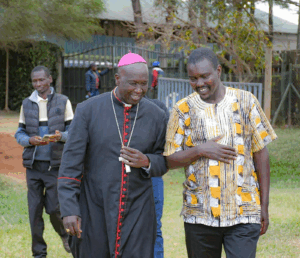
He pointed out that Kenya cannot afford to ignore alarming signs when content capable of sparking tension is openly shared online. Photo/Courtesy.
By Ruth Sang
Muslim leaders in Rift Valley have called for immediate action by investigative and cohesion agencies following a string of sermons by a local preacher that went viral, raising concerns over potential religious incitement. The clerics indicate that the videos, now widely shared on different social media platforms, contain messages that undermine peaceful coexistence and threaten to stir hostility among the diverse religious communities of Kenya.
Addressing journalists outside Masjid Noor Mosque in Eldoret on November 22, 2025, the leaders, among them Sheikh Abubakar Bini, Imam Abdulaziz Mohammed, and Sheikh Abdikadir Mohammed, strongly condemned the preacher’s remarks. They said the statements unfairly targeted and demonized other religious groups, warning that such rhetoric could destabilize interfaith relations in the Rift Valley and beyond.
Leaders note that the region with a mix of Christian, Muslim, and Hindu, among other religious communities, still remains vulnerable to tension whenever the messages of hate are amplified. They urged clerics across all faiths to unite in publicly rejecting the sermons before they inflame deeper conflict. For his part, Sheikh Bini said such messaging, now permeating the internet, equates to “dangerous poison,” arguing it threatens to undermine years of mutual respect and peaceful coexistence through much-engaged interfaith dialogue.
Imam Abdulaziz Mohammed added that silence or reluctance from religious leaders would only serve to empower people who peddle extremist views. He emphasized that the country had witnessed the tragic consequences of unchecked hate speech before, recalling incidents during the 2007–2008 post-election period when religious undertones worsened violence. He pointed out that Kenya cannot afford to ignore alarming signs when content capable of sparking tension is openly shared online.
In another statement, Eldoret Muslim community leader Zulfikar Bachu directly called upon Interior Cabinet Secretary Kipchumba Murkomen to ensure an urgent and comprehensive probe. Bachu argued that the preacher’s digital content seems to breach the Computer Misuse and Cybercrimes Act, as amended, which criminalizes the publishing of information that is false or harmful with the intention of inciting discrimination or violence. He insisted the matter went beyond freedom of expression, describing it as a direct attack on national cohesion.
Recent data from the National Cohesion and Integration Commission indicates that there is a disturbing increase in cases of hate speech across the country in 2025, with incidents increasing by more than 25 percent. Officials have repeatedly identified social media as the main vehicle for spreading inflammatory content. As the controversial sermons continue to circulate, interfaith groups and residents in the Rift Valley say they are awaiting decisive action from authorities. Many fear that delays in addressing the situation may widen religious fractures and threaten the region’s hard-earned stability.
About Author