Revealed!what women go through when selling “uji” in Nairobi
“Business is not easy yes but with hard work, consistency and resilience, it’s rewarding”

Photo Courtesy
Women & Business;
By Calister Bonareri
Mama Christine “mathe”
It was at 4.40 pm one Thursday evening and Caroline Anyango, 55 years old,
was hastily gathering her 3 thermos flasks and metallic cups from which she
served her hot uji and tea for her clients. It was not her usual closing time.
” Closing time?” she giggles when I ask her what’s her business closing time.
“you know, this is a jua Kali business. I make 2 flasks of tea and one flask of
Uji. I also make chapati and mandazi then deliver to customers at Bandari
plaza and its environs. So I close when I finish my food.”
The term ‘Informal Sector’ was first used in 1971. In the 1980s the word ‘Jua
Kali’ which is Swahili for ‘Hot Sun’ came to be used in reference to sectors
such as metal Fabricators, car mechanics and Market Sellers. This is because
they worked under the scorching sun. In the later years, it also encompassed
people who were self-employed.
The ‘Jua Kali’ sector takes up 87% of the economy according to a report by
the World Bank in 2020.
This particular Thursday afternoon, Martha, one of her usual clients had told
her to collect her money. Caroline occasionally sells her dishes on credit.
“When a customer tells you to collect payment, you better be there on time
otherwise who is to blame if you find they’ve gone home and the next day
they’ll say they used the money.’
Martha had insisted that she’d leave work at exactly 5 PM and Caroline
should be punctual. As she was crossing Mpaka road back to Bishan plaza after
collecting her money, “I just heard a loud noise followed by screams and
shattered glass which I later realized was my 3 flasks hitting the ground when
the car hit me and I fell across the street. As I lay there on the ground amidst
people’s screams, I asked God, what is the meaning of this? So much bad
luck.
“Prior to her current Tea and Uji delivery business, Caroline or “Mathe” (as
she’s known to her customers) had tried her hands on two other businesses in
Westlands’ old market.
” I had a liquor business when I first came to Westlands. It was where I used
to get money to take my children to school. The county government came and
constructed shops and I decided to upgrade my space and so I paid for one
shop. When I came the next day, I was shocked to be told that the chief had
prohibited liquor selling at the market. Just like that, I lost my business. ” She
remembered in disbelief.
” I didn’t have a choice but to quickly think of a way to make ends meet. I had
bills to pay and food to provide for my children.” she emphasized.
“I couldn’t go back to being employed. I used to work at an Indian home and it
was very difficult. I used to work from 8 am to 5 pm for Ksh 100. I was barely
making ends meet. That’s why I venture into business.”
Since she had already paid rent for the shop, she had to come up with a new
business idea. She settled on cooking and selling tea, uji, chapati, and
mandazi. She employed 2 delivery girls in order to serve as many customers
as possible hence scaling her business.
“The business was booming and customers loved my food. Two months into
the business, we woke up one morning to find that the whole market had
burned down and just like that I lost everything.
She recalls shaking her head in sadness. “I was back to the drawing board. I
went home and knelt down to pray. I asked God why this was happening. The
next day I woke up and realized I had no choice but to go back to my business
again because at least I still had customers.”
She managed to get the business back up and running with two delivery girls.
Her customers were mostly security guards, salon employees, boda boda
riders and even office employees in the office buildings along mpaka rd,
woodvale groove and Westlands rd. The girls would deliver and later go back
to collect cups as they picked payment.
One day I realized that they were stealing from me. They’d deliver to the
customer and when I ask for money they’d say the client had not paid or the
client had disappeared. But they’d still expect me to be paid their daily wages.
It became very difficult to run the business and so I decided to do the
deliveries myself despite.
“When you choose to start a business, you cannot expect it to be easy. Be
ready to weather the storms when they come. ” She insists
Christine had gotten used to cooking and delivering to her customers and
finally her business was putting money in her pocket. This is when the car
accident happened.
“I was in hospital for two months. When I went home, I asked God for strength
because I was all I had. At least my children had finished school but I still had
rent and food to buy. The car hit my right leg so it’s difficult to move around
that fast. But I had to be strong. I decided to be cooking from the house and I
got a spot outside Bandari plaza, on woodvale groove Westlands where I sell
from.”
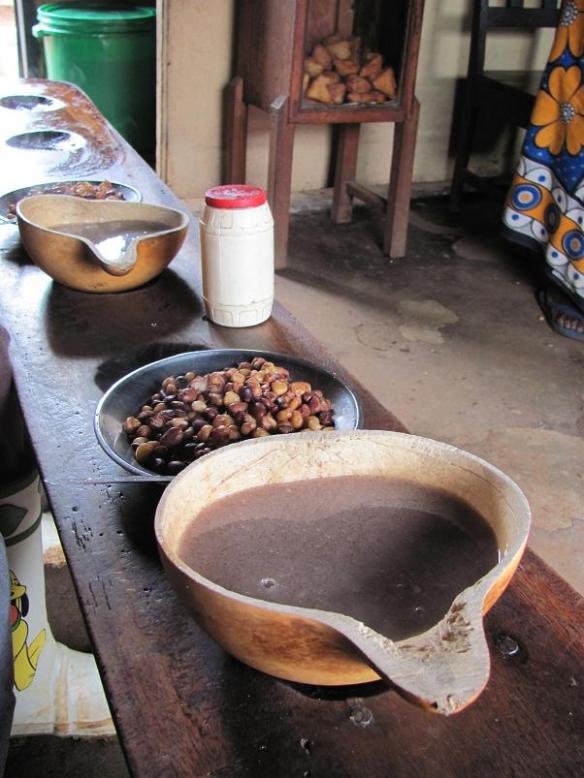 Photo Courtesy
What’s your typical day like?
I wake up at 5 AM and pray for the day to be fruitful. I go buy milk and start
making tea. I prepare 2 kgs of chapati and finish with 5 litres of Uji. I prepare
myself then pack everything and take a boda boda at ksh. 50 to the bus stop
and take a matatu to Westlands. I arrive at my spot at around 11 am.
What’s the most you’ve made in a day?
She thinks first and then laughs happily when she remembers ” There’s a day
I went home and as I counted the money, I had ksh. 1300! I was so happy.”
she looks up and continues ” I knelt and told God, thank you!”
And the most challenging part of your business…
” Sometimes people come hungry and they ask for food on credit and I just
give believing that they will pay later. Some pay. However, so many have
disappeared with my money and it saddens me but because of my faith in
God, I know God will avenge for me.”
What do you do when you don’t sell all the food?
“I just go home and eat what I can or give away. Then I go to my suppliers
and request for credit and they trust me because they know I pay. Then I
make the food and once again pray for a good day and go to work.”
What is needed to start this business?
“It won’t cost more than ksh 3000 to start. You just need a flask or two and
cups. Then get a good supplier who you can create a good relationship with
so that when in need, they can give you ingredients on credit so that you are
able to meet the needs of your customers.
“Uji”, a popular authentic Kenyan dish made from maize and millet flour, is her
highest selling dish. When combined with her soft sumptuous chapati, the duo
becomes breakfast for champions.
According to Shopify, Customer retention is the practice of increasing a
business’s repeat customer rate and extracting value from those customers.
This principle cuts across formal and informal sectors both small, medium and
large organizations.
Caroline understands this principle as per the repeat customers she has.
What has made your customers grow?
“In business you must have good customer service. Understand even those
who talk to you badly, sometimes they’re having a bad day. But even when
you’re having a bad day, never let the customer know. I also ensure my food
is consistently tasty and am always available on time.”
She pauses and then laughs ” I have just remembered a day I woke up late.
Customers were calling me as it was past my opening time. I could see
around four of my usual customers waiting for me and so with my flasks and
chapatis on my head, I increased the pace only to trip and fall. The flasks
were broken and I had nothing to sell except the chapati. You should have
seen the disappointment on my customers’ faces. ” She laughed again, I had
to join her. ‘
Her final word to entrepreneurs.
“Business is not easy yes but with hard work, consistency and resilience, it’s
rewarding. Now that am old, I’ll retire to my home up country which I built
through this business. So am happy about that.”
About Author