Putin’s United Russia Secures Parliamentary Supermajority
The results were announced amid criticism from opposition groups and Western governments, who questioned the competitiveness and conduct of the election.
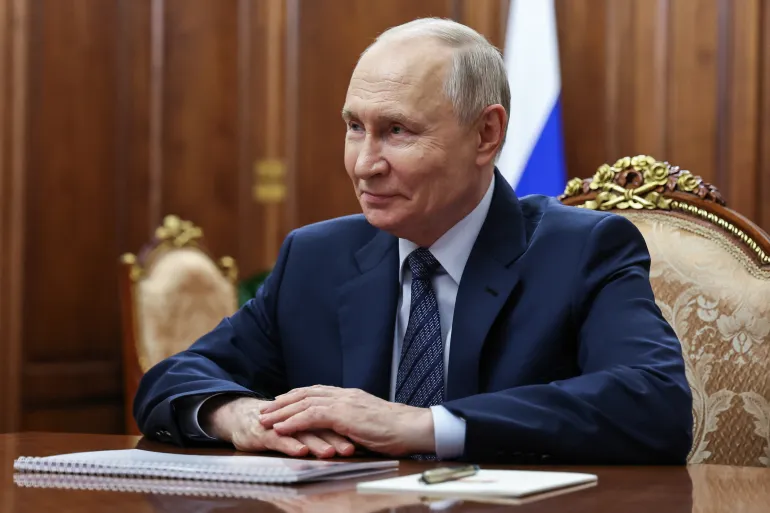
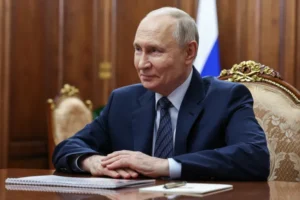
President Vladimir Putin’s United Russia party has secured more than 58 percent of the vote in Russia’s parliamentary elections, putting the ruling party on course to retain more than three-quarters of the seats in the State Duma, according to near-complete official results. Photo: Al Jazeera.
By Robert Mutasi
President Vladimir Putin’s United Russia party has secured a commanding majority in Russia’s parliamentary elections, according to near-complete official results released Monday.
United Russia had won more than 58 percent of the vote, putting it on course to control more than three-quarters of the seats in the State Duma, Russia’s lower house of parliament.
The three-day election, which ended Sunday, was the first parliamentary vote since Russia launched its full-scale invasion of Ukraine in February 2022. It also marked the first national parliamentary election to include voters in four Ukrainian regions that Moscow occupied and later declared part of Russia.
The results were announced amid criticism from opposition groups and Western governments, who questioned the competitiveness and conduct of the election.
Russia’s Central Electoral Commission said turnout was close to 60 percent. Commission chair Ella Pamfilova said Yabloko, the country’s only registered party openly opposed to the war in Ukraine, failed to win any seats at the national level.
Yabloko had been removed from the national ballot by the Supreme Court last month and fielded only a limited number of candidates in single-member constituencies. The party, however, won representation in the regional legislature in the western Novgorod region after receiving about 12,000 votes, or slightly more than six percent.
The Communist Party finished second nationally with 13.8 percent and secured 40 seats in the State Duma. The nationalist Liberal Democratic Party of Russia won 25 seats, while New People secured 20.
Opposition parties also raised concerns about access to polling stations. Yabloko and the Communist Party said some of their election observers had been denied entry to polling stations.
The election was held without observers from the Organisation for Security and Co-operation in Europe. The OSCE Parliamentary Assembly said Russia’s decision to exclude its observers violated the country’s commitments as a participating state.
The Kremlin is expected to view United Russia’s result as evidence of continued political support for the government and its policies during the war in Ukraine. Analysts, however, have cautioned against interpreting the vote as a direct measure of public backing for the conflict.
Tatyana Stanovaya of the Carnegie Russia Eurasia Center said the result could be used by President Putin to argue that his government retains public support, while noting that concerns about the war and its consequences remain among sections of the population.
Western governments sharply criticised the election process. EU foreign policy chief Kaja Kallas rejected what she described as Russia’s “so-called” election, accusing the Kremlin of suppressing dissent, excluding the country’s only registered anti-war party and preventing international election monitors from observing the vote.
Australia, Britain, Canada and two other countries also condemned the holding of parliamentary elections in Russian-occupied areas of Ukraine, describing them as part of a broader system of occupation.
With United Russia expected to retain a supermajority in the State Duma, the result is likely to preserve the Kremlin’s strong legislative control as Russia continues its war in Ukraine.
About Author