President Ruto Stands by Controversial “Shoot in the Leg” Comment Amid Protest Waves
Ruto also touched on incidents of police misconduct, including the death of a teacher and blogger named Albert Ojwang while in police custody.
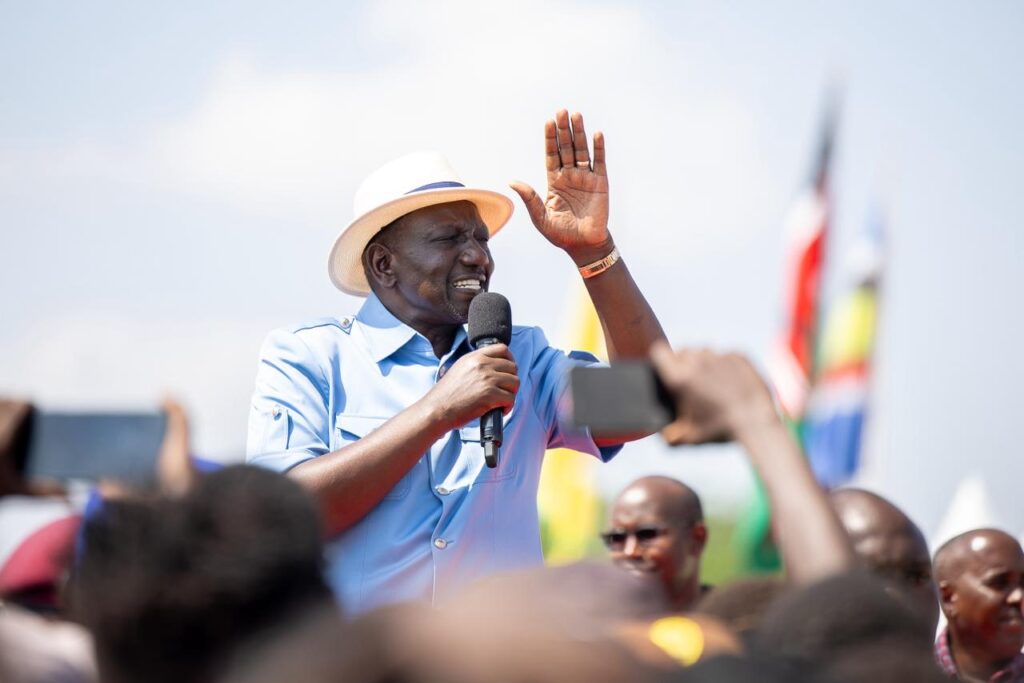
The comments have led to a broader debate over how public safety can be upheld while civil liberties are protected, calling into question limits on lawful police intervention in unrest. Photo/Courtesy.
By Phanice Rono
Nairobi, Nov 10 President William Ruto has defended his controversial statement suggesting police should “shoot in the leg” those who destroy property during protests, saying he has no regrets over the remark.
In an interview with Al Jazeera, Ruto explained that under Kenyan law, police are allowed to use force when there is a danger to lives or property. “I don’t regret those comments at all,” he said. “The law allows the police to use force when other people’s lives are in danger.”
The statement was first made on July 9, 2025, at a public event in Kilimani, Nairobi. Speaking during the ceremony, Ruto said: “Someone who goes to burn another person’s business … should be shot in the legs, taken to hospital, and then taken to court.” The statement came amid a period of heightened civil unrest, following widespread protests that erupted in June 2025.
Demonstrations were largely driven by public grievances over rising living costs, a proposed finance bill, and allegations of government corruption and police brutality. Most protests in the country were peaceful, but some escalated into violent confrontations, resulting in looting, destruction of property, and dozens of deaths.
Addressing concerns of the potential misuse of his comments, Ruto was quick to insist that he was not giving a direct order to the police, adding that the security service is independent. “There is nowhere in the law that allows me to order the police,” he said, while attempting to distance himself from claims that he instructed law enforcement on operational tactics.
Ruto also touched on incidents of police misconduct, including the death of a teacher and blogger named Albert Ojwang while in police custody. He confirmed that officers implicated in the case had been arrested, and he reiterated that rogue behavior by law enforcement officers will not be tolerated.
The president’s statement has elicited mixed reactions in the country. Human rights organizations have criticized the statement, noting that encouraging police to shoot protesters deliberately, even in the legs, is dangerous as it may encourage excessive use of force and undermine citizens’ right to peaceful assembly. On the other end, some of Ruto’s supporters say strong measures must be taken to prevent looting and theft of private property and ensure law and order during violent demonstrations. The comments have led to a broader debate over how public safety can be upheld while civil liberties are protected, calling into question limits on lawful police intervention in unrest. With Kenya continuing to work through political tensions and dissatisfaction in public, the discussion of the security forces’ role and the boundaries of state authority will likely continue as a contentious issue.
About Author