North Rift Muslim Leaders Mourn Raila Odinga, Hail His Legacy of Unity and Political Tolerance
“Raila’s leadership was instrumental in promoting peace and unity,” Bachu noted.
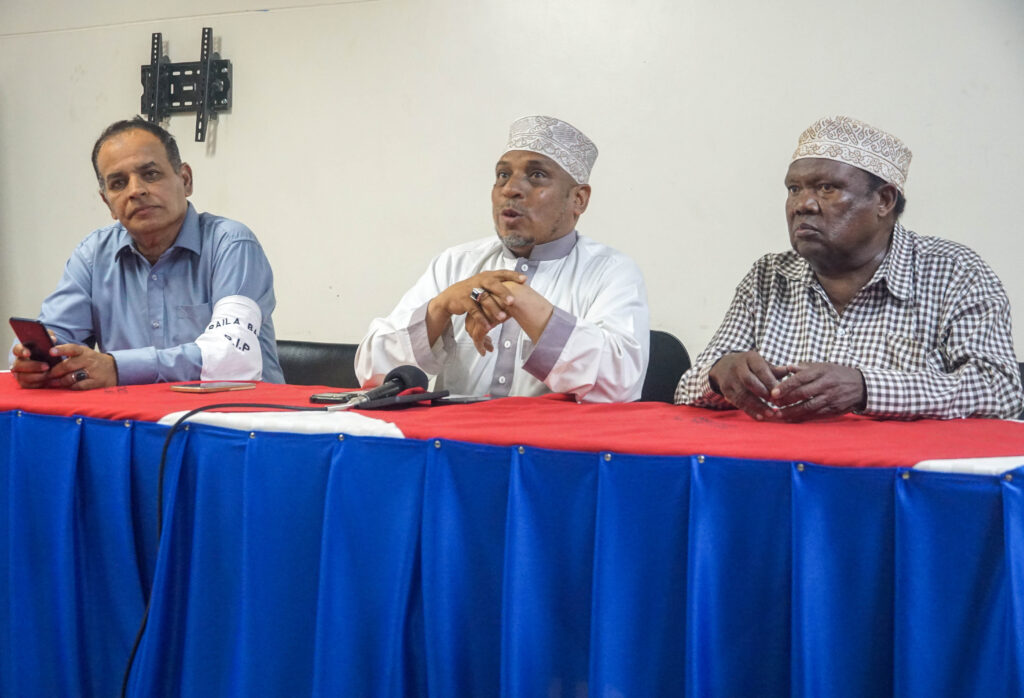
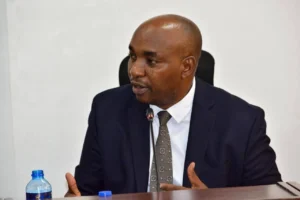
Muslim leaders in Eldoret Led by Sheikh Abubakar Bini (c) Zulfikar Bachu (L) and Hassan Koskey address the media as they pay tribute to the late former Prime Minister Raila Odinga for his contribution to religious freedom and national unity/Photo Kemuma Achieng
By Aziza Muriithi
Leaders from the Muslim community in Kenya’s North Rift region have joined the nation in mourning the late former Prime Minister Raila Amolo Odinga, who passed away recently while receiving treatment in India. His death has sent shockwaves across the country, leaving a deep void in Kenya’s political, social, and religious spheres.
Odinga, 80, was a towering figure in Kenyan politics, widely respected for his decades-long struggle for democracy, human rights, and social justice. He served as the country’s second Prime Minister from 2008 to 2013 under the Grand Coalition Government formed after the disputed 2007 elections. Over his lifetime, Odinga became synonymous with the fight for multiparty democracy and constitutional reform — efforts that reshaped Kenya’s political landscape.
Speaking in Eldoret, Sheikh Abubakar Bini, a senior Muslim cleric in the North Rift, praised Odinga’s unwavering commitment to religious freedom and inclusion.
“Raila Odinga stood firm in defending the rights of Muslims in Kenya,” Sheikh Bini said. “His advocacy for the inclusion of the Kadhis’ Court in the 2010 Constitution was a landmark achievement that guaranteed justice and equality for the Muslim community. He believed in religious tolerance, peace, and national unity. His passing is a great loss to all Kenyans who value coexistence and justice.”
The Kadhis’ Court, which handles matters of personal law such as marriage, divorce, and inheritance among Muslims, was one of the most debated issues during the 2010 constitutional reform process. Odinga’s steadfast support ensured its retention, a move widely celebrated by Muslim leaders as a victory for religious pluralism.
Prominent business figures from the region also paid tribute to the late leader. Zulfikar Bachu, a businessman and community leader, described Odinga as a statesman who transcended religious and ethnic divisions and urged current politicians to emulate his values.
“Raila’s leadership was instrumental in promoting peace and unity,” Bachu noted. “He brought people together and always emphasized dialogue over division. I call on today’s politicians to emulate the late Prime Minister by preaching peace, unity, and political tolerance. Kenya needs leaders who can rise above personal interests to serve the nation selflessly, just as Raila did.”
Another business leader, Hassan Koskey, echoed similar sentiments, highlighting Odinga’s lifelong dedication to peacebuilding.
“He was a unifying figure who believed in cooperation among communities,” Koskey said. “Even in moments of political tension, he always sought to bring Kenyans together. We have lost a true patriot.”
As the country prepares for Odinga’s final send-off, tributes continue to pour in from across the political and religious spectrum. His funeral ceremonies have been marked by prayers, reflections, and calls to uphold his vision of a just, peaceful, and inclusive Kenya.
Odinga’s enduring legacy — as a champion of democracy, social justice, and religious freedom — remains deeply etched in the nation’s history. His death marks the end of an era, but his ideals continue to inspire Kenyans to work toward unity and equality for all.
About Author