National Government Sends Emergency Food Aid to Makueni as Drought Situation Deepens
Local authorities say the situation might get worse if the dry conditions persist, further straining household coping mechanisms.

Makueni County Commissioner Khalif Abdullai . Photo/Courtesy
By Ruth Sang
The National Government has distributed emergency food supplies to Makueni County to support thousands of residents who have plunged into acute food shortage following the collapse of the recent short rainy season. This comes as families across the county grapple with worsening drought conditions that have drastically impacted agricultural production and household food reserves.
According to government officials, the relief consignment contains 3,000 bags of maize and 2,600 bags of beans, weighing 50 kilograms each. Food has been distributed across the ten sub-counties that have been identified as most affected by drought. These include Makueni, Mbooni East, Mbooni West, Kilungu, and Mukaa, among others like Nzaui, Kathozweni, Makindu, Kibwezi, and Kambua.
Makueni County Commissioner Khalif Abdullai, while addressing the media, stated that each of the targeted sub-counties was allocated an equal amount of the supplies, with 300 bags of maize and 260 bags of beans for each of the areas. He said this move is part of the government’s intensified efforts to cushion vulnerable households and prevent hunger-related deaths as food insecurity continues to rise.
He said, “The government remains fully committed to ensuring that no Kenyan loses their life due to starvation. This food aid is intended to give immediate relief to the families currently facing serious shortages.” Abdullai said this while overseeing the exercise in the distribution of food.
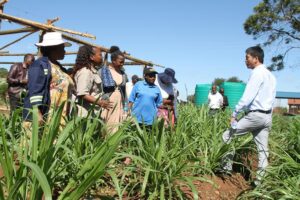
He said the current food crisis was brought about by the failure of the October, November, and December short rains, that are important for crop production in the region. Crops planted early in September had been badly affected following the failure of the expected rains to materialize at all or fell sporadically in isolated areas to cause widespread crop failure.
He pointed out that even in the areas that witnessed some rain, there was a very irregular distribution of the same, making it clearly not sufficient to sustain crops through to maturity. Consequently, many farmers lost their entire harvest, pushing households that heavily rely on rain-fed agriculture into deeper vulnerability.
“The anticipated short rains largely failed across the county. The few areas where rains were received, the rainfall was poorly distributed and not sufficient to support crop farming activities,” he added.
The erratic rainfall of the short rainy season has left thousands of families reliant on government relief and other forms of humanitarian assistance. Local authorities say the situation might get worse if the dry conditions persist, further straining household coping mechanisms.
Government agencies, in close collaboration with county officials, continue to monitor the changing drought conditions and stand ready to scale up emergency response measures where needed. In turn, residents and local leaders have drummed their calls for realistic, long-term initiatives aimed at curbing recurring food insecurity. The proposed measures include expansion of irrigation infrastructure, increased investment in water harvesting, and promotion of drought-tolerant crop varieties. Leaders say such interventions would consolidate resilience among farming communities, reduce dependence on relief food, and improve food security in Makueni County in the long run.
About Author