Nandi Integrated Forum for Conservation Targets 10,000 Indigenous Trees as Forest Restoration Gains Momentum
Every tree counts. Through sustained community participation, the Nandi Integrated Forum for Conservation hopes to help restore the escarpment, safeguard biodiversity and secure a greener future for generations to come.
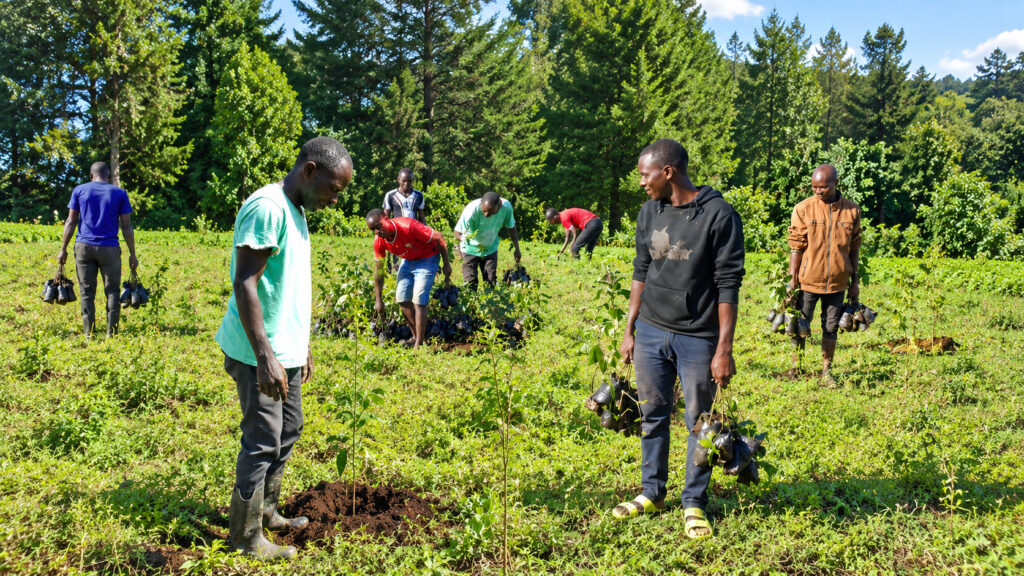
Community members plant indigenous tree seedlings at Chepkiep Forest as the Nandi Integrated Forum for Conservation steps up efforts to restore forest cover and protect biodiversity.
By James Gitaka | HubzMedia Africa
The Nandi Integrated Forum for Conservation has intensified its community-led forest restoration campaign, targeting the planting of 10,000 indigenous trees across four acres at Chepkiep Forest during Kenya’s short-rains season.
The initiative builds on ongoing efforts to rehabilitate degraded sections of the Nandi Escarpment, where communities, environmental organisations and government agencies are working together to restore forest cover, protect water resources and strengthen resilience to climate change.
The Forum is implementing the latest phase in partnership with local communities, the Kenya Forest Service (KFS) and the regional Community Forest Association (CFA), with an emphasis on indigenous species, seedling survival and sustained environmental stewardship.
Organisers report a survival rate of more than 90 per cent among previously planted trees, with dried-up seedlings replaced and regular monitoring undertaken to support the establishment and growth of the young trees.
The approach reflects a growing recognition among conservation practitioners that successful restoration requires more than planting seedlings. Long-term monitoring, replacement of dead trees and community participation are essential to ensuring that planting campaigns translate into lasting ecological benefits.
Building on a wider forest restoration campaign
The latest initiative follows an earlier conservation campaign reported by HubzMedia Africa in June 2026, when hundreds of residents and professionals under the Nandi Integrated Forum had planted more than 20,000 indigenous trees at Chepkiep/Kiptangus Forest on the Nandi Escarpment.
That campaign brought together community members, schools, government agencies, businesses and environmental stakeholders to rehabilitate degraded forest land. The report also indicated that approximately 74 hectares of the Nandi Escarpment had been restored through collaborative efforts involving the Kenya Forest Service and other conservation partners.
The initiative was spearheaded by Nandi professionals under the leadership of Dr Henry Rotich, Abraham Koech and the Forum’s patron, Dr Hosea Kili.
“Our objective is not only to plant trees but to restore the ecosystem and protect the future of generations. Communities living around forests must be empowered to take ownership of conservation efforts,” Rotich said during the earlier restoration campaign.
His remarks underscore the Forum’s emphasis on community ownership as a foundation for sustainable forest management.
The latest target of 10,000 trees represents a further commitment to the restoration effort.
Protecting water sources and biodiversity
The Nandi Escarpment is an important landscape for biodiversity, water resources and the livelihoods of surrounding communities. Forest degradation can undermine these ecological functions, contributing to soil erosion, habitat loss and increased vulnerability to changing rainfall patterns.
For residents who have witnessed the landscape change over time, restoration is also about rebuilding the environmental conditions that sustain local livelihoods.
Abraham Koech, a native of Chepkiep village, recalled how the forest had changed after years of deforestation.
“I grew up seeing this forest when it was very dense. Over the years, deforestation changed the landscape and affected our weather patterns. For more than 15 years, rainfall became unpredictable, but since we started restoration efforts two years ago, we have noticed more consistency in rainfall patterns,” Koech said.
He added: “This is about restoring our water sources, protecting biodiversity, and ensuring future generations inherit a healthy environment.”
Koech’s observations reflect local experiences of environmental change, although the reported changes in rainfall would require long-term meteorological data to establish a causal relationship between forest restoration and rainfall patterns.
Beyond planting trees, conservation in the escarpment is therefore linked to protecting water catchment areas, improving habitat conditions and strengthening the resilience of communities that depend on the surrounding natural environment.
Communities urged to extend tree growing to farms and homes
The Nandi Integrated Forum is urging residents to complement forest restoration by planting indigenous trees on farms, around homes and within community spaces.
The appeal seeks to extend conservation beyond designated forest areas, encouraging households and landowners to contribute to tree cover while supporting the protection of local ecosystems.
Climate action champion Laura Sang has similarly called for tree growing to become a shared responsibility among communities, schools and institutions.
“Every tree we plant today is a gift to future generations,” Sang said.
She also emphasised the role of schools in building long-term environmental awareness, arguing that young people should be actively involved in conservation activities.
“Our children must grow up understanding the importance of protecting the environment. Schools provide an important space where we can create climate champions who will continue this work in the future,” she added.
For the Forum, household participation is particularly important because the cumulative impact of individual planting efforts can complement organised restoration programmes. However, the ecological value of these efforts depends on selecting suitable species, protecting seedlings from damage and ensuring that trees survive to maturity.
Indigenous species are central to the initiative because they can help restore locally appropriate habitats and support the ecological relationships that sustain native biodiversity.
Conservation linked to livelihoods and community wellbeing
The Forum is also planning cycling events, marathon races and road races, alongside community engagement programmes and family activities, as part of efforts to broaden public participation in environmental conservation.
The planned events are intended to bring together residents, families, young people and other stakeholders around shared goals of environmental protection, healthy living and sustainable development.
By combining conservation activities with sports and family-oriented events, the Forum hopes to build stronger community connections and encourage more people to participate in environmental initiatives.
The approach complements a broader community-centred vision advanced during the earlier restoration campaign, when Head of Public Service Felix Koskei called for communities protecting forests to benefit from the ecosystems they help conserve.
“Communities should not only participate in conservation but should also benefit from the forests they help protect. This is the only way we can create sustainable partnerships,” Koskei said.
The principle is significant for forest-edge communities, where conservation measures are more likely to endure when local residents have meaningful opportunities to participate in decision-making and benefit from sustainable activities that do not undermine ecological protection.
Aligning local action with Kenya’s national tree-growing ambitions
The Nandi initiative also contributes to wider efforts to increase tree cover and address environmental degradation in Kenya.
The national government has promoted a target of growing 15 billion trees by 2032 as part of its climate action and landscape restoration agenda. Community-based initiatives such as the work at Chepkiep demonstrate how local organisations can contribute to this broader ambition through partnerships with public agencies, institutions and residents.
Nevertheless, the contribution of any tree-growing campaign must ultimately be assessed not only by the number of seedlings planted but also by their survival, growth, ecological suitability and contribution to restoring degraded landscapes.
For the Nandi Integrated Forum, the reported survival rate of more than 90 per cent provides an encouraging basis for the current planting season. Continued monitoring and the replacement of failed seedlings will remain important in maintaining that progress.
The Forum has expressed appreciation to its partners, volunteers and community members for supporting the ongoing campaign and has called for sustained public participation in protecting the region’s natural heritage.
As the short-rains planting season progresses, the initiative highlights a central lesson in environmental restoration: protecting forests is a long-term responsibility that requires collective action, consistent follow-up and a commitment that extends well beyond the planting day.
About Author