“When a heart attack begins, every minute counts. If we can open the artery within the first two hours, we have a very good chance of saving the patient’s heart muscle—and their life.” Dr. Phillip Kirwa, MTRH Chief Executive Officer.
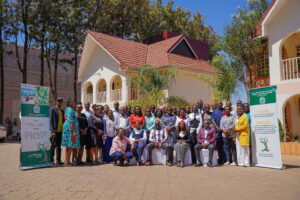
Dr. Phillip Kirwa, CEO of Moi Teaching and Referral Hospital (center), flanked by senior cardiologists and medical staff, addresses the media following the successful completion of the hospital’s first-ever heart stenting procedures. The two-day camp marked a historic milestone in expanding advanced cardiac care to Western Kenya.
Image: James Gitaka
By James Gitaka
In a historic advancement for Kenya’s healthcare sector, Moi Teaching and Referral Hospital (MTRH) has successfully conducted its first-ever Percutaneous Coronary Intervention (PCI), also known as heart stenting. This groundbreaking initiative marks a significant step in expanding access to advanced cardiac care in Western Kenya.
The procedures were carried out during a dedicated two-day medical camp, during which a multidisciplinary team performed the surgeries on seven patients, all of whom received the treatment at no cost, thanks to full funding from the Social Health Authority (SHA).
Understanding PCI: A Life-Saving Heart Procedure
Percutaneous Coronary Intervention (PCI) is a minimally invasive treatment that helps restore blood flow to the heart by opening up narrowed or blocked coronary arteries. It is commonly used to prevent or treat heart attacks, especially in patients suffering from coronary artery disease — a condition in which fatty deposits build up inside the arteries.
The procedure involves threading a thin tube (catheter) through an artery, typically from the wrist or groin, guiding it to the heart, and inflating a balloon to compress the plaque. A stent—a tiny mesh tube—is then inserted to keep the artery open permanently.
Balloon angioplasty. Computer artwork of a stent being placed in a narrowed blood vessel/Image Courtesy
“These patients were in serious danger of suffering heart attacks due to blocked blood vessels. Conditions like high blood pressure, obesity, and elevated cholesterol levels are major contributors,” explained Dr. Phillip Kirwa, MTRH Chief Executive Officer. “When a heart attack begins, every minute counts. If we can open the artery within the first two hours, we have a very good chance of saving the patient’s heart muscle—and their life.”
Bridging the Access Gap
Before this initiative, PCI procedures were available only in Nairobi, severely limiting access for millions of Kenyans living outside the capital. For many patients in Western Kenya, the delay caused by travel could be the difference between life and death.
“This is a breakthrough. We’re now bringing these life-saving services closer to the people who need them most,” Dr. Kirwa added. “It’s not just a treatment—it’s hope for families across the region.”
Patient Impact: Real Lives, Real Change
During the camp, seven patients, aged between 36 and 67, were successfully treated. The group included five men and two women, many of whom had previously experienced chest pain or even multiple heart attacks.
Dr. Felix Barasa, Head of Cardiology at MTRH
“Some of these patients had already survived one or two heart attacks,” said Dr. Felix Barasa, Head of Cardiology at MTRH. “Until now, our only option was to manage them with medication, because we lacked the tools for intervention. This time, we were finally able to physically open their arteries and offer a long-term solution.”
Each PCI procedure took between one and one-and-a-half hours, conducted inside the newly commissioned catheterization lab at the MTRH Memorial Wing, equipped with high-end cardiac technology provided by the Ministry of Health.
A Growing Threat: Heart Disease in Kenya
Cardiovascular diseases are on the rise in Kenya, driven by a range of modifiable and non-modifiable risk factors. According to data from the MTRH team, the most common causes include:
High blood pressure (hypertension) – affecting nearly 1 in 3 Kenyans aged over 30 years
Diabetes – often undiagnosed and poorly managed
High cholesterol – linked to diet and lifestyle
Smoking – still prevalent despite awareness campaigns
Obesity – increasingly common in both urban and rural settings
Genetic predisposition – family history of heart disease
Raising public awareness about these risk factors is key to preventing the progression of heart disease, and the PCI program at MTRH is helping lead that education effort.
Empowering Local Teams Through Mentorship
The camp also served as a critical training and mentorship opportunity for MTRH’s internal team. Leading the procedures was Dr. Etienne Amendezo, a renowned international cardiologist from Aga Khan University Hospital in Nairobi, who worked alongside local doctors and nurses to share best practices and enhance local capacity.
Dr. Etienne Amendezo, a renowned international cardiologist from Aga Khan University Hospital in Nairobi.
“This isn’t just about treating a handful of patients. It’s about building the skills and systems that will allow this hospital to offer PCI regularly,” said Dr. Amendezo. “This technology has saved millions of lives globally. Now, it’s here, and it’s here to stay.”
Among those trained was Dr. Joan Kiyeng, the only female cardiologist at MTRH, who played a hands-on role in performing the procedures.
Dr. Felix Barasa, Head of Cardiology at MTRH.
“The mentorship from Aga Khan Hospital has been transformative,” she said. “Today, we have a team that can independently perform these interventions, and that’s a big win for our community.”
The medical team included senior consultants, cardiology fellows, and cardiac nurses such as Dr. Wilson Sugut, Dr. Metito, Dr. Moraa, Dr. Rutto, and specialist nurses P. Chebet, K. Masika, O. Mugodo, and B. Naliaka.
Affordable, Accessible, and Life-Saving
One of the most remarkable aspects of this initiative was its affordability. In many private hospitals, a single PCI procedure can cost up to KSh 2 million, making it inaccessible to the majority of Kenyans.
Through SHA funding, all patients in the MTRH camp received their procedures completely free of charge.
“We are proving that advanced cardiac care doesn’t have to be a luxury,” said Dr. Kirwa. “Through public investment and collaboration, we’re making it available to the average Kenyan.”
A Sustainable Model for Cardiac Care
With the successful launch of PCI at MTRH, the hospital now stands as the only public referral center in Western Kenya offering this service. It is a game-changing addition to Kenya’s cardiac health landscape—reducing pressure on Nairobi facilities and ensuring timely intervention for emergencies.
“This is just the beginning,” said Dr. Barasa. “We aim to make PCI a routine offering at MTRH—not just for emergencies, but also for managing chronic heart conditions.”
Eldoret Media Hub, a working space for journalists based in Uasin Gishu County set up by the Uasin Gishu Journalists Association (UGJA) through a Media Council of Kenya (MCK) grant.
The facility was officially opened in August 2021 by the MCK Chief Executive Officer David Omwoyo.