Kericho Court Finds Two Teachers Guilty in Death of 14-Year-Old Student Enock Kipkoech
Following the court’s findings, a formal recommendation has been made to the Director of Public Prosecutions (DPP) to open criminal proceedings against the two educators

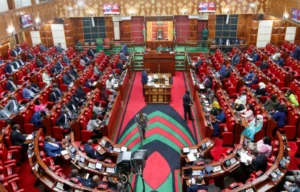
Kericho Law Court-Image Kenya News Agency.
By James Gitaka|
The Chief Magistrate’s Court in Kericho has ruled that two teachers at St. Teresa Mixed Day and Boarding Primary School in Kipchimchim are criminally liable for the death of 14-year-old student Enock Kipkoech, whose body was discovered hanging in a school bathroom on September 27, 2022.
Delivering the judgment under Inquest No. E003 of 2023, Senior Resident Magistrate Japhet Bii concluded that teachers Aron Kosgei and Philemon Kiptanui inflicted corporal punishment on the standard eight pupil in a manner that contributed directly to his death.
“There was foul play before the deceased died,” ruled Magistrate Bii. “I find that teacher Aron Kosgei and Philemon acted grossly upon the boy in a manner that led to his death. The two should be charged.”
The court noted that Kosgei had admitted to beating the student shortly before his death. The postmortem revealed injuries consistent with excessive force, particularly to the lower back and buttocks, undermining the initial suspicion of suicide.
A Timeline of Tragedy
According to testimony, Enock had returned to school from Eldoret on September 26, 2022, to resume third term. His mother, Emily Siele, said he was in good health and spirits when he left home.
The following day, Enock reportedly moved a locker desk from one classroom to another, an act which led to disciplinary measures. Witnesses told the court that Teacher Kosgei ordered Enock to kneel in the staffroom as punishment before later sending him to the bathroom—where his body was found hanging hours later.
Students who discovered the body testified that the bathroom was rarely used and contained unfamiliar blue buckets and a rope, items not issued by the school. A fellow pupil said Enock was wearing a brown hoodie and blue shorts—not his usual school uniform—when he was found.
Despite the circumstances, the school initially downplayed the incident. Enock’s father, Peter Kiplangat Siele, was only informed the next day and claimed they were denied access to both the dormitory and headteacher’s office upon arrival.
Public Outcry and Legal Precedent
The case sparked widespread outrage across Kenya, especially after local news outlets revealed that Enock had previously requested to transfer schools due to persistent physical abuse. His parents accused school staff of ignoring these concerns.
In referencing the legal basis for the ruling, Magistrate Bii cited Section 387 of the Criminal Procedure Code, which empowers courts to initiate criminal proceedings if an inquest reveals that a known person may have committed an offence.
“The inquest process is meant to uncover the truth behind unexplained deaths,” Bii noted. “This was not a suicide—it was a consequence of unlawful disciplinary action.”
Following the court’s findings, a formal recommendation has been made to the Director of Public Prosecutions (DPP) to open criminal proceedings against the two educators.
The ruling is seen as a landmark moment for child protection advocacy in Kenya, reinforcing that corporal punishment—despite being outlawed in schools—is still being practiced in some institutions.
Enock Kipkoech’s death is now a symbol of the urgent need for reforms in school discipline and a reminder of the irreversible consequences of unchecked authority.
About Author