Kenya to Build National Feed Reserves for Animals to Prevent Continuous Heavy Losses on Livestock in Droughts
He further said that the measures are aimed at streamlining Kenya from reactive crisis management to proactive planning, securing livelihoods, and strengthening national food security.

Cabinet Secretary for Agriculture and Livestock Development, Hon. Sen. Mutahi Kagwe. Photo/Courtesy
By Ruth Sang
As livestock and pastoralists continue to suffer severe drought-related losses amounting to tens of billions of shillings, the government intends to build national reserves for animal feeds with an aim to safeguarding such livelihood forms.
According to Cabinet Secretary for Agriculture and Livestock Development Hon. Sen. Mutahi Kagwe, this strategy aims at avoiding similar drought effects as those that decimated Arid and Semi-Arid Lands (ASAL) communities in the past. The last really bad drought saw at least 2.5 million animals perishing, which translates to losses valued at over KSh 50 billion.
While launching in Embu County the Emkitha Dairy Cooperative Union, Kagwe noted that drought should be treated as normal rather than emergency and be treated as predictable within the course of future planning and investment.
Strategic Feeding Stockpiling to Buff National Pastoralists
The government has expressed new intentions to establish strategic reserves of animal feeds (including hay, silage, and drought-resistant fodder) for disaster relief use during times of severe drought. Strategic feeding reserves will be constructed during surplus production periods and opened to farmers for use in dry months to prevent livestock from dying and reduce the distress sale of livestock.
Counties will be responsible for planning, stocking, and distributing feed; the national government will therefore coordinate and authorize the supply of funds and technical support. Livestock cooperatives will play an important role as delivery agents to ensure feed will reach genuine livestock owners effectively and in good time.
The deployment of feed will be regulated by early warning systems, enabling the authority to respond before the drought worsens. According to Kagwe, timely intervention is essential in stabilizing pastoralist income and securing food production at national level.
Disease Control and Restrictions on Movement
Along with the feed reserve programme, the government specified that human movement from disease areas among livestock will be strictly controlled. The movement restrictions of animals suspected of having FMD and other endemic diseases will be strictly controlled.
These safeguards will include increased vaccination campaigns, including anthrax vaccination campaigns, biosecurity measures at livestock checkpoints to ensure safe keeping of animal health situations during both normal and drought periods.
Increase in Dairy Production by Benefits of Cooperatives
Kagwe at this similar gathering underscored the organized dairy cooperatives as building the pillar of resilience and enhancing farmer incomes. According to him, dairy farmers should learn to invest on increase per animal milk production-as better feed, nutrition and management practices represents an expansion in the number of cows.
Presently, the Embu County produces about 101.3 million litres of milk annually, valued at around KSh 5.2 billion. Unfortunately, average production is still very low; approximately eight litres per cow per day. However with improved husbandry and stronger cooperative coordination output from the 19 cooperatives under the Emkitha umbrella could rise to more than 397,000 litres per day.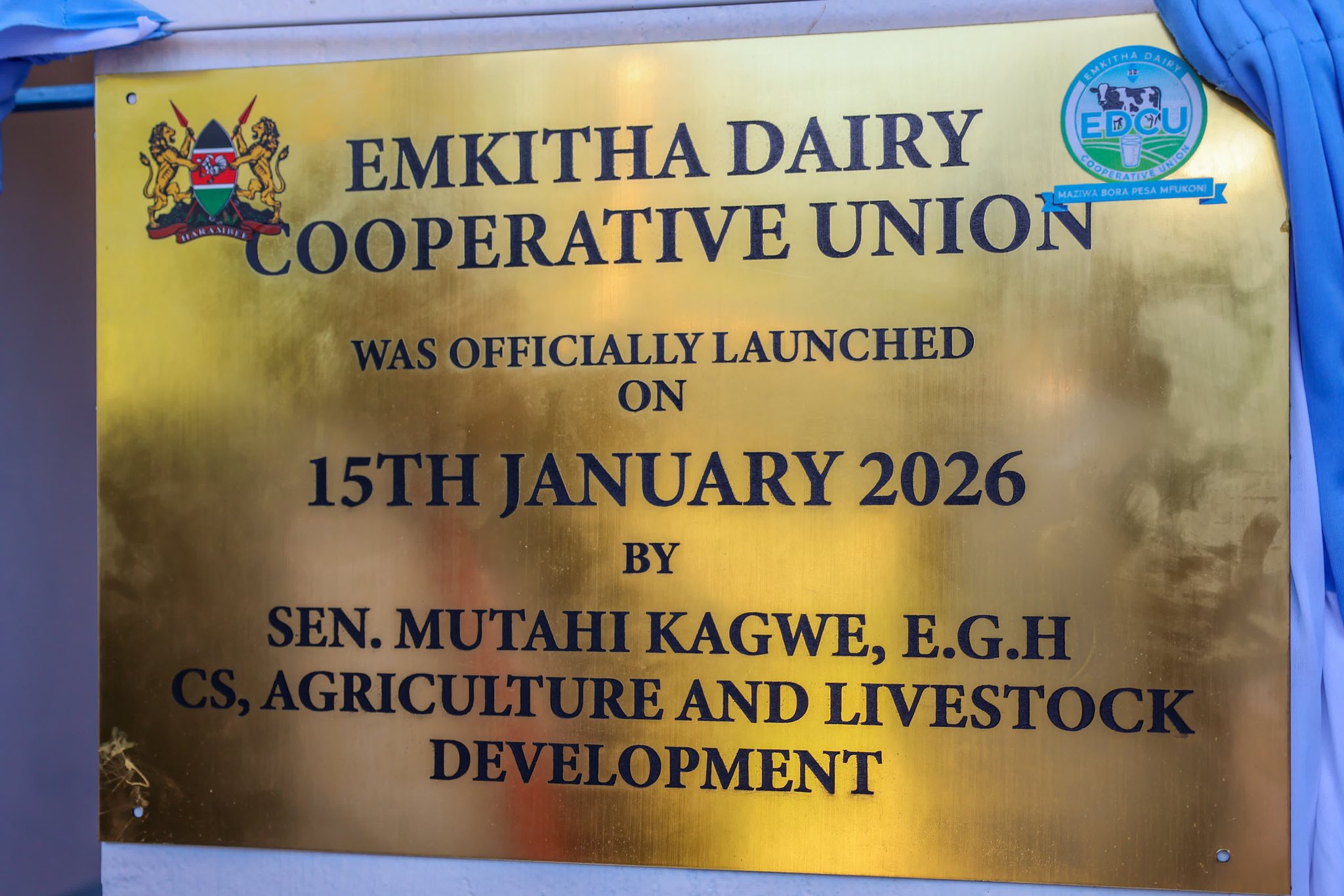
Expansion of Support Measures for Farmers
The government also wants to improve the input delivery systems based on cooperatives so that they can also support pastoralists and dairy farmers better. Under this scheme, the fertilizer subsidies shall continue. Last-mile distribution through the cooperatives and provision of some credit to farmers will be part of the plan. The modality of doing the same for animal feed support is on the table for discussion.
Some adjustments shall be made in the Kenya Integrated Agricultural Management Information System (KIAMIS) so that registered farmers directly benefit from government programmes while cooperatives are the trusted distribution channels. In addition, structured animal off-take programmes shall be introduced to ensure that farmers do not fall prey to losses through forced low prices at which they must part with their livestock during drought.
According to Kagwe, more funding has been made available for new milk coolers in Embu County in addition to last year’s delivery of 13 coolers worth over KSh 70 million-Cooler Infrastructure is designed to reduce post-harvest losses, improve quality of milk, and assist payment systems based on quality.
He stressed that counties are at the frontline in preparedness against droughts, livestock protection, and disease control and that the national government will oversee and offer technical guidance. He further said that the measures are aimed at streamlining Kenya from reactive crisis management to proactive planning, securing livelihoods, and strengthening national food security.
About Author