Kenya Sets Stage for the First National Youth Council Elections
The move is a realization of the Kenya Kwanza administration’s recommitment to ensure inclusive governance and create real opportunities for the youth
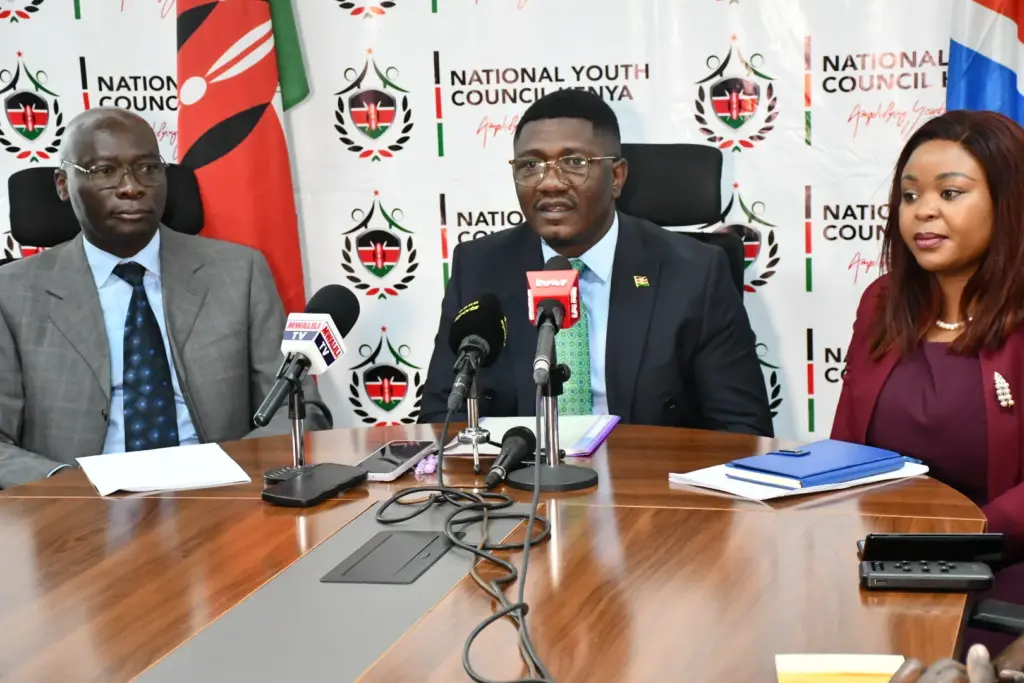
After a 13-year hiatus, the Government has officially initiated preparations for the highly anticipated National Youth Council (NYC) elections. Photo/KBC Digital
By Juliet Jerotich
After a 13-year hiatus, the Government has officially initiated preparations for the highly anticipated National Youth Council (NYC) elections, setting the stage for a milestone in youth representation and democratic participation. It is the first time the elections are being held since 2012.
The move is a realization of the Kenya Kwanza administration’s recommitment to ensure inclusive governance and create real opportunities for the youth to get involved in national leadership.
Speaking during a press conference at the State Department for Youth Affairs and Communities in Nairobi, Principal Secretary Fikirini Jacobs confirmed that the Ministry had been issued a formal directive by the Cabinet Secretary to kick-start the process of elections.
We have the go-ahead to initiate structured and open preparations for the NYC elections,” Jacobs indicated. He noted that the elections are not just about selecting leaders, but are a vital means of empowering young people to contribute to policies and governance.
“These elections are about ensuring youth voices shape national decisions. It’s a reflection of our belief in the ability and right of young people to lead,” he stated.
Instituted under the National Youth Council Act, Cap. 132, the NYC is a statutory body mandated to represent Kenyan youth nationally. It comprises eight members elected through a national election and a further eight appointed by the youth affairs Cabinet Secretary.
The initial elections to the Council were conducted in 2012. While the term was previously extended, it expired in 2019. Preparations for conducting new elections in 2022 were suspended due to the General Election, while a suggestion in 2023 to replace elections with a selection process by County Youth Directors was shot down for contravening Article 55 of the Constitution.
As such, the Ministry set up a National Steering Committee in November 2024 and embarked on resource mobilization and consultations with stakeholders. With the approval of the Cabinet in July 2025, the Ministry is now mandated and resourced to hold the polls.
Jacobs outlined a four-phase election process. The candidates must be nominated by at least 50 registered youth voters. At the ward level, six delegates (three men and three women) are to be elected from each of the 1,450 wards, for a total of 8,700 delegates.
These delegates shall elect two members—one male and one female—from among the 290 constituencies, totaling 580 constituency-level delegates. The final voting shall be conducted at the National Youth Congress, where the delegates shall elect eight members of the Council. Another eight shall be nominated by the Cabinet Secretary, and a further 31 substitute members shall be nominated by the Congress to ensure leadership succession.
Eligibility requirements are being under 35 years old by December 31st of the election year, holding at least a secondary education certificate, a police clearance or recommendation by a local chief, and compliance with Chapter Six of the Constitution. The process also makes provision for inclusion of persons living with disabilities.
Jacobs emphasized that civic education will be key to ensuring the elections are a success and that the official dates for the polls will be gazetted shortly. “We want every young person who is eligible to understand how this works and why it’s crucial that they be involved,” he said.
Referring to the 13-year gap since the previous poll, Jacobs said, “Most young people have never witnessed NYC elections. This is their opportunity to be involved, vote, and lead.”
He urged development partners and stakeholders, both public and private, to provide financial and logistical support to enhance civic education and ensure a smooth election process.
Jacobs appreciated President William Ruto for approving the election budget and reaffirming his administration’s dedication to youth empowerment. “This is more than an election—it’s nation-building and equipping responsible, visionary leaders for tomorrow,” he continued.
The NYC elections are expected to fundamentally change the governance of Kenya’s youth and provide a platform for greater involvement in national development.
About Author