Kenya Renews Dedication to the Global Battle Against Human Trafficking
The Cabinet Secretary further emphasized the ongoing government initiatives towards making laws and policies stricter, improving early detection systems
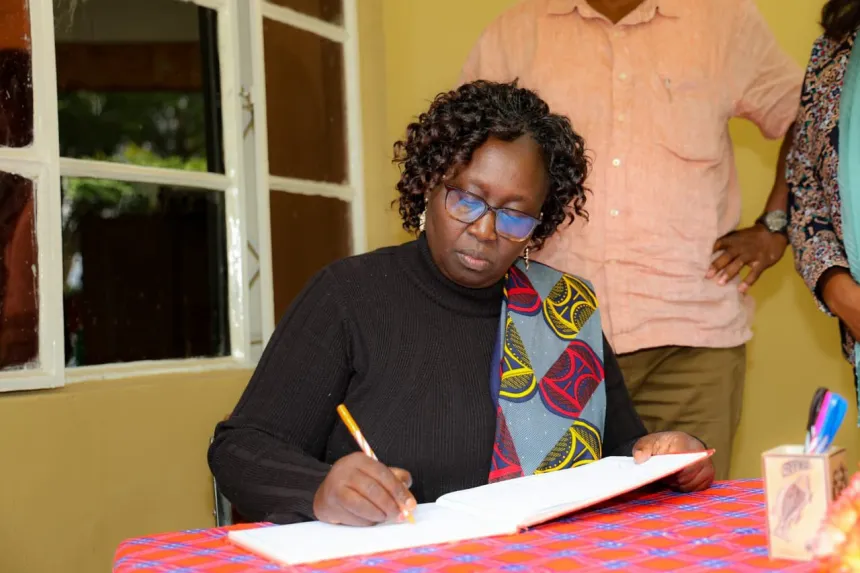
State Department for Children Services Principal Secretary Carren Ageng'o supported these issues, referring to human trafficking as an organized crime that victimizes the vulnerable through deceit. Photo / KBC Digital
By Juliet Jerotich
Kenya reiterated its unshakeable commitment to the global battle against human trafficking and abuse, with top government officials demanding united efforts directed toward safeguarding vulnerable segments—particularly children—against exploitation and abuse.
In commemorating ,World Day Against Trafficking in Persons, the Cabinet Secretary for Gender, Culture, the Arts and Heritage Hanna Wendot Cheptumo reasserted the country’s commitment to tackle the upsurge of trafficking and protect citizens from exploitation.
“Today, Kenya joins the world to commemorate World Day Against Trafficking in Persons, reaffirming commitment to protect children against exploitation and violation of human rights,” CS Cheptumo stated.
Defining child trafficking as a grave violation of human rights and a serious obstacle to development at the national level, Cheptumo promoted shared responsibility in protection and prevention.
“We call upon families, communities, civil society, and law enforcement agencies to come together to protect every child. Prevention begins with collective awareness,” she declared.
The Cabinet Secretary further emphasized the ongoing government initiatives towards making laws and policies stricter, improving early detection systems, providing rehabilitation to survivors, and raising public awareness to dismantle trafficking networks.
State Department for Children Services Principal Secretary Carren Ageng’o supported these issues, referring to human trafficking as an organized crime that victimizes the vulnerable through deceit.
“Traffickers take advantage of desperation by making false promises of improved lives, then trapping victims in slavery,” Ageng’o added.
“We need to acknowledge trafficking as organized crime and come together to bring such exploitation to an end.”
Agang’o advised Kenyans to exercise caution when working abroad by: scouting opportunities with the National Employment Authority (NEA), making sure that contracts are legally signed, and being issued real visas—actions which can protect one from being exploited by traffickers. Posing as.recruiters or so-called friends.
A 2022 National Crime Research Centre study ,report findings provided veritable facts: children account for 44.4% of victims in the domestic trafficking case, with adults describing cross-border and internal trafficking crimes. The victims are primarily subjected to forced labor, sexual exploitation, and emergent cyber-crimes such as coerced online fraud by international syndicates.
Despite these challenges, Kenya has improved the fight against trafficking based on the Counter Trafficking in Persons Act, 2010. Notable milestones include the rescue of 153 Kenyan citizens trafficked to Myanmar and forced to commit online fraud, training over 700 law enforcement officers, court staff, and aviation officers on how to recognize improved trafficking victims, assisting 35 victims through the National Assistance Trust Fund to start small businesses, and opening a state-run shelter to provide victims with appropriate accommodation and reintegration support.
Participants of the Nakuru commemoration event discussed the need to enhance early identification, reporting approaches, and measures for prevention. The public was urged to report suspected cases of trafficking in a timely manner to the Counter Trafficking in Persons Secretariat, or the National Crime Research Centre.
Observed every year on July 30, World Day Against Trafficking in Persons is a global call to action—to stand united with the victims, hold the traffickers accountable, and ensure no one is left behind in the quest against modern slavery.
About Author