Kenya Has Over 462,000 Uncollected National IDs — 15,000 Still Pending in Uasin Gishu, Officials Say
This initiative is part of the government’s broader strategy to modernize the national identification system, strengthen service delivery, and promote inclusivity for all Kenyans.
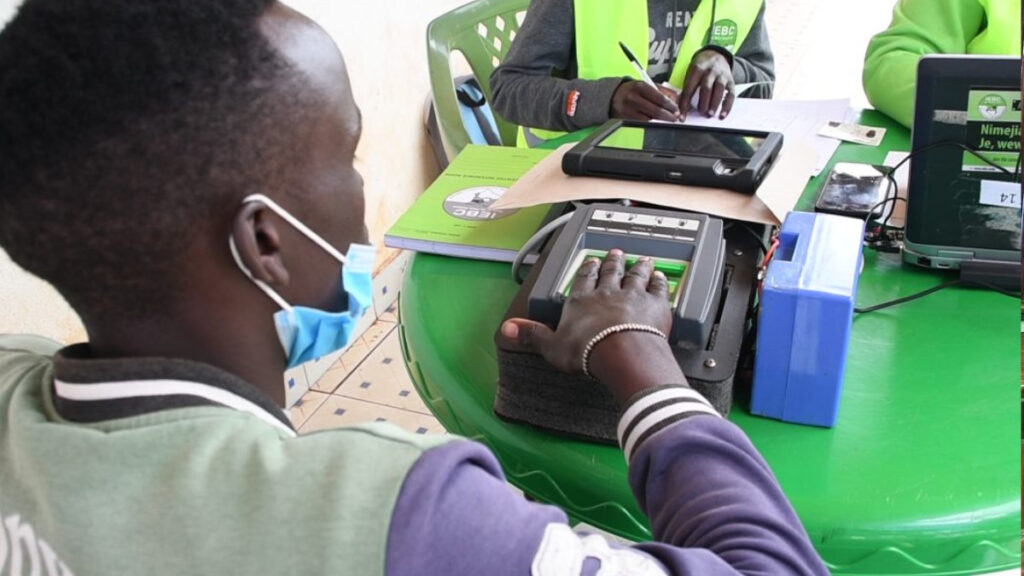
A young Kenyan registers as a voter, taking part in shaping the nation’s future. Image courtesy: TV47
By Hubzmedia
A total of 462,000 newly printed national identity cards remain uncollected across Kenya, with 15,000 of them still unclaimed in Uasin Gishu County, immigration authorities have disclosed, raising concerns about access to essential services and voter registration ahead of upcoming electoral activities.
The figures were revealed on Thursday by Principal Secretary for the State Department of Immigration and Citizen Services, Dr. Belio Kipsang, during a sensitisation meeting with local administrators in Eldoret, Uasin Gishu County. The campaign aims to bring uncollected ID cards directly to residents through grassroots distribution efforts that involve chiefs, assistant chiefs and community elders.
“We have 462,000 ID cards which have not been collected countrywide, and we are ensuring that chiefs and their assistants collect IDs which have not been collected,” Dr. Kipsang said “These include more than **15,000 in Uasin Gishu alone, more than 8,000 of which belong to youthful first‑time applicants who have yet to pick up their documents.”
Uasin Gishu Residents Grapple with Barriers to Collection
In Uasin Gishu, the uncollected IDs reflect both logistical challenges and gaps in public awareness, officials say. Many residents, especially those living in peri‑urban and rural areas outside Eldoret City, may have registered for cards but have not returned to registration bureaus to pick them up. With the Independent Electoral and Boundaries Commission (IEBC) currently intensifying its continuous voter registration drive — part of its plan to register more than 6.3 million new voters nationwide — the backlog threatens to hinder eligible citizens’ ability to participate fully in the democratic process.
Dr. Kipsang explained that the government is now repositioning uncollected ID cards from national registration bureaus to chiefs’ offices at the sub‑location level, where local administrators, assisted by village elders, will work door‑to‑door to return them to rightful owners.
“We are aligning these IDs all the way to the sub‑locations so that assistant chiefs and village elders can ensure these documents are collected,” he said.
Why Uncollected IDs Matter
The uncollected identity cards are more than just official documents — they are gateways to services and civic rights. Without a valid ID, Kenyans cannot access government services such as Social Health Authority (SHA) registration, scholarships, loans, agricultural support programmes and formal employment, as well as voter registration and participation.
In recent months, the government has rolled out initiatives such as Usajili Mashinani, which brings registration services closer to citizens in remote areas, easing access for those unable to travel long distances to central registration centres.
Authorities have also cautioned that chiefs and national registration officials must adhere to legal processes in issuing IDs, warning that any attempt to misuse the cessation of vetting to register foreigners would be dealt with severely.
“Issuance of IDs is essentially still a multi‑agency process. Our other multi‑agency teams still follow up to ensure that application processes are within the laws that guide the issuance of identity documents,” Dr. Kipsang said.
Government Response and Next Steps
To tackle the backlog, the government has turned to local administrative structures to close the gap between issuance and collection. This approach seeks to ensure that ID cards — particularly those in counties with large uncollected volumes such as Uasin Gishu and others — are delivered efficiently and securely to Kenyans who are awaiting them.
The mobilisation efforts are expected to continue nationwide, combining both mobile distribution units and community‑based delivery to ensure that no citizen is left behind in accessing vital identification documents that play a crucial role in service delivery, economic participation and democratic engagement.
About Author