Kajiado School Faces Acute Sanitation Shortage
Senior teacher Medrick Ater confirms the lack. Over 2,000 students, including pre-primary, share the same handful of facilities to utilize
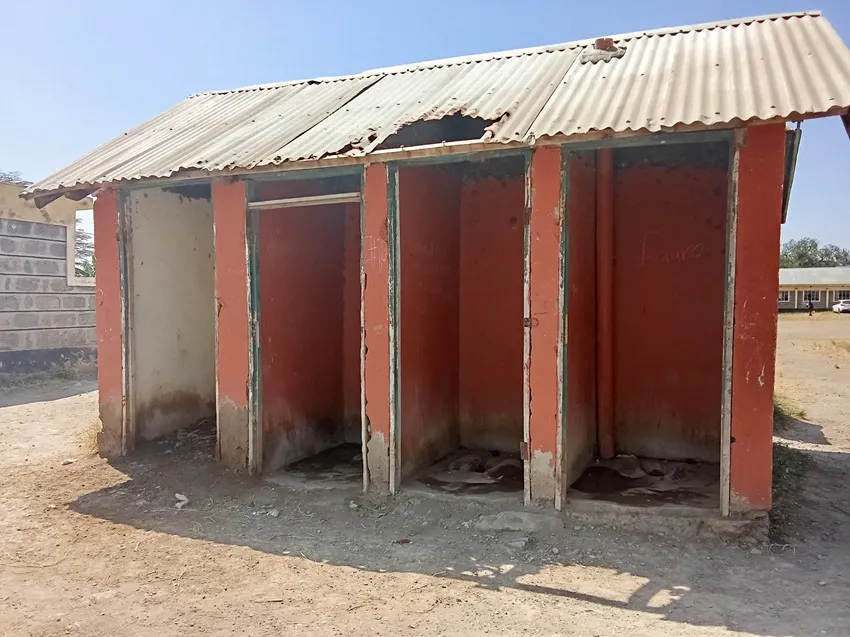
Kajiado's semi-arid nature makes things worse. Rainwater harvesting is the main supply of water, but prolonged droughts make it unreliable . Photo /KBC Digital
By Juliet jerotich
GK Prison Comprehensive School in Kajiado County looks well from the outside. The clean school blocks stand row-wise, and the large playground is filled with life. But appearances deceive, for they mask a deeply rooted sanitation problem that creates a significant hurdle for learning on a daily basis.
The school has approximately 2,500 students. Yet there are only 16 boys’ and 16 girls’ pit latrines. Toilets are almost full, have broken doors, and are largely unclean. The dry school environment adds to the discomfort by leaving dust all over.
It is just two kilometers away from Kitengela town, and the school also lacks water. This means 70–100 students share one toilet, much worse than the World Health Organization’s giving one toilet for 20–25 students.
For 15-year-old Johnstone Ouma, who is the school’s Education Minister, privacy is a huge issue. “Our toilets have no doors. There’s no privacy. Water is also scarce,” he complains. Broken taps are common in many, leaving students unable to wash hands after use.
The issue is beyond discomfiture. Student Scovia Akinyi states the lack of clean water leads to infections. The girls have the additional issue due to the lack of sanitary disposal pails. “We dispose of pads in pit latrines. It’s not safe or dignified,” she inserts.
Kajiado’s semi-arid nature makes things worse. Rainwater harvesting is the main supply of water, but prolonged droughts make it unreliable. Water is stored at times to prevent wastage, and pupils have to take a miss.
Dirty conditions make learning difficult. Classrooms are swept using dry sweeping that triggers coughs and allergic reactions. “It would be good if we used water to mop, but we do not have water,” says Ouma.
Senior teacher Medrick Ater confirms the lack. Over 2,000 students, including pre-primary, share the same handful of facilities to utilize. Strict toilet time allocation leads some children to return to class without relief.
Visitors suffer too when going there. Parent and school staff Joyce Wangui confirms that they suffer the same. Students make use of makeshift screens for privacy using black plastics that are blown by the wind.
The school is crying out for help. Even slight repairs—like the installation of doors and fixing taps—would improve matters. The Kitengela Rotary Club plans to help the school such that when August comes and it reopens, students are in a cleaner and more dignified environment.
About Author