Kabogo Lauds Student-Led Computer Assembly at JKUAT as Kenya Accelerates Digital Hub Rollout
The programme is part of the government’s wider agenda to expand digital access, boost youth employment, and strengthen local technology manufacturing capacity.

Communications and the Digital Economy Cabinet Secretary William Kabogo. Photo/Courtesy
By Ruth Sang
The government has expressed optimism over the progress of a student-led computer assembly programme at the Jomo Kenyatta University of Agriculture and Technology (JKUAT), saying the initiative is key to fast-tracking the rollout of national digital hubs while empowering young people with practical skills.
William Kabogo Information, Communications and the Digital Economy Cabinet Secretary
said the ongoing assembly work demonstrates that university students are capable of driving Kenya’s digital transformation through hands-on technical engagement.
During a visit to the university’s assembly line, Kabogo said production levels for the 3,000 computers assigned to JKUAT are on track, noting that the institution is achieving an average output of about 300 units daily. He added that Moi University has been tasked with assembling an additional 7,000 units.
“The progress we are seeing shows that students can effectively contribute to national development through practical technical work,” Kabogo said.
He further stated that the initiative is central to the government’s plan to equip all 1,450 wards with digital hubs, each expected to receive between 50 and 100 devices to support youth training and access to digital employment opportunities.
Kabogo noted that involving students in the assembly process not only accelerates implementation but also equips them with critical skills in hardware integration, diagnostics, and production—skills he said are essential for sustaining Kenya’s growing digital economy.
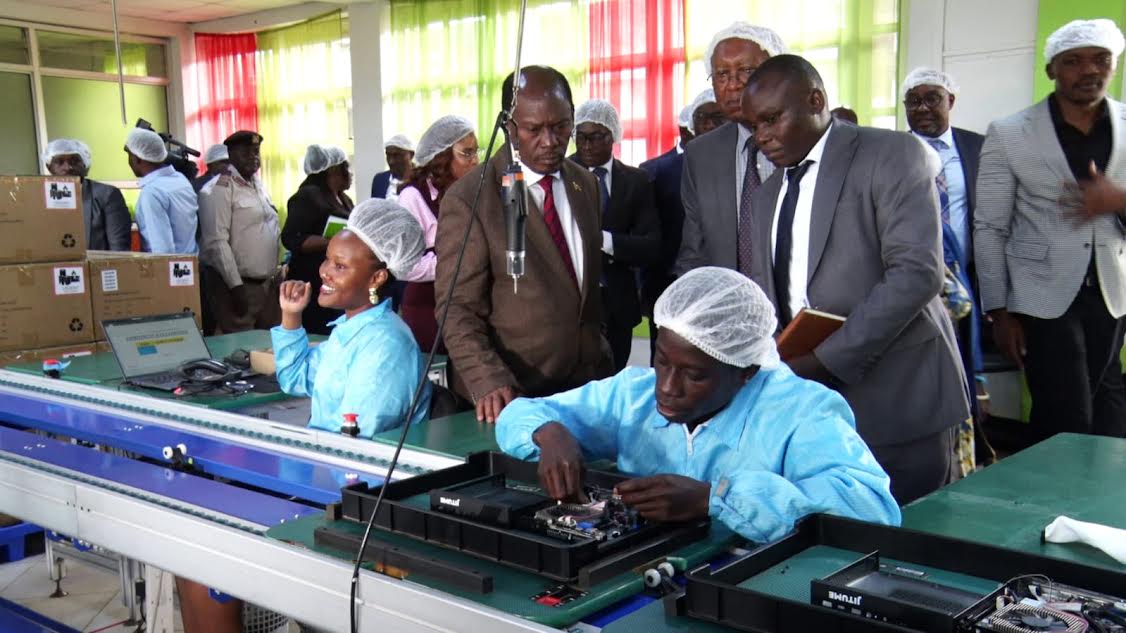
“The government deliberately engaged local universities to undertake the assembly so as to build local capacity while reducing reliance on fully built imports. The approach is also expected to promote local manufacturing by encouraging institutions to assemble devices from imported components,” he explained.
He added that the programme goes beyond delivery of devices and is part of a broader strategy to strengthen Kenya’s position in the global digital economy, which continues to contribute significantly to national growth.
Kabogo also called for increased funding to speed up the rollout and operationalisation of digital hubs, revealing plans to support the local assembly of an additional 50,000 devices.
At JKUAT, the programme has been integrated into academic training, with students directly attached to assembly lines to gain practical experience. Vice Chancellor Prof. Victoria Ngumi said the initiative is improving graduate employability and confirmed the university’s readiness to scale up production if further support is provided.
Kabogo further urged young people to take advantage of emerging digital opportunities, pointing to rising earnings in online work and content creation.
“What has been witnessed in this sector where some Kenyans are making up to Sh57 million annually from online jobs and content creation has never been witnessed in this country before. The opportunities for our youth in this sector are huge, and as a government, we shall continue offering the best environment and policies to help our young people to earn,” he said.
The programme is part of the government’s wider agenda to expand digital access, boost youth employment, and strengthen local technology manufacturing capacity.
About Author