Kabianga Water Project Set for Completion
The water will be pumped through a gravity main to a raw water sump, using a 50-meter steel pipe with a diameter of 300mm.
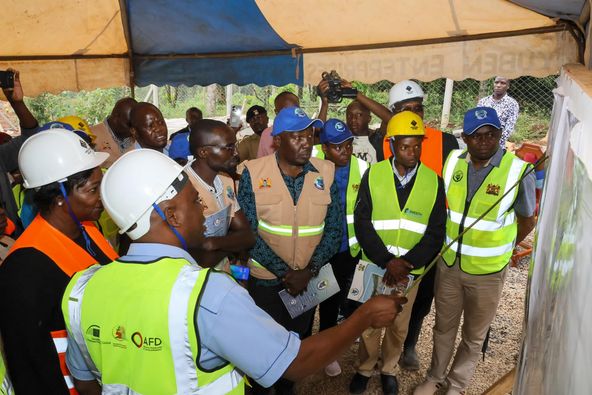
Ministry of Water , Sanitation and Irrigation led by Cabinet Secretary Eric Muga Muriithi inspecting Kabianga Water Supply Project. Photo by Eric Muga Muriithi.
By Robert Mutasi
The much-anticipated Kabianga Water Supply Project Phase 1 in Belgut Constituency, Kericho County, is nearing completion after significant delays.
The project, which is expected to provide clean and reliable water to over 25,000 residents, is now projected to be fully operational by January 2025, according to Cabinet Secretary for Water, Sanitation, and Irrigation, Eric Muga Muriithi.
The project, backed by the Government of Kenya (GoK), is a key initiative aimed at enhancing water access for Kabianga University, Chepnyogaa, Kabianga Centre, and the surrounding communities.
Once completed, it will significantly improve water supply in the area, which has long struggled with inadequate access to clean water.
CS Muriithi, who inspected the site earlier this week, outlined the scope of the project, which includes the construction of a water intake structure on the River Kabianga.
The water will be pumped through a gravity main to a raw water sump, using a 50-meter steel pipe with a diameter of 300mm.
The centerpiece of the project is a state-of-the-art water treatment facility with a daily capacity of 2 million liters, which will ensure that clean water is consistently available to the community.
In addition to the treatment facility, the project involves the installation of 9 kilometers of distribution mains, which will channel treated water to various points across the region.
The project also includes an elevated 200,000-liter storage tank at Kapmaso, which will help stabilize the water supply.
Moreover, communal water kiosks will be established at key locations such as Kapmaso Primary School, Chepnyogaa Centre, and Kabianga Centre to improve access for local residents.
Despite the project’s promising outlook, CS Muriithi acknowledged the delays caused by land constraints at the treatment works site, which had previously slowed down progress.
To date, only 38% of the physical construction has been completed.
However, with the land issues now resolved, the Ministry is working closely with local stakeholders to expedite the remaining work.
“We are committed to fast-tracking progress and ensuring that the residents of Kabianga and its surrounding areas receive a sustainable and reliable water supply,” Muriithi stated.
The completion of this project is seen as a major step toward improving living conditions and promoting economic growth in the region.
About Author